Chapter 7
Aircraft Materials, Hardware, & Processes
Taper-Lok
Taper-Loks are the strongest special fasteners used in aircraft construction. The Taper-Lok exerts a force on the walls of the hole because of its tapered shape. The Taper-Lok is designed to completely fill the hole, but unlike the rivet, it fills the hole without deforming the shank. Instead, the washer head nut squeezes the metal with tremendous force against the tapered walls of the hole. This creates radial compression around the shank and vertical compression lines as the metals are squeezed together. The combination of these forces generates strength unequaled by any other fastener. [Figure 7-56]
HI-LOK™ Fastening System
The threaded end of the HI-LOK™ two-piece fastener contains a hexagonal shaped recess. The hex tip of an Allen wrench engages the recess to prevent rotation of the pin while the collar is being installed. The pin is designed in two basic head styles. For shear applications, the pin is made in countersunk style and in a compact protruding head style. For tension applications, the MS24694 countersunk and regular protruding head styles are available.
The self-locking, threaded HI-LOK™ collar has an internal counterbore at the base to accommodate variations in material thickness. At the opposite end of the collar is a wrenching device that is torqued by the driving tool until it shears off during installation, leaving the lower portion of the collar seated with the proper torque without additional torque inspection. This shear-off point occurs when a predetermined preload or clamp-up is attained in the fastener during installation.
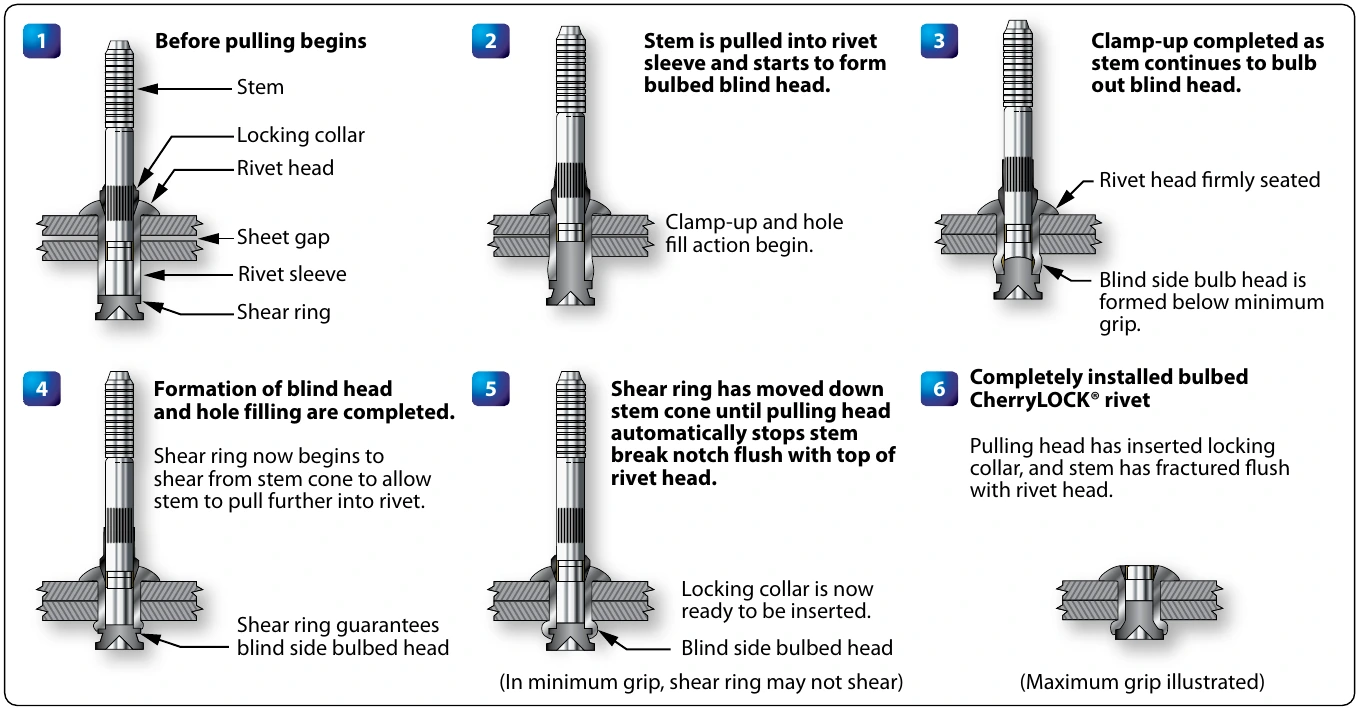
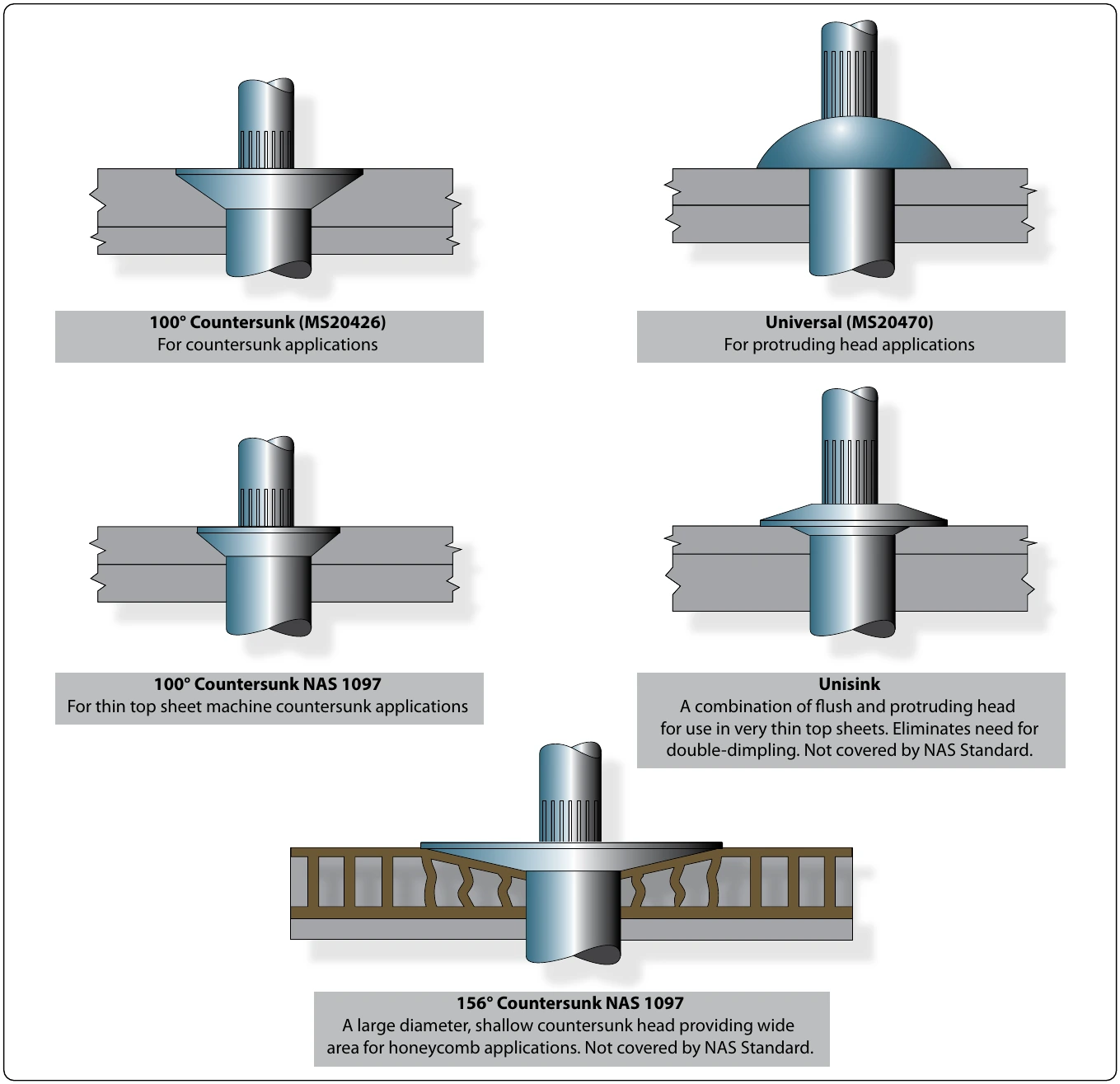
installation sequence is complete, and after any residual relaxation of the joint assembly.
The advantages of HI-LOK™ two-piece fastener include its lightweight, high fatigue resistance, high strength, and its inability to be over-torqued. The pins, made from alloy steel, corrosion-resistant steel, nickel, or titanium alloy, come in many standard and oversized shank diameters. The collars are made of aluminum alloy, corrosion-resistant steel, titanium, or alloy steel. The collars have wrenching flats, fracture point, threads, and a recess. The wrenching flats are used to install the collar. The fracture point has been designed to allow the wrenching flats to shear when the proper torque has been reached. The threads match the threads of the pins and have been formed into an ellipse that is distorted to provide the locking action. The recess serves as a built-in washer. This area contains a portion of the shank and the transition area of the fastener.
The hole shall typically be prepared so that the maximum interference fit does not exceed 0.002-inch. This avoids build up of excessive internal stresses in the work adjacent HI-LOK™ is typically installed in interference fit holes for aluminum structure and a clearance fit for steel, titanium, and composite materials.
HI-TIGUE™ Fastening System
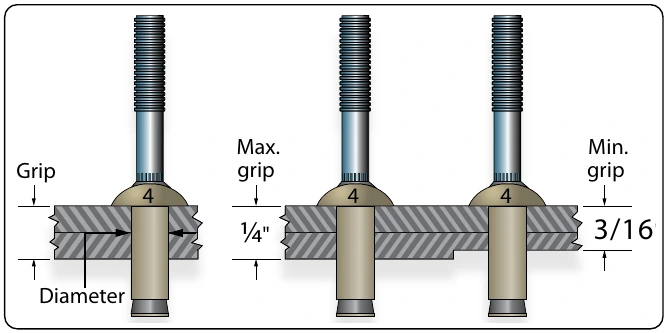
The HI-TIGUE™ fastener offers all the benefits of the HI-LOK™ fastening system along with a unique radius contour on the thread lead-in, or a raised bead design that enhances the fatigue performance of the structure making it ideal for situations that require a controlled interference fit. The HI-TIGUE™ fastener assembly consists of a pin and will “cold-work” the hole. These fastening systems can be easily confused, and visual reference should not be used for identification. Use part numbers to identify these fasteners. [Figure 7-57]