
Chapter 8
Cleaning & Corrosion Control
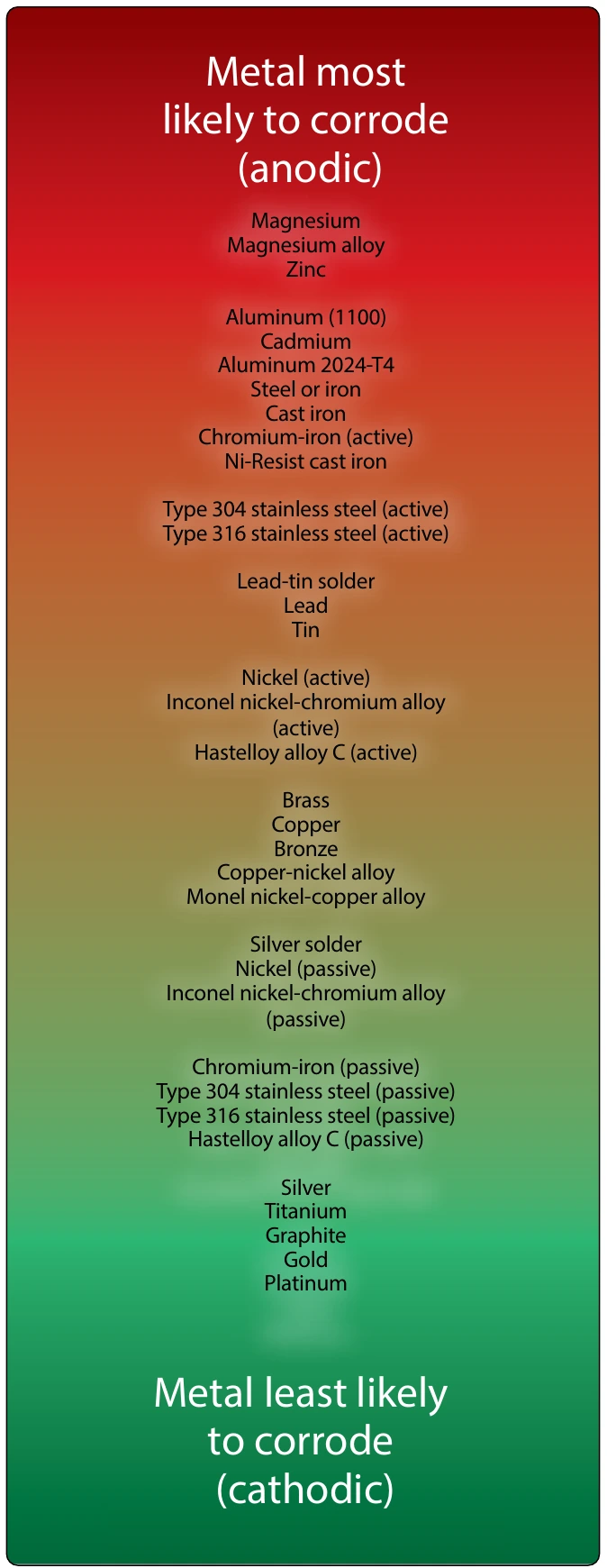
Extensive pitting damage may result from contact between dissimilar metal parts in the presence of a conductor. While surface corrosion may or may not be taking place, a galvanic action, not unlike electroplating, occurs at the points or areas of contact where the insulation between the surfaces has broken down or been omitted. This electrochemical attack can be very serious because, in many instances, the action is taking place out of sight, and the only way to detect it prior to structural failure is by disassembly and inspection. [Figure 8-10]
The contamination of a metal’s surface by mechanical means can also induce dissimilar metal corrosion. The improper use of steel cleaning products, such as steel wool or a steel wire brush on aluminum or magnesium, can force small pieces of steel into the metal being cleaned, causing corrosion and ruining the adjoining surface. Carefully monitor the use of nonwoven abrasive pads, so that pads used on one type of metal are not used again on a different metal surface.
Concentration Cell Corrosion
Concentration cell corrosion, (also known as crevice corrosion) is corrosion of metals in a metal-to-metal joint, corrosion at the edge of a joint even though the joined metals are identical, or corrosion of a spot on the metal surface covered by a foreign material. Metal ion concentration cells, oxygen concentration cells, and active-passive cells are three general types of concentration cell corrosion.
Metal Ion Concentration Cells
The solution may consist of water and ions of the metal that are in contact with water. A high concentration of metal ions normally exists under faying surfaces where the solution is stagnant and a low concentration of metal ions exist adjacent to the crevice, created by the faying surface. [Figure 8-11] An electrical potential exists between the two points: the area of the metal in contact with the low concentration of metal ions is anodic and corrodes; the area in contact with the high metal ion concentration is cathodic and does not show signs of corrosion.
Oxygen Concentration Cells
The solution in contact with the metal surface normally contains dissolved oxygen. An oxygen cell can develop at any point where the oxygen in the air is not allowed to diffuse into the solution, thereby creating a difference in oxygen concentration between two points. Typical locations of oxygen concentration cells are under gaskets, wood, rubber, and other materials in contact with the metal surface. Corrosion occurs at the area of low oxygen concentration (anode). Alloys such as stainless steel are particularly susceptible to this type of crevice corrosion. [Figure 8-12]
Active-Passive Cells
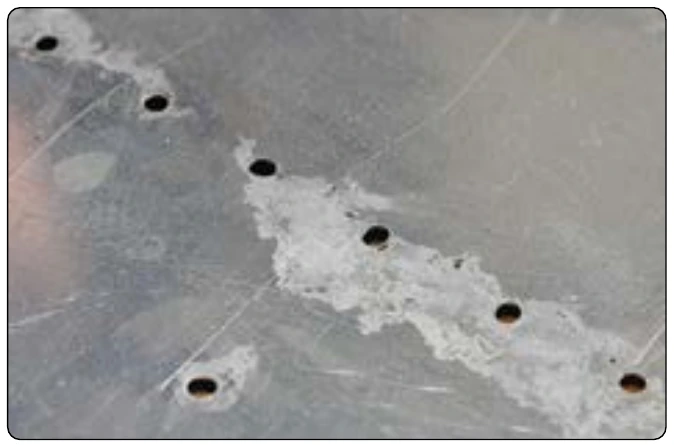
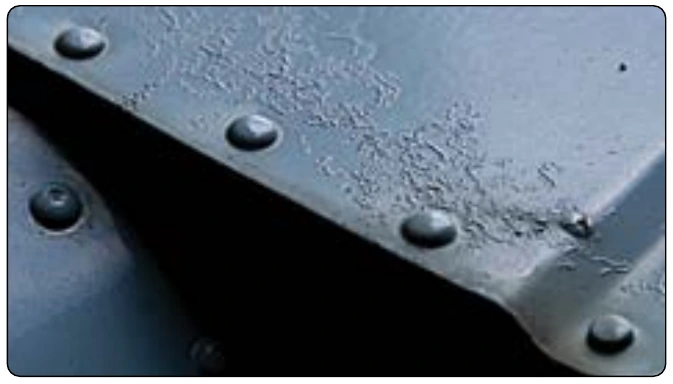
Metals that depend on a tightly adhering passive film, usually an oxide for corrosion protection, are prone to rapid corrosive attack by active-passive cells. The corrosive action usually starts as an oxygen concentration cell. The passive film is broken beneath the dirt particle exposing the active metal to corrosive attack. An electrical potential will develop between the large area of the passive film and the small area of the active metal, resulting in rapid pitting. [Figure 8-13] This type of corrosion is an attack along the grain boundaries of an alloy and commonly results from a lack of uniformity in the alloy structure. Aluminum alloys and some stainless steels are particularly susceptible to this form of electrochemical attack. [Figure 8-14] The lack of uniformity is caused by changes that occur in the alloy during the heating and cooling process of the material’s manufacturing. Intergranular corrosion may exist without visible surface evidence. High-strength aluminum alloys, such as 2014 and 7075, are more susceptible to intergranular corrosion if they have been improperly heat-treated and then exposed to a corrosive environment.
Exfoliation Corrosion
Exfoliation corrosion is an advanced form of intergranular corrosion and shows itself by lifting up the surface grains of a metal by the force of expanding corrosion products occurring at the grain boundaries just below the surface. [Figure 8-15] It is visible evidence of intergranular corrosion and is most often seen on extruded sections where grain thickness is usually less than in rolled forms. This type of corrosion is difficult to detect in its initial stage. Extruded components, such as spars, can be subject to this type of corrosion. Ultrasonic and eddy current inspection methods are being used with a great deal of success.
Stress-Corrosion/Cracking
This form of corrosion involves a constant or cyclic stress acting in conjunction with a damaging chemical environment. The stress may be caused by internal or external loading. [Figure 8-16] Internal stress may be trapped in a part of structure during manufacturing processes, such as cold-working or by unequal cooling from high temperatures. Most manufacturers follow these processes with a stress relief operation. Even so, sometimes stress remains trapped. The stress may be externally introduced in part structure by riveting, welding, bolting, clamping, press fit, etc. If a slight mismatch occurs or a fastener is over-torqued, internal stress is present. Internal stress is more important than design stress, because stress corrosion is difficult to recognize before it has overcome the design safety factor. The level of stress varies from point to point within the metal. Stresses near the yield strength are generally necessary to promote stress corrosion cracking. However, failures may occur at lower stresses.
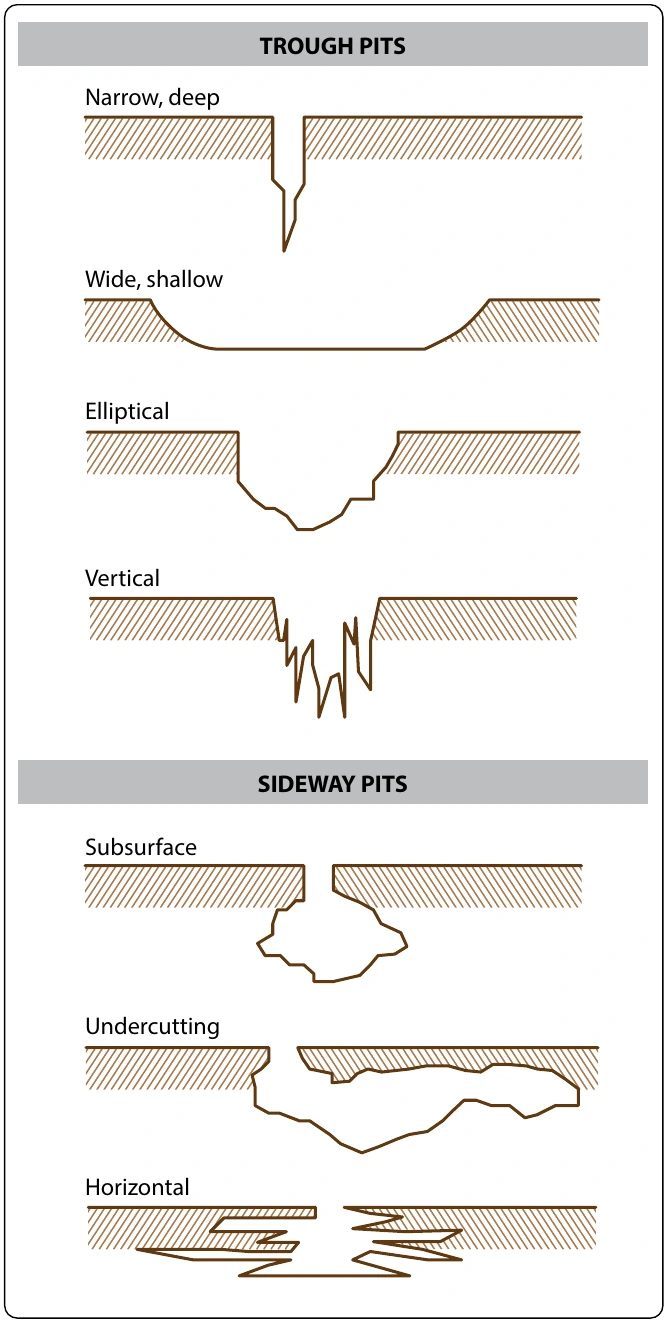
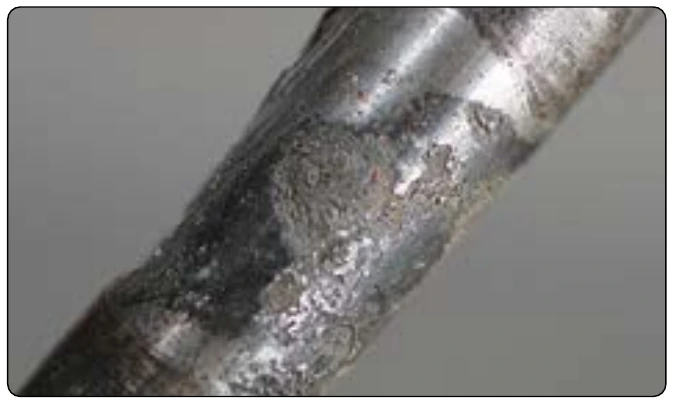
Specific environments have been identified that cause stress corrosion cracking of certain alloys.