
Chapter 10
Engine Maintenance & Operation
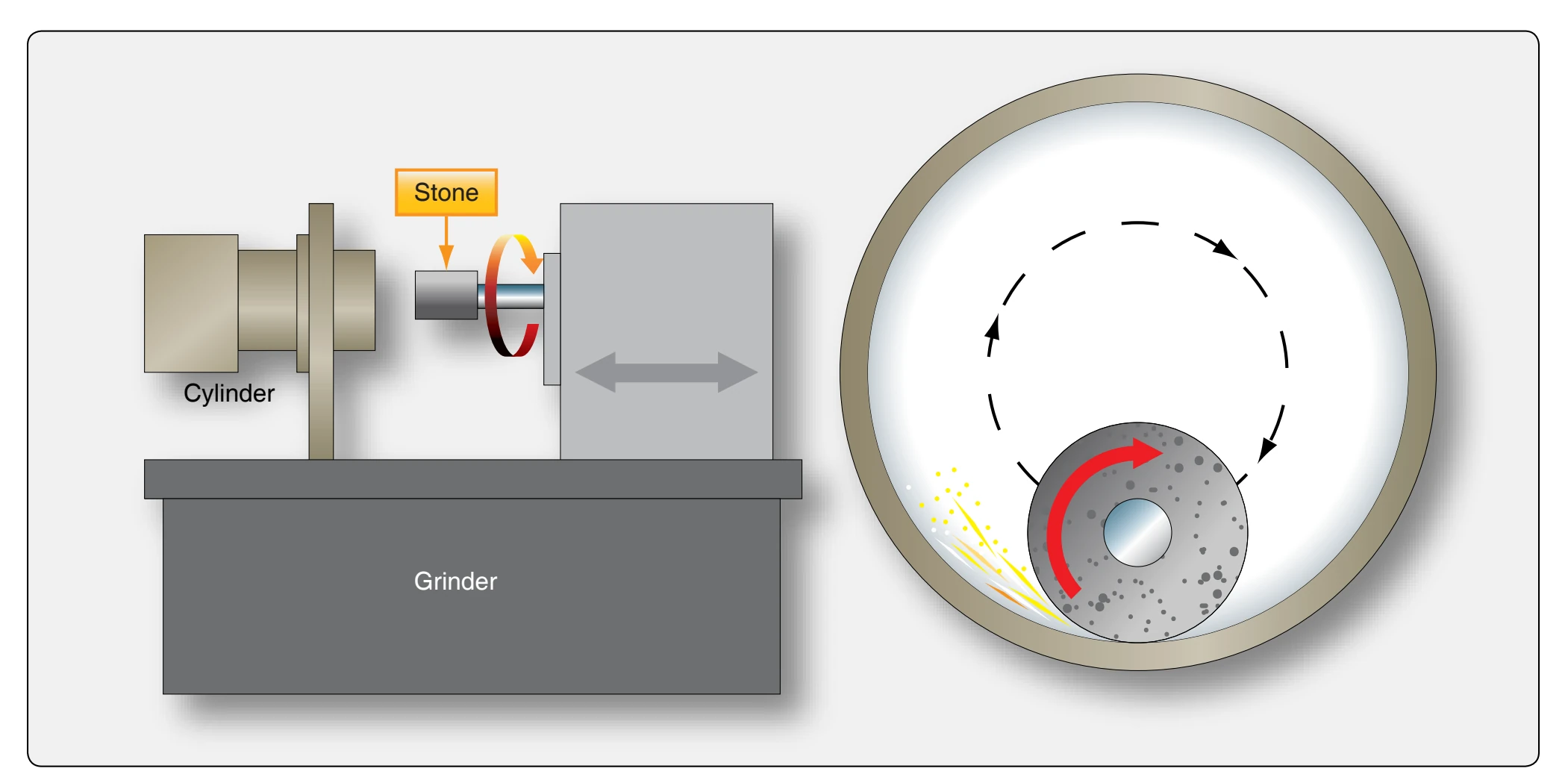
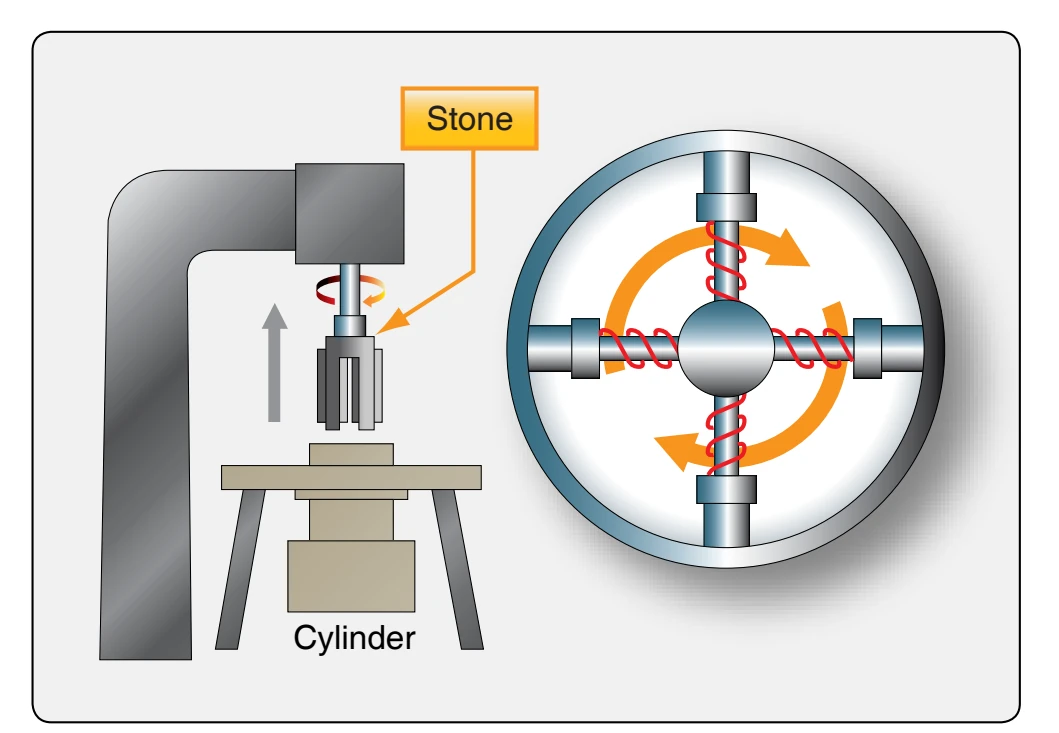
micromatic hone can also be used to straighten out the cylinder walls. A burnishing hone should not be used in an attempt to straighten cylinder walls. [Figure 10-31] Since the stones are only spring loaded, they follow the contour of the cylinder wall and may aggravate a tapered condition.
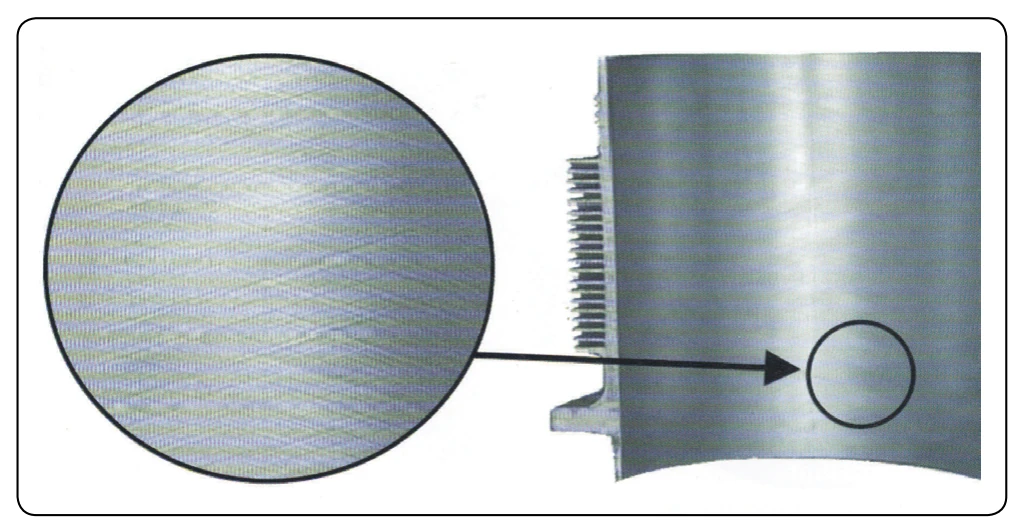
Deglazing the cylinder walls is accomplished with the use of a deglazing hone. A cross-hatch pattern must be placed on the cylinder wall to allow for piston ring break-in. This is accomplished by a deglazing hone turned by a drill being moved in and out of the cylinder rapidly. [Figure 10-32]
After the cylinders have been reground or deglazed, or both, check the size and wall finish, and check for evidence of overheating or grinding cracks before installing on an engine.
Reassembly
Before starting reassembly, all serviceable and new engine components need to be cleaned, organized, and laid out in the order they are to be assembled. A popular method of engine assembly is for the engine to be assembled at one work station with the same technicians completing the total assembly of the engine. It is also important to refer to the parts catalog to ensure that the correct hardware is used during the assembly of the engine. The engine overhaul manual should be referred to for information on the use of safety wire, self-locking nuts, and torque values. During assembly, the components should be pre-lubricated as the overhaul manual sets forth. It is important to follow the manufacturer’s overhaul assembly procedures completely and perform all checks and procedures that are called for in the manual.
Installation & Testing
Testing Reciprocating Engines
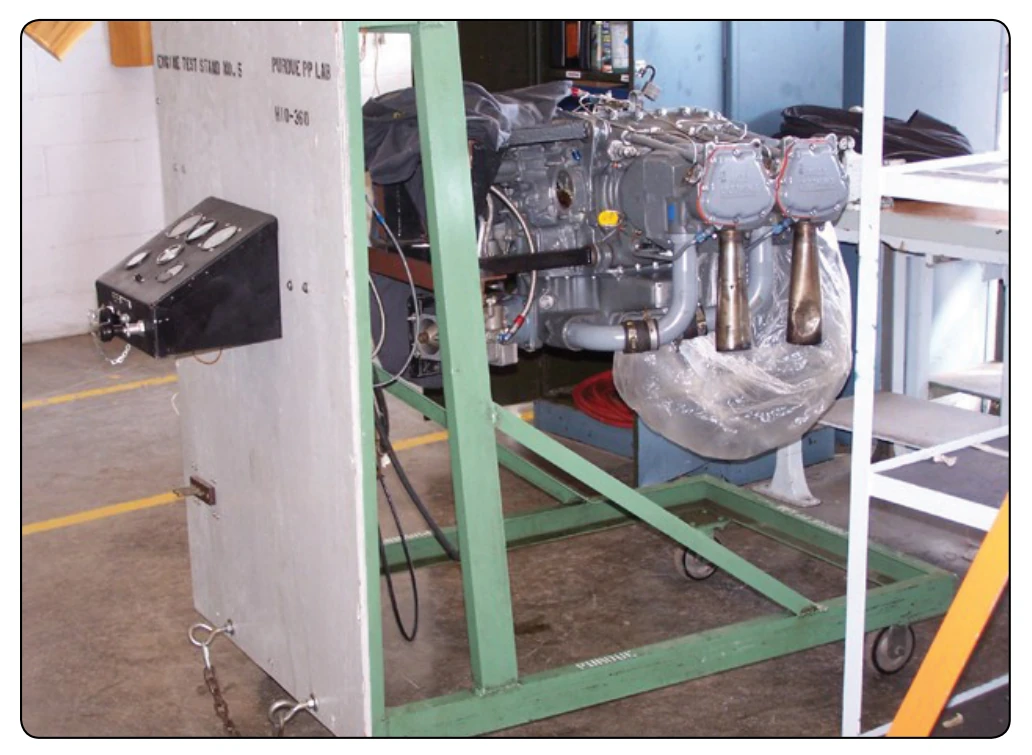
The procedures and equipment used in determining that an engine is ready for airworthy service and is in excellent mechanical condition, normally requires the use of a test stand, or test cell, although the aircraft can be used.
[Figure 10-33] The method of engine testing or run-in that takes place during overhaul prior to delivery of the engine is critical to the airworthiness of the engine. It must be emphasized that engine run-in is as vital as any other phase of engine overhaul, for it is the means by which the quality of a new or newly overhauled engine is checked, and it is the final step in the preparation of an engine for service. Thus, the reliability and potential service life of an engine is in question until it has satisfactorily passed the cell test.
The test serves a dual purpose. First, it accomplishes piston ring run-in and bearing burnishing. Second, it provides valuable information that it used to evaluate engine performance and determine engine condition. To provide proper oil flow to the upper portion of the cylinder barrel walls with a minimum loss of oil, it is important that piston rings be properly seated in the cylinder in which they are installed. The process is called piston ring run-in (breakin) and is accomplished chiefly by controlled operation of the engine in the high-speed range. Improper piston ring conditioning, or run-in, may result in unsatisfactory engine operation with high oil consumption. A process called bearing burnishing creates a highly polished surface on new bearings and bushings installed during overhaul. The burnishing is usually accomplished during the first periods of the engine run-in at comparatively slow engine speeds.
The failure of any part during engine testing or run-in requires that the engine be returned, repaired, and completely retested. After an engine has successfully completed test requirements, it is then specially treated to prevent corrosion, if it is shipped or stored before being installed in an aircraft. During the final run-in period during testing, the engines are operated on the proper grade of fuel prescribed for the particular kind of engine. The oil system is serviced with a mixture of corrosion-preventive compound and engine oil. The temperature of this mixture is maintained at 105 °C to
121 °C. Near the end of final run-in, corrosion-preventive mixture (CPM) is used as the engine lubricant. The engine induction passages and combustion chambers are also treated with CPM by an aspiration method. CPM is drawn or breathed into the engine.
Test Cell Requirements
The test cell requires an area to mount and hold the engine for testing. The cell needs to have the controls, instruments, and any special equipment to evaluate the total performance of the engine. A test club should be used for testing instead of a flight propeller. [Figure 10-34] A test club provides more cooling air flow and the correct amount of load. The operational tests and test procedures vary with individual engines, but the basic requirements are generally closely related.
Engine Instruments
The test cell control room contains the controls used to operate the engine and the instruments used to measure various temperatures and pressures, fuel flow, and other factors. These devices are necessary in providing an accurate check and an evaluation of the operating engine. The control room is separate from, but adjacent to, the space (test cell) that houses the engine being tested. The safe, economical, and reliable testing of modern aircraft engines depends largely upon the use of instruments. In engine run-in procedures, the same basic engine instruments are used as when the engine is installed in the aircraft, plus some additional connections to these instruments, and some indicating and measuring devices that cannot be practically installed in the aircraft. Instruments used in the testing procedures are inspected and calibrated periodically, as are instruments installed in the aircraft; thus, accurate information concerning engine operation is ensured.