
Chapter 10
Engine Maintenance & Operation
Torquemeter
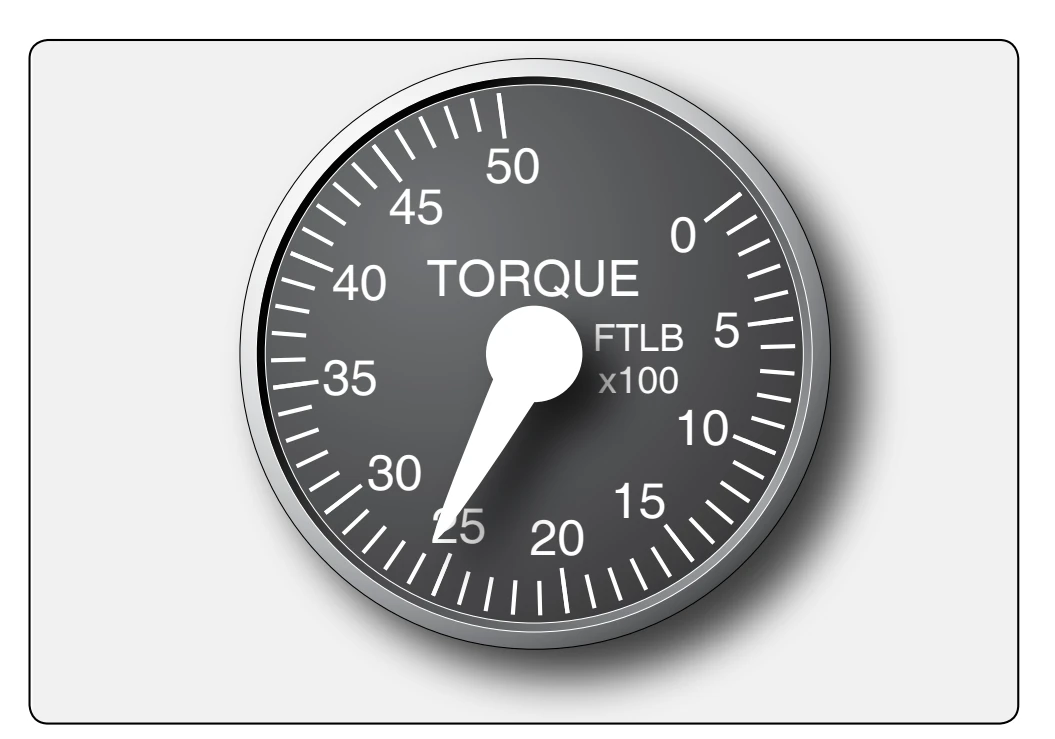
Most torque systems use an oil pressure output from a torque valve to indicate actual engine power output at various power settings. The torquemeter indicates the amount of torque being produced at the propeller shaft. A helical gear moves back and forth as the torque on the propeller shaft varies. This gear, acting on a piston, positions a valve that meters the oil pressure proportionally to the torque being produced. A change in pressure from the valve that is connected to a transducer is then converted to an electrical signal and is transmitted to the flight deck. The torquemeter can read out in foot-pounds
of torque, percent of horsepower, or horsepower. The earlier systems read out in psi, and the flight engineer converted this to the correct power setting. [Figure 10-40] Some systems use strain gauges to attach to the ring gear to provide an electrical signal directly to the readout.
Warning Systems
Many of the miscellaneous gauges and devices indicate only that a system is functioning or has failed to function. On some aircraft, a warning light illuminates when the fuel pressure or oil pressure is low.
Reciprocating Engine Operation
The operation of the powerplant is controlled from the flight deck. Some installations have numerous control handles and levers connected to the engine by rods, cables, bellcranks, pulleys, etc. In most cases, the control handles are conveniently mounted on quadrants in the flight deck. Placards, or markings, are placed on the quadrant to indicate the functions and positions of the levers. In some installations, friction clutches are installed to hold the controls in place.
Engine Instruments
The term engine instruments usually includes all instruments required to measure and indicate the functioning of the powerplant. The engine instruments are generally installed on the instrument panel so that all of them can easily be observed at one time. Manifold pressure, rpm, engine temperature, oil temperature, CAT, and the air-fuel ratio can be controlled by manipulating the flight deck controls. Coordinating the movement of the controls with the instrument readings protects against exceeding operating limits.
Engine operation is usually limited by specified operating ranges of the following:
- Crankshaft speed (rpm).
- Manifold pressure.
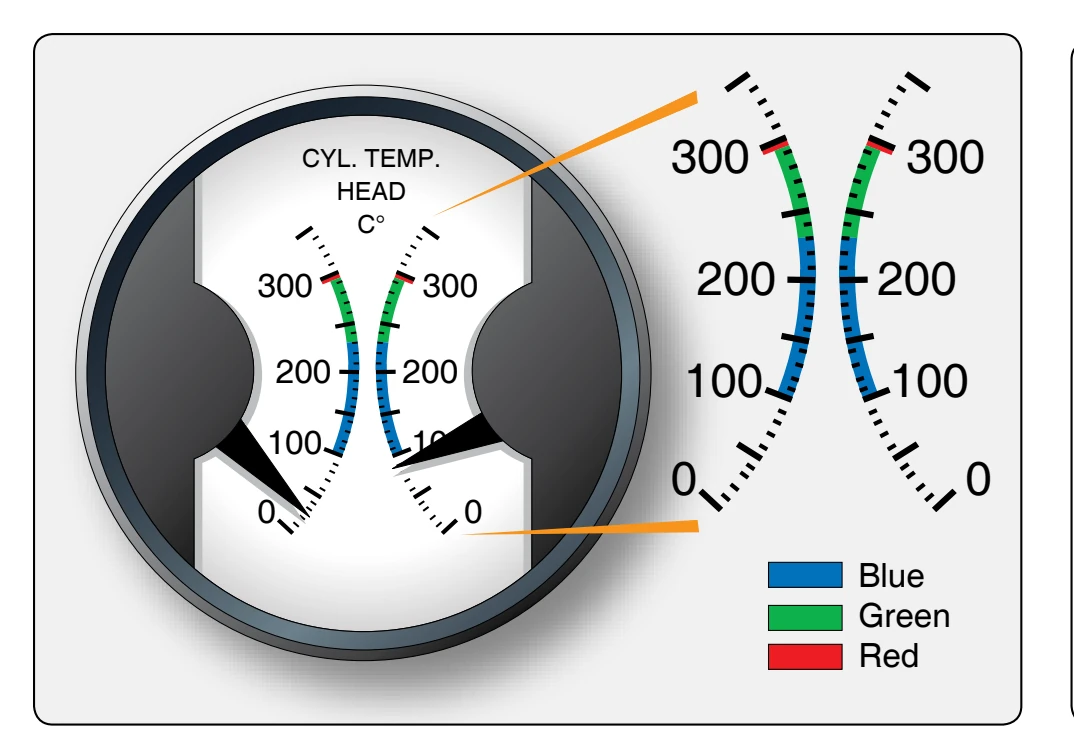
- Cylinder head temperature.
- CAT.
- Oil temperature.
- Oil pressure.
- Fuel pressure.
- Fuel-flow meter.
- Air-fuel mixture setting.
The procedures, pressures, temperatures, and rpm used throughout this section are solely for the purpose of illustration and do not have general application. The operating procedures and limits used on individual makes and models of aircraft engines vary considerably from the values shown here. For exact information regarding a specific engine model, consult the applicable instructions.
Engine Starting
Before starting the engine, observe the manifold pressure gauge that should read approximate atmospheric (barometric) pressure when the engine is not running. At sea level, this is approximately 30 "Hg, and at fields above sea level, the atmospheric pressure is less, depending on the height above sea level. Also, observe all engine gauges for the correct reading for engine off settings.
Correct starting technique is an important part of engine operation. Improper procedures often are used, because some of the basic principles involved in engine operation are misunderstood. Read more about typical procedures for starting reciprocating engines in the Aviation Maintenance Technician Handbook - General.
Pre-Oiling
Engines that have undergone overhaul or major maintenance can have air trapped in some of the oil passages that must be removed before the first start. This is done by pre-oiling the engine by cranking, with the spark plugs removed, the engine with the starter or by hand (turning) until oil pressure is indicated. A second method is to pump oil under pressure through the oil system using an external pump until oil comes out of the oil outlet of the engine.