
Chapter 4
Engine Ignition & Electrical Systems
- Wiring in the vicinity of magnetic compass or flux valve,
- Three-phase distribution wiring, and
- Certain other wires (usually radio wiring).
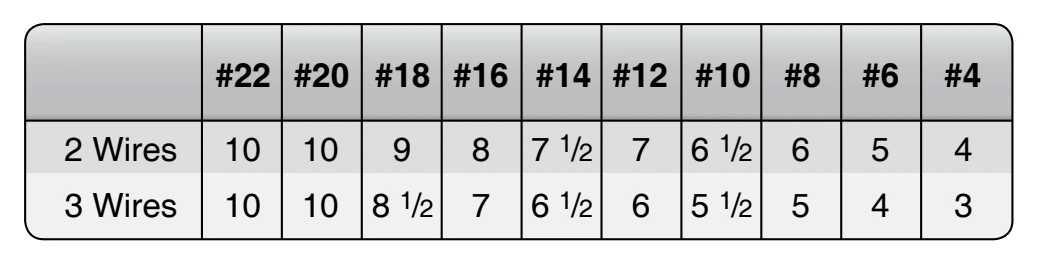
Twist the wires so that they lie snugly against each other, making approximately the number of twists per foot as listed in Figure 4-92. Always check wire insulation for damage after twisting. If the insulation is torn or frayed, replace the wire.
Spliced Connections in Wire Bundles
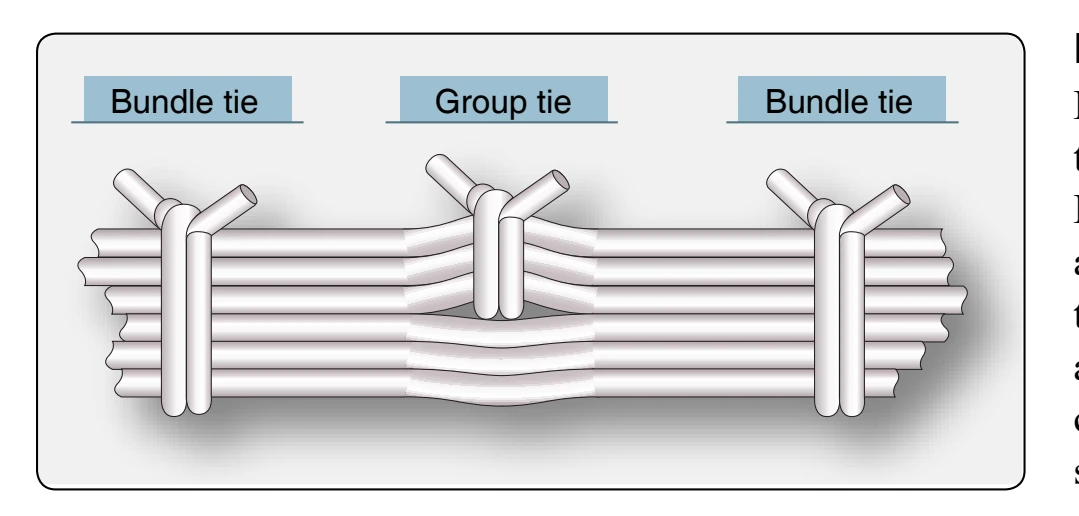
Spliced connections in wire groups or bundles should be located so that they can be easily inspected. Splices should also be staggered so that the bundle does not become excessively enlarged. [Figure 4-93] All noninsulated splices should be covered with plastic, securely tied at both ends.
Slack in Wiring Bundles
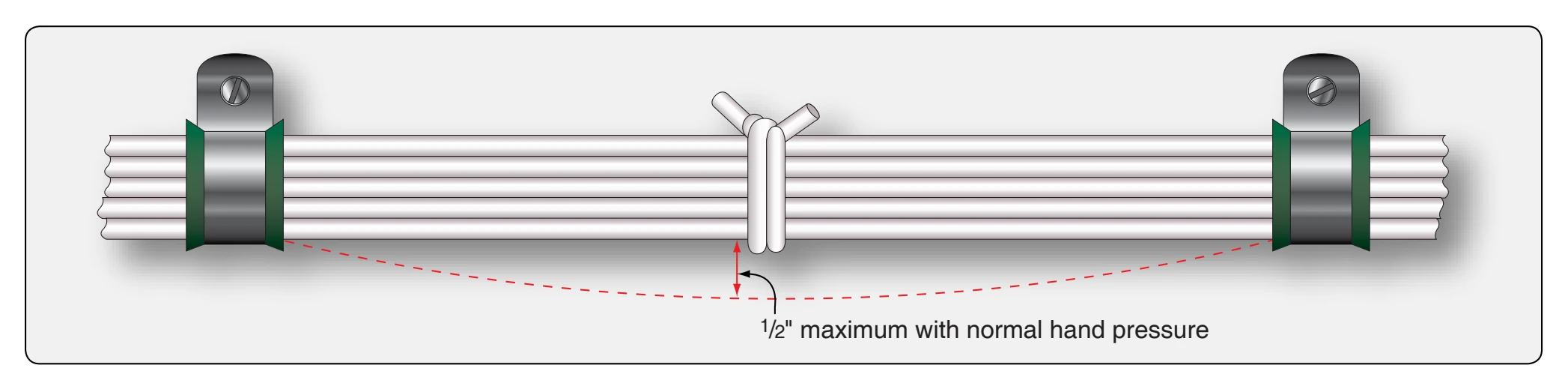
Single wires or wire bundles should not be installed with excessive slack. Slack between supports should normally not exceed ½ inch. This is the maximum it should be possible
to deflect the wire with normal hand force. However, this may be exceeded if the wire bundle is thin and the clamps are far apart. But the slack should never be so great that the wire bundle can abrade against any surface it touches. [Figure 4-94] A sufficient amount of slack should be allowed near each end of a bundle to:
- Permit easy maintenance;
- Allow replacement of terminals;
- Relieve mechanical strain on the wires, wire junctions, or supports;
- Permit free movement of shock and vibration-mounted equipment; and
- Permit shifting of equipment for purposes of maintenance.
Bend Radii
Bends in wire groups or bundles should not be less than ten times the outside diameter of the wire group or bundle. However, at terminal strips, where wire is suitably supported at each end of the bend, a minimum radius of three times the outside diameter of the wire, or wire bundle, is usually acceptable. There are exceptions to these guidelines in the case of certain types of cable; for example, coaxial cable should never be bent to a smaller radius than six times the outside diameter.
Routing & Installation
l All wiring should be installed so that it is mechanically and electrically sound and neat in appearance. Whenever practicable, wires and bundles should be routed parallel with, or at right angles to, the stringers or ribs of the area involved. An exception to this general rule is the coaxial cables, which are routed as directly as possible.
The wiring must be adequately supported throughout its length. A sufficient number of supports must be provided to prevent undue vibration of the unsupported lengths. All wires and wire groups should be routed and installed to protect them from:
- Chafing or abrasion;
- High temperature;
- Being used as handholds, or as support for personal belongings and equipment;
- Damage by personnel moving within the aircraft;
- Damage from cargo stowage or shifting;
- Damage from battery acid fumes, spray, or spillage;

and
- Damage from solvents and fluids.