
Chapter 4
Engine Ignition & Electrical Systems
Aluminum wire is being used increasingly in aircraft systems because of its weight advantage over copper. However, bending aluminum causes “work hardening” of the metal, making it brittle. This results in failure or breakage of strands much sooner than in a similar case with copper wire. Aluminum also forms a high-resistant oxide
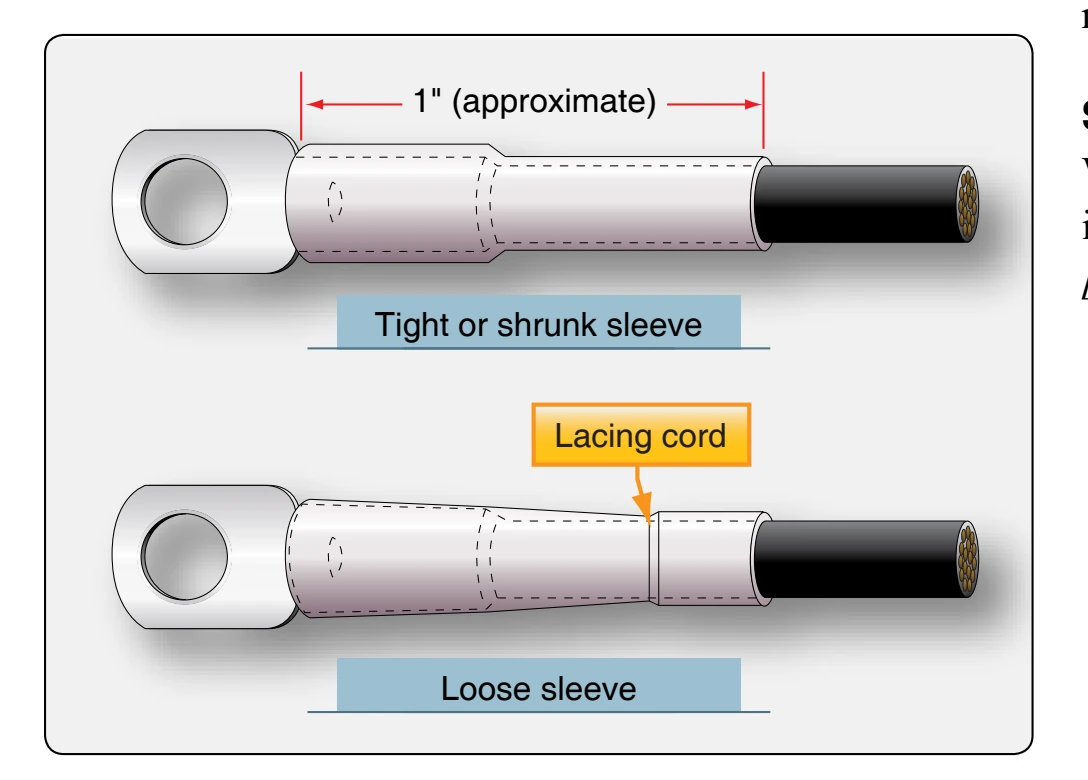
film immediately upon exposure to air. To compensate for these disadvantages, it is important to use the most reliable installation procedures. Only aluminum terminal lugs are used to terminate aluminum wires.
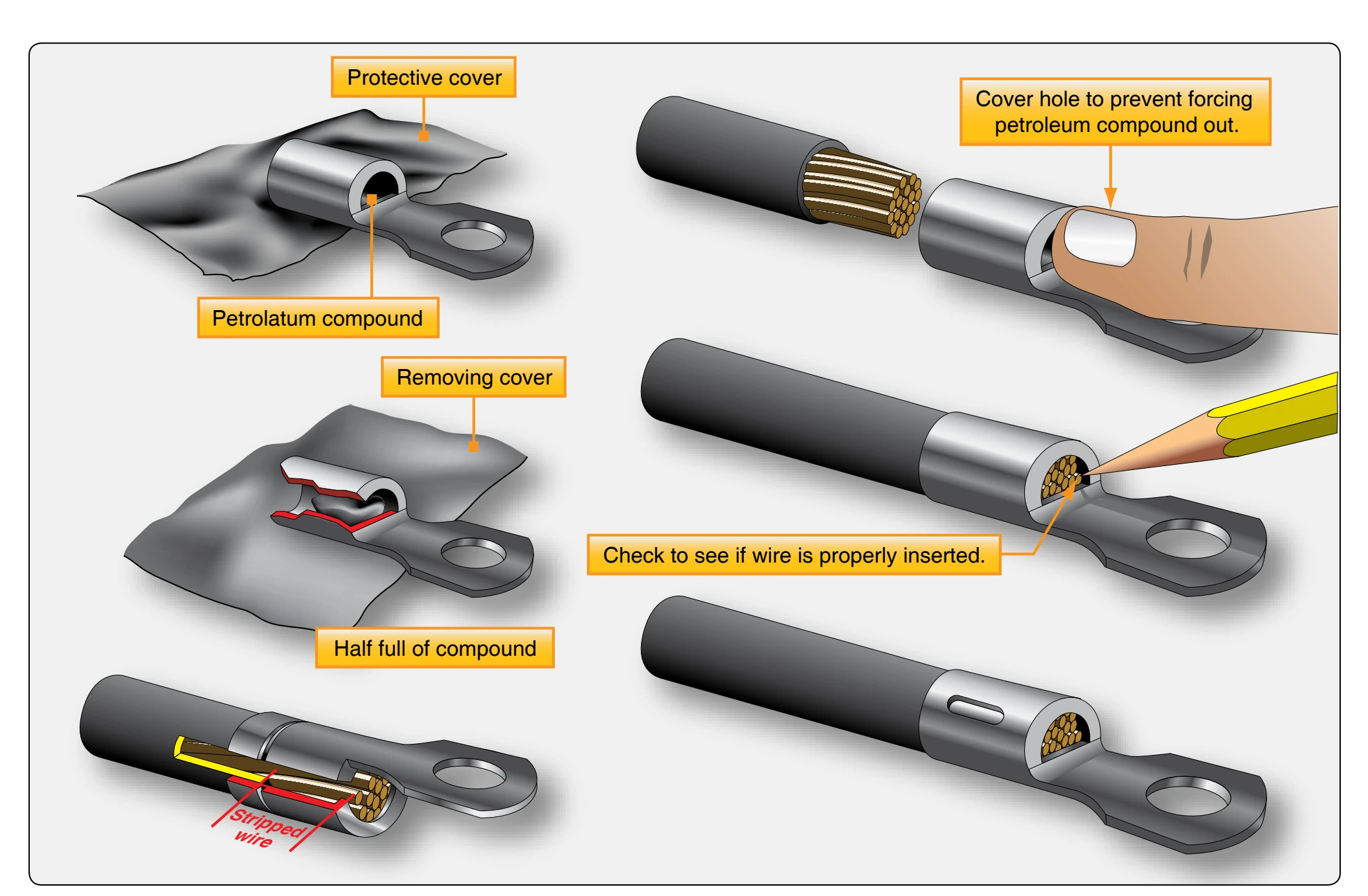
All aluminum terminals incorporate an inspection hole that permits checking the depth of wire insertion. [Figure 4-113] The barrel of aluminum terminal lugs is filled with a petrolatum-zinc dust compound. This compound removes the oxide film from the aluminum by a grinding process during the crimping operation. The compound also minimizes later oxidation of the completed connection by excluding moisture and air. The compound is retained inside the terminal lug barrel by a plastic or foil seal at the end of the barrel.
Splicing Copper Wires Using Preinsulated Wires
Preinsulated permanent copper splices join small wires of sizes 22 through 10. Each splice size can be used for more than one wire size. Splices are usually color coded in the same manner as preinsulated, small copper terminal lugs. Some splices are insulated with white plastic. Splices are also used to reduce wire sizes [Figure 4-114]
Crimping tools are used to accomplish this type of splice. The crimping procedures are the same as those used for terminal lugs, except that the crimping operation must be done twice, one for each end of the splice.
Emergency Splicing Repairs
Broken wires can be repaired by means of crimped splices, by using terminal lugs from which the tongue has been cut off, or by soldering together and potting broken strands. These repairs are applicable to copper wire. Damaged aluminum wire must not be temporarily spliced. These repairs are for temporary emergency use only and should be replaced as soon as possible with permanent repairs. Since some manufacturers prohibit splicing, the applicable manufacturer’s instructions should always be consulted.
Splicing with Solder & Potting Compound
When neither a permanent splice nor a terminal lug is available, a broken wire can be repaired as follows [Figure 4-115]:
- Install a piece of plastic sleeving about 3 inches long and of the proper diameter to fit loosely over the insulation on one piece of the broken wire.
- Strip approximately 1½ inches from each broken end of the wire.
- Lay the stripped ends side by side and twist one wire around the other with approximately four turns.
- Twist the free end of the second wire around the first
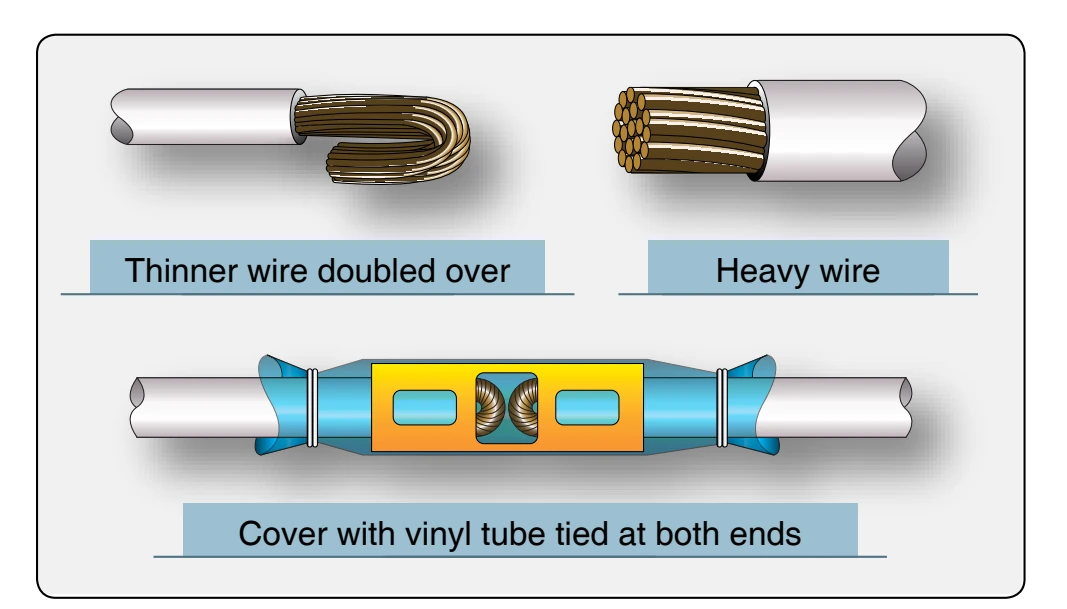
wire with approximately four turns. Solder the wire turns together using 60⁄ tin-lead resin-core solder. 40
- When solder is cool, draw the sleeve over the soldered wires and tie at one end. If potting compound is available, fill the sleeve with potting material and tie securely.
- Allow the potting compound to set without touching for 4 hours. Full cure and electrical characteristics are achieved in 24 hours.
Connecting Terminal Lugs to Terminal Blocks
Terminal lugs should be installed on terminal blocks in such a manner that they are locked against movement in the direction of loosening. [Figure 4-116]
Terminal blocks are normally supplied with studs secured in place by a plain washer, an external tooth lockwasher, and a nut. In connecting terminals, a recommended practice is to place copper terminal jugs directly on top of the nut, followed with a plain washer and elastic stop nut, or with a plain washer, split steel lockwasher, and plain nut.
Aluminum terminal lugs should be placed over a plated brass plain washer, followed with another plated brass plain washer, split steel lockwasher, and plain nut or elastic stop nut. The plated brass washer should have a diameter equal to the tongue width of the aluminum terminal lug. Consult the manufacturer’s instructions for recommended dimensions of these plated brass washers. Do not place any washer in the current path between two aluminum terminal lugs or between two copper terminal lugs. Also, do not place a lockwasher directly against the tongue or pad of the aluminum terminal. To join a copper terminal lug to an aluminum terminal lug, place a plated brass plain washer over the nut that holds the stud in place; follow with the aluminum terminal lug, a plated