
Chapter 4
Engine Ignition & Electrical Systems
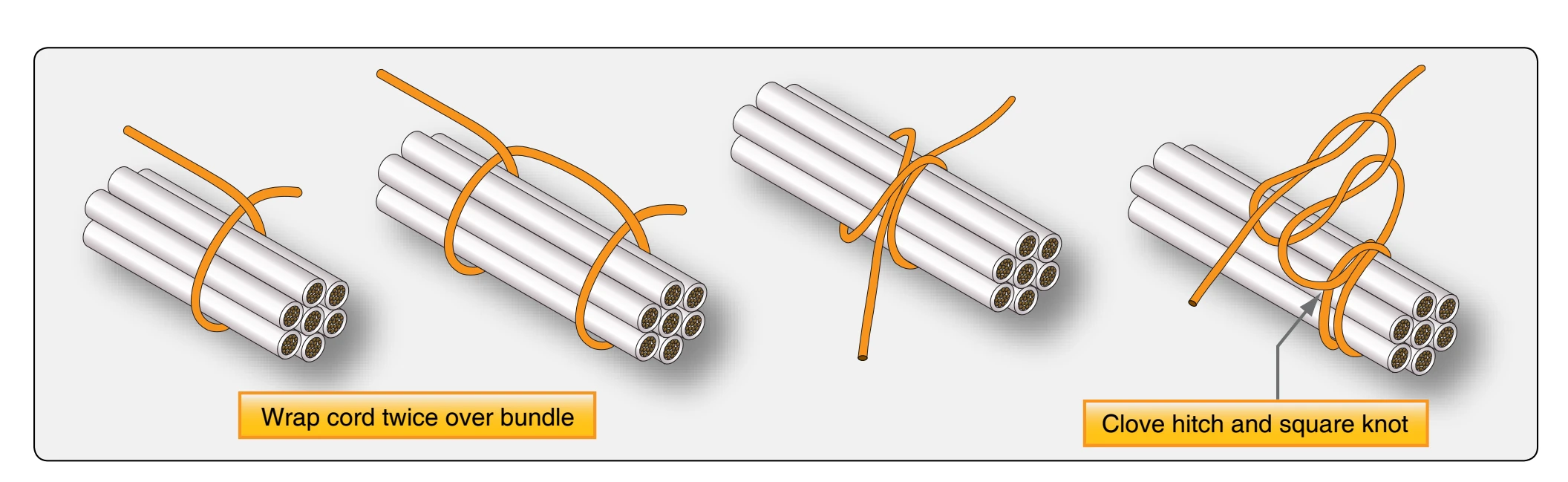
Temporary ties are sometimes used in making up and installing wire groups and bundles. Colored cord is normally used to make temporary ties, since they are removed when the installation is complete.
Whether lacing or tying, bundles should be secured tightly enough to prevent slipping, but not so tightly that the cord cuts into or deforms the insulation. This applies especially to coaxial cable, which has a soft dielectric insulation between the inner and outer conductor. Coaxial cables have been damaged by the use of lacing materials or by methods of lacing or tying wire bundles that cause a concentrated force on the cable insulation. Elastic lacing materials, smalldiameter lacing cord, and excessive tightening deform the interconductor insulation and result in short circuits or impedance changes. Flat nylon braided waxed lacing tape
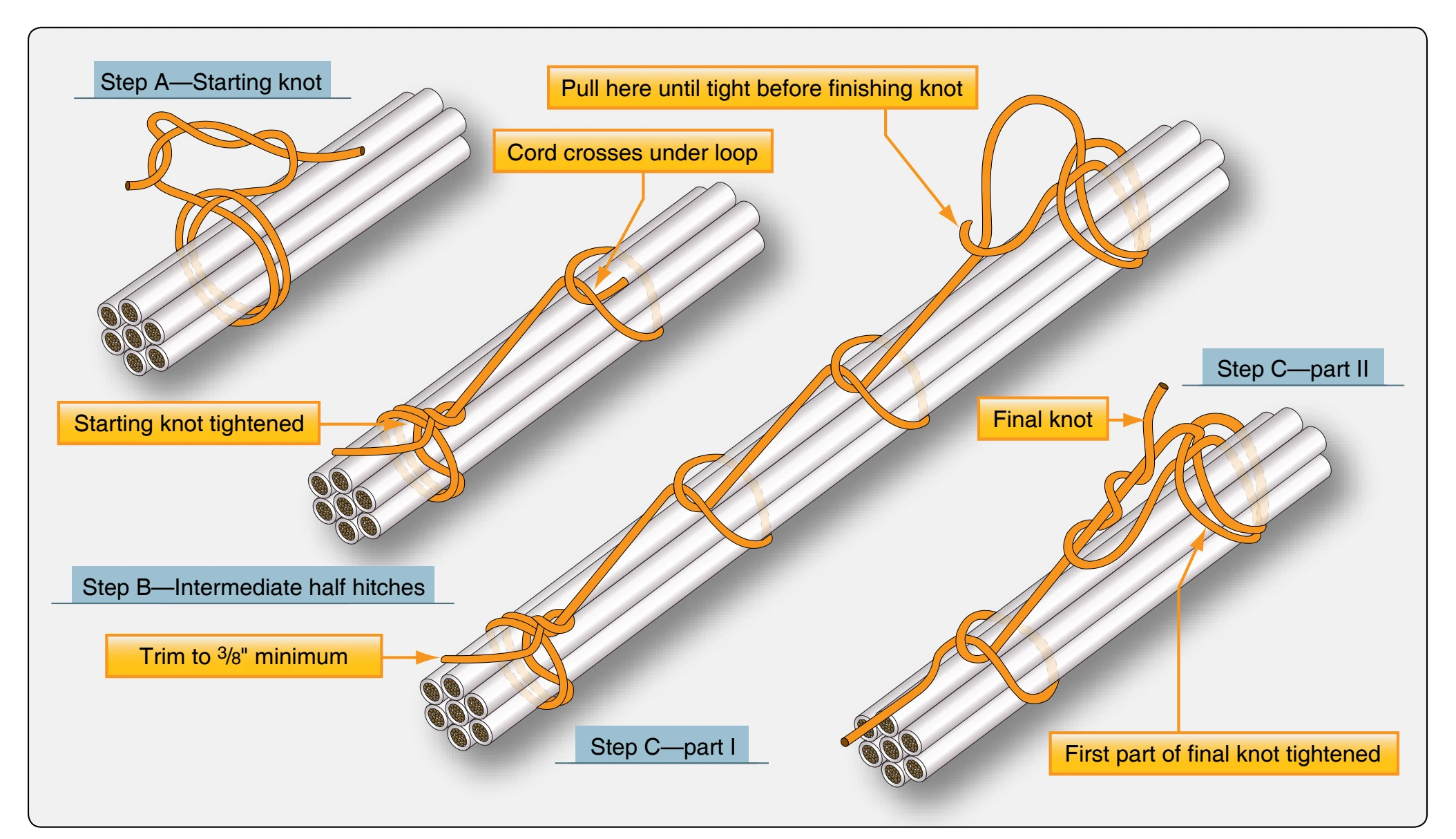
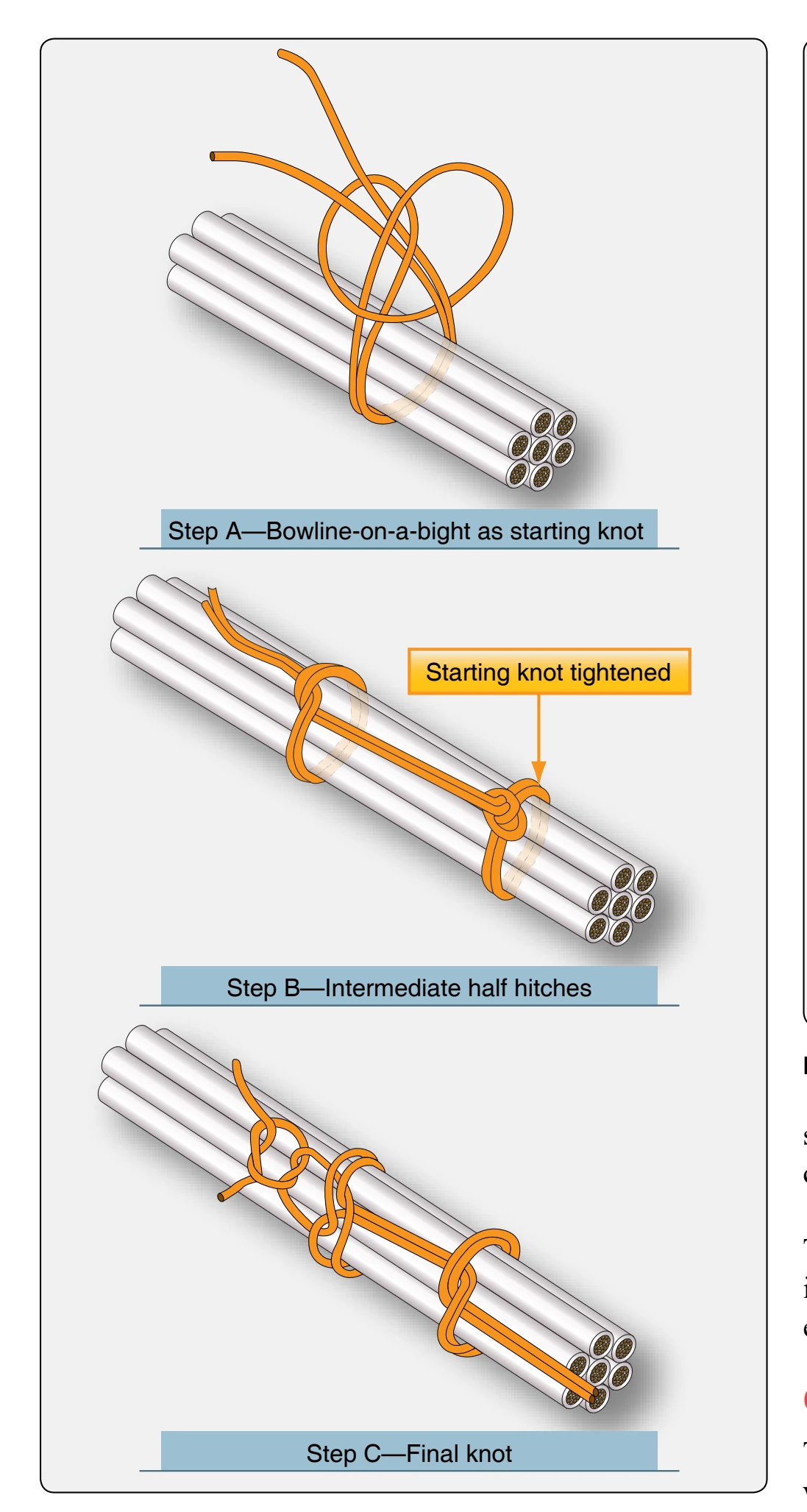
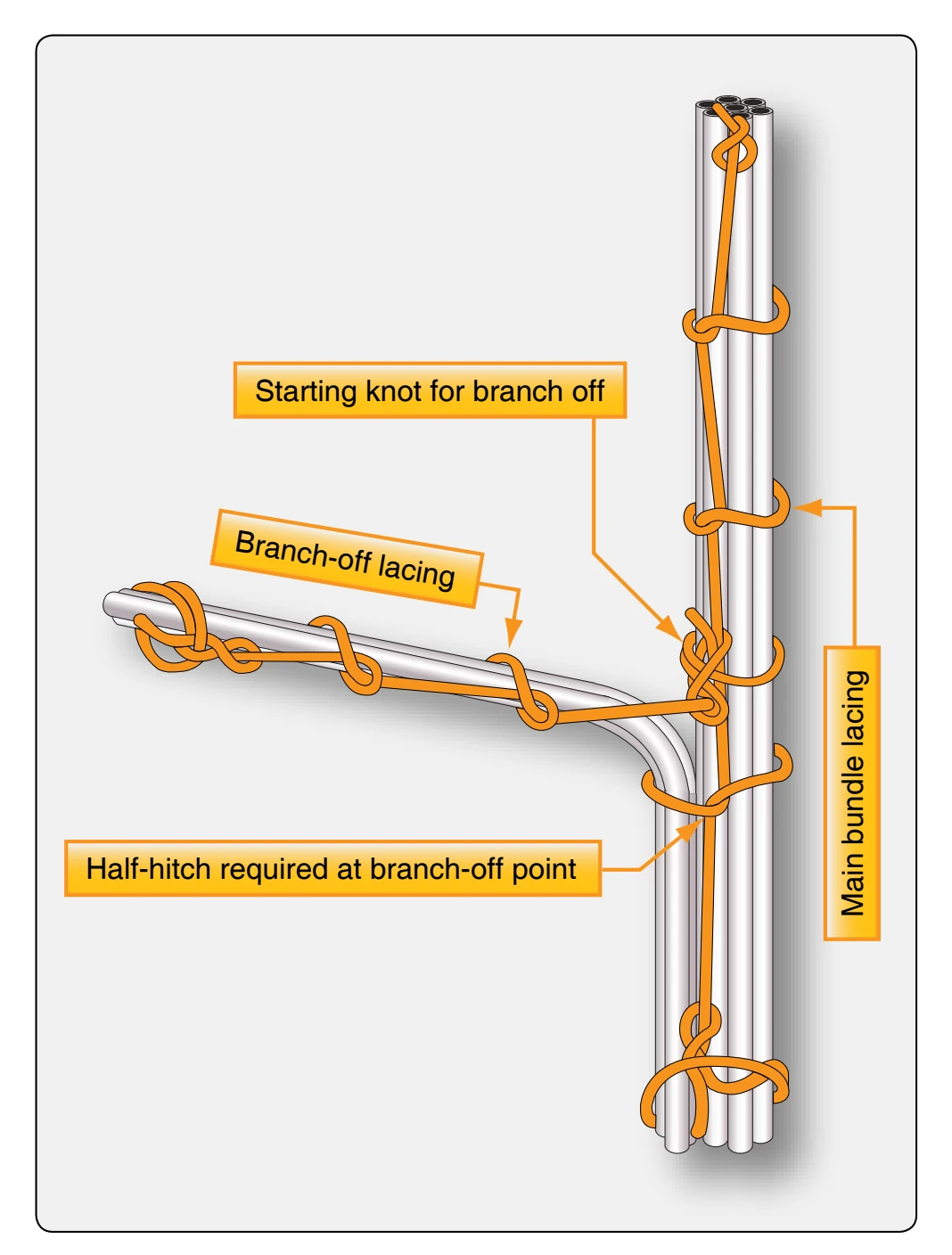
should be used for lacing or tying any wire bundles containing coaxial cables.
The part of a wire group or bundle located inside a conduit is not tied or laced; however, wire groups or bundles inside enclosures, such as junction boxes, should be laced only.
Cutting Wire & Cable
To make installation, maintenance, and repair easier, runs of wire and cable in aircraft are broken at specified locations by junctions, such as connectors, terminal blocks, or buses.
Before assembly to these junctions, wires and cables must be cut to length.
All wires and cables should be cut to the lengths specified on drawings and wiring diagrams. The cut should be made clean and square, and the wire or cable should not be deformed. If necessary, large diameter wire should be reshaped after cutting. Good cuts can be made only if the blades of cutting tools are sharp and free from nicks. A dull blade deforms and extrudes wire ends.
Stripping Wire & Cable
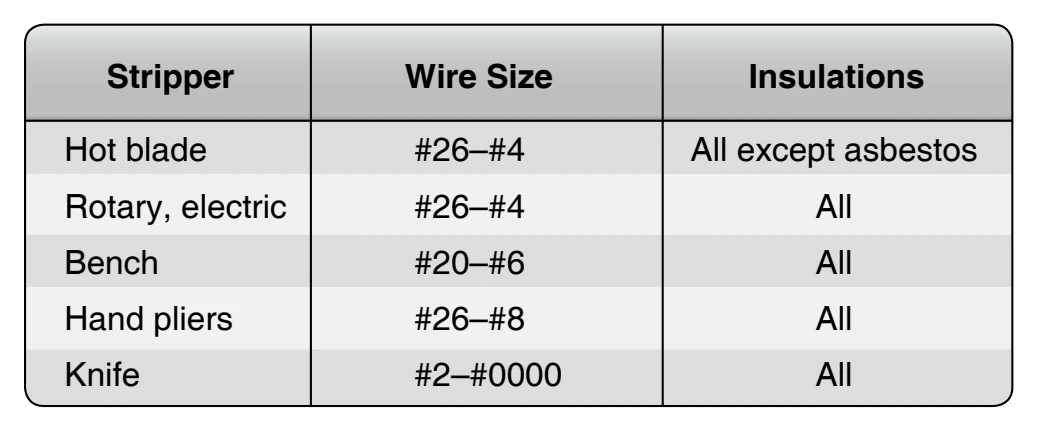
Nearly all wire and cable used as electrical conductors are covered with some type of insulation. In order to make electrical connections with the wire, a part of this insulation must be removed to expose the bare conductor. Copper wire can be stripped in a number of ways depending on the size and insulation. Figure 4-107 lists some types of stripping tools recommended for various wire sizes and types of insulation. Aluminum wire must be stripped using extreme care, since individual strands break very easily after being nicked.
The following general precautions are recommended when stripping any type of wire:
- When using any type of wire stripper, hold the wire so that it is perpendicular to the cutting blades.
- Adjust automatic stripping tools carefully; follow the manufacturer’s instructions to avoid nicking, cutting, or otherwise damaging strands. This is especially important for aluminum wires and for copper wires smaller than No. 10. Examine stripped wires for damage. Cut off and restrip, if length is sufficient, or reject and replace any wires with more than the allowable number of nicked or broken strands listed in the manufacturer’s instructions.
- Make sure insulation is clean cut with no frayed or ragged edges. Trim, if necessary.
- Make sure all insulation is removed from stripped area. Some types of wires are supplied with a transparent layer of insulation between the conductor and the primary insulation. If this is present, remove it.
- When using hand wire strippers to remove lengths of
insulation longer than 3⁄ inch, it is easier to accomplish 4 in two or more operations.
- Retwist copper strands by hand or with pliers, if necessary, to restore natural lay and tightness of strands.
A pair of hand wire strippers is shown in Figure 4-108. This tool is commonly used to strip most types of wire. The following general procedures describe the steps for stripping wire with a hand stripper. [Figure 4-109]