
Chapter 4
Engine Ignition & Electrical Systems
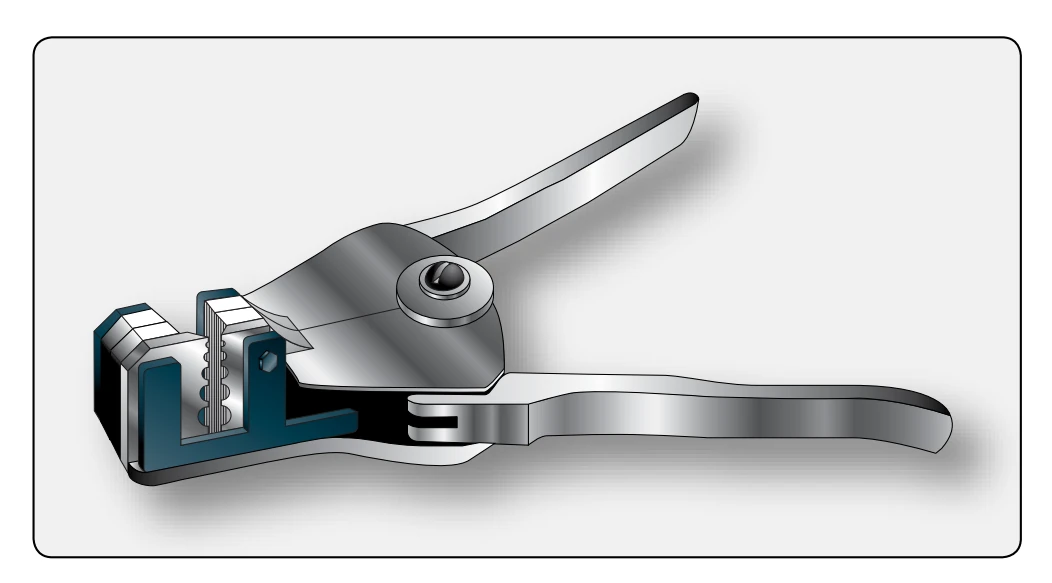
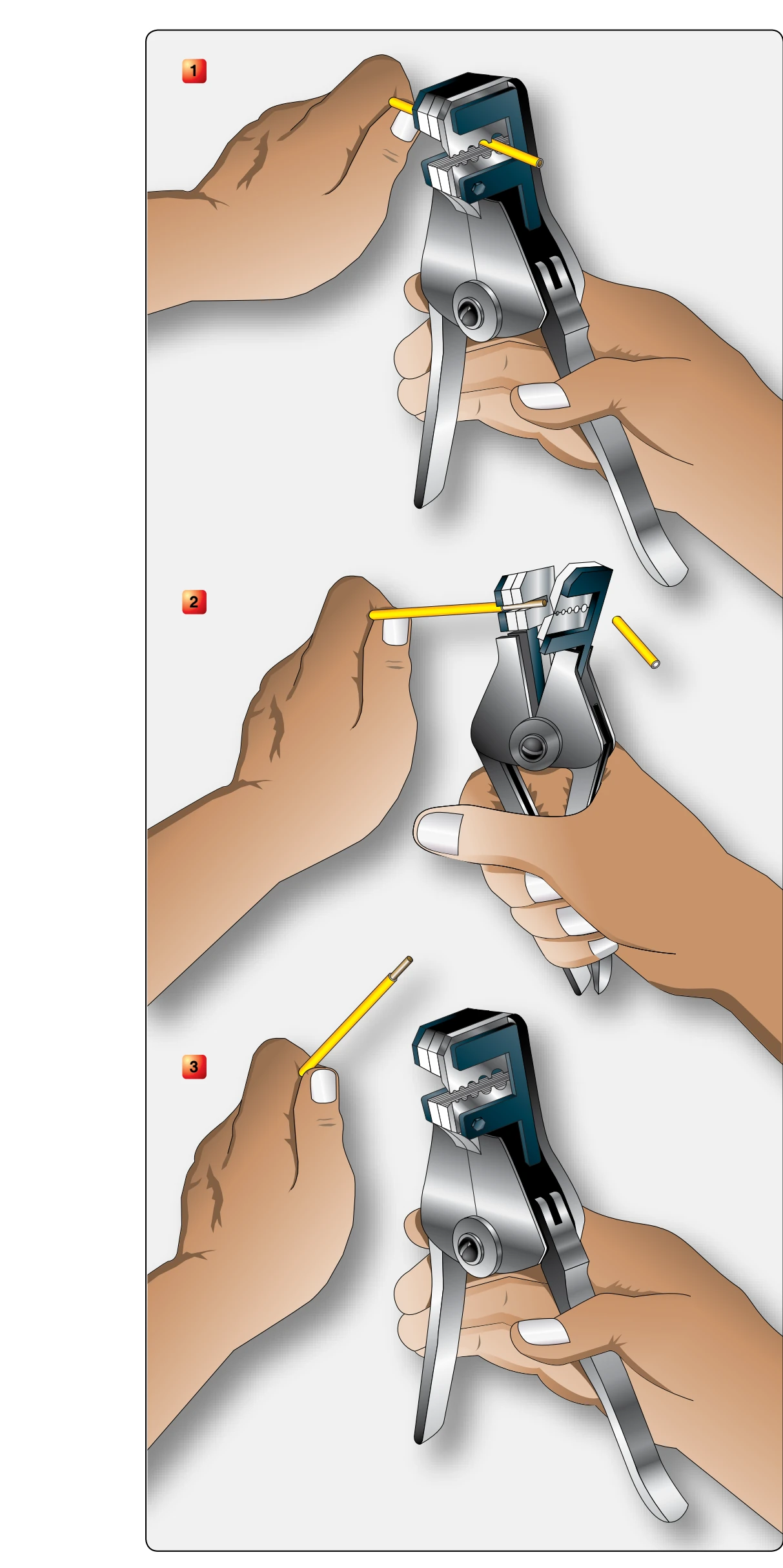
- Insert wire into exact center of correct cutting slot for wire size to be stripped. Each slot is marked with wire size.
- Close handles together as far as they will go.
- Release handles allowing wire holder to return to the open position.
- Remove stripped wire.
Solderless Terminals & Splices
Splicing of electrical cable should be kept to a minimum and avoided entirely in locations subject to extreme vibrations. Individual wires in a group or bundle can usually be spliced if the completed splice is located where it can be inspected periodically. The splices should be staggered so that the bundle does not become excessively enlarged. Many types of aircraft splice connectors are available for splicing individual wires. Self-insulated splice connectors are usually preferred; however, a noninsulated splice connector can be used if the splice is covered with plastic sleeving secured at both ends. Solder splices may be used, but they are particularly brittle and not recommended.
Electric wires are terminated with solderless terminal lugs to permit easy and efficient connection to and disconnection from terminal blocks, bus bars, or other electrical equipment. Solderless splices join electric wires to form permanent continuous runs. Solderless terminal lugs and splices are made of copper or aluminum and are preinsulated or uninsulated, depending on the desired application.
Terminal lugs are generally available in three types for use in different space conditions. These are the flag, straight, and right-angle lugs. Terminal lugs are crimped, sometimes called staked or swaged, to the wires by means of hand or power crimping tools.
Copper Wire Terminals
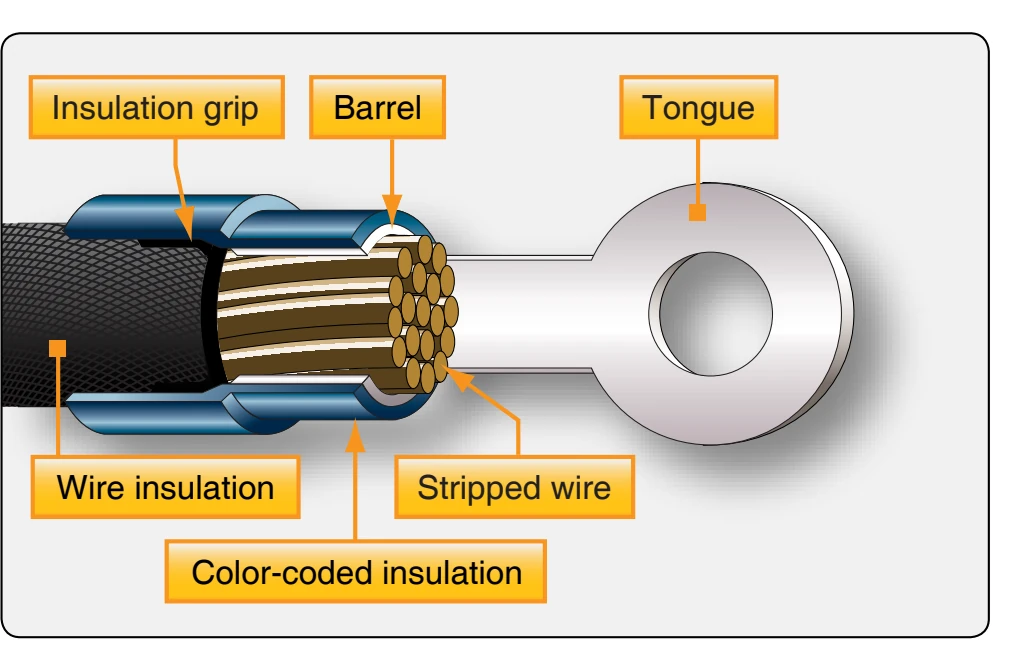
Copper wires are terminated with solderless, preinsulated straight copper terminal lugs. The insulation is part of the terminal lug and extends beyond its barrel so that it covers a portion of the wire insulation, making the use of an insulation sleeve unnecessary. [Figure 4-110]
In addition, preinsulated terminal lugs contain an insulation grip (a metal reinforcing sleeve) beneath the insulation for extra gripping strength on the wire insulation. Preinsulated terminals accommodate more than one size of wire; the insulation is usually color coded to identify the wire sizes that can be terminated with each of the terminal lug sizes.
Crimping Tools
Hand, portable power, and stationary power tools are available for crimping terminal lugs. These tools crimp the barrel of the terminal lug to the conductor and simultaneously crimp the insulation grip to the wire insulation.
Hand crimping tools all have a self-locking ratchet that prevents opening the tool until the crimp is complete. Some hand crimping tools are equipped with a nest of various size inserts to fit different size terminal lugs. Others are used on one terminal lug size only. All types of hand crimping tools are checked by gauges for proper adjustment of crimping jaws.
Figure 4-111 shows a terminal lug inserted into a hand tool. The following general guidelines outline the crimping procedure:
- Strip the wire insulation to proper length.
- Insert the terminal lug, tongue first, into the hand tool barrel crimping jaws until the terminal lug barrel butts flush against the tool stop.
- Insert the stripped wire into the terminal lug barrel until the wire insulation butts flush against the end of the barrel.
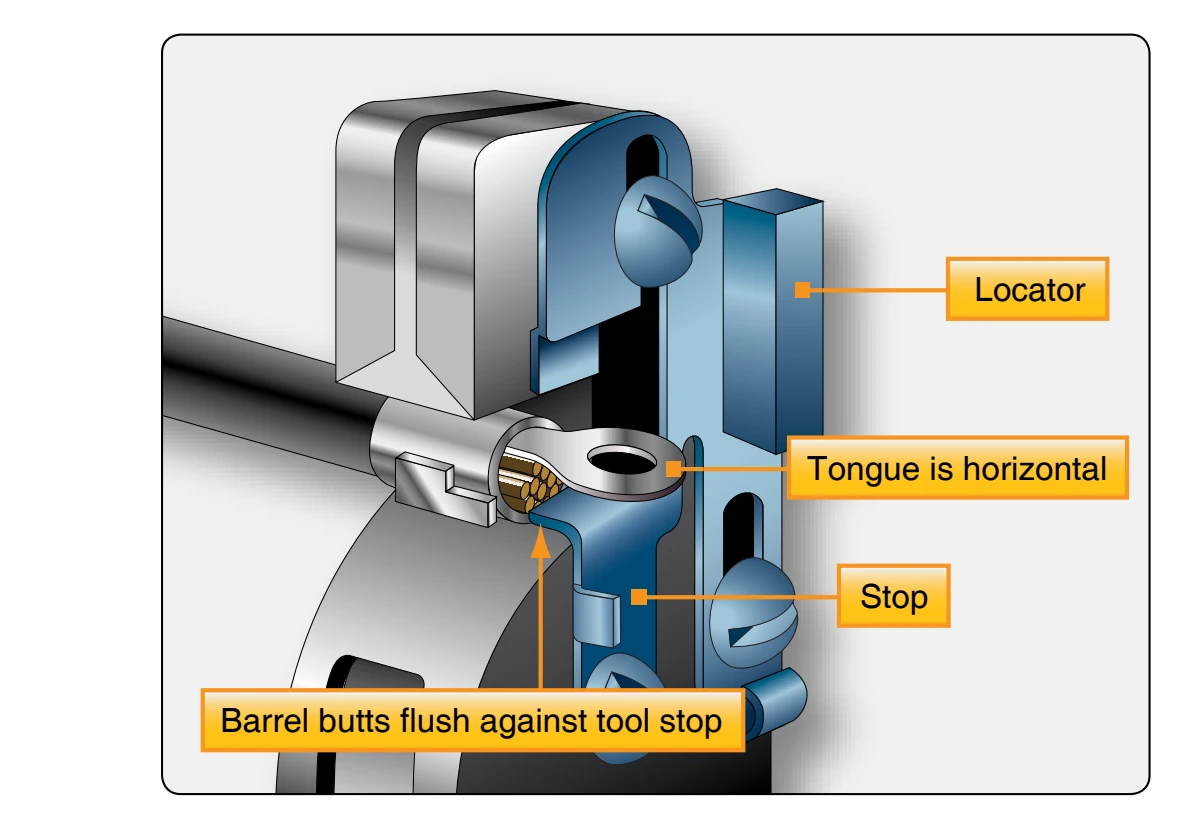
- Squeeze the tool handles until the ratchet releases.
- Remove the completed assembly and examine it for proper crimp.
Some types of uninsulated terminal lugs are insulated after assembly to a wire by means of pieces of transparent flexible tubing called sleeves. The sleeve provides electrical and mechanical protection at the connection. When the size of the sleeves used is such that it fits tightly over the terminal lug, the sleeves need not be tied; otherwise, it should be tied with lacing cord [Figure 4-112]