
Chapter 6
Lubrication & Cooling Systems
Oil tanks are generally associated with a dry sump lubrication system, while a wet sump system uses the crankcase of the engine to store the oil. Oil tanks are usually constructed of aluminum alloy and must withstand any vibration, inertia, and fluid loads expected in operation.
Each oil tank used with a reciprocating engine must have expansion space of not less than the greater of 10 percent
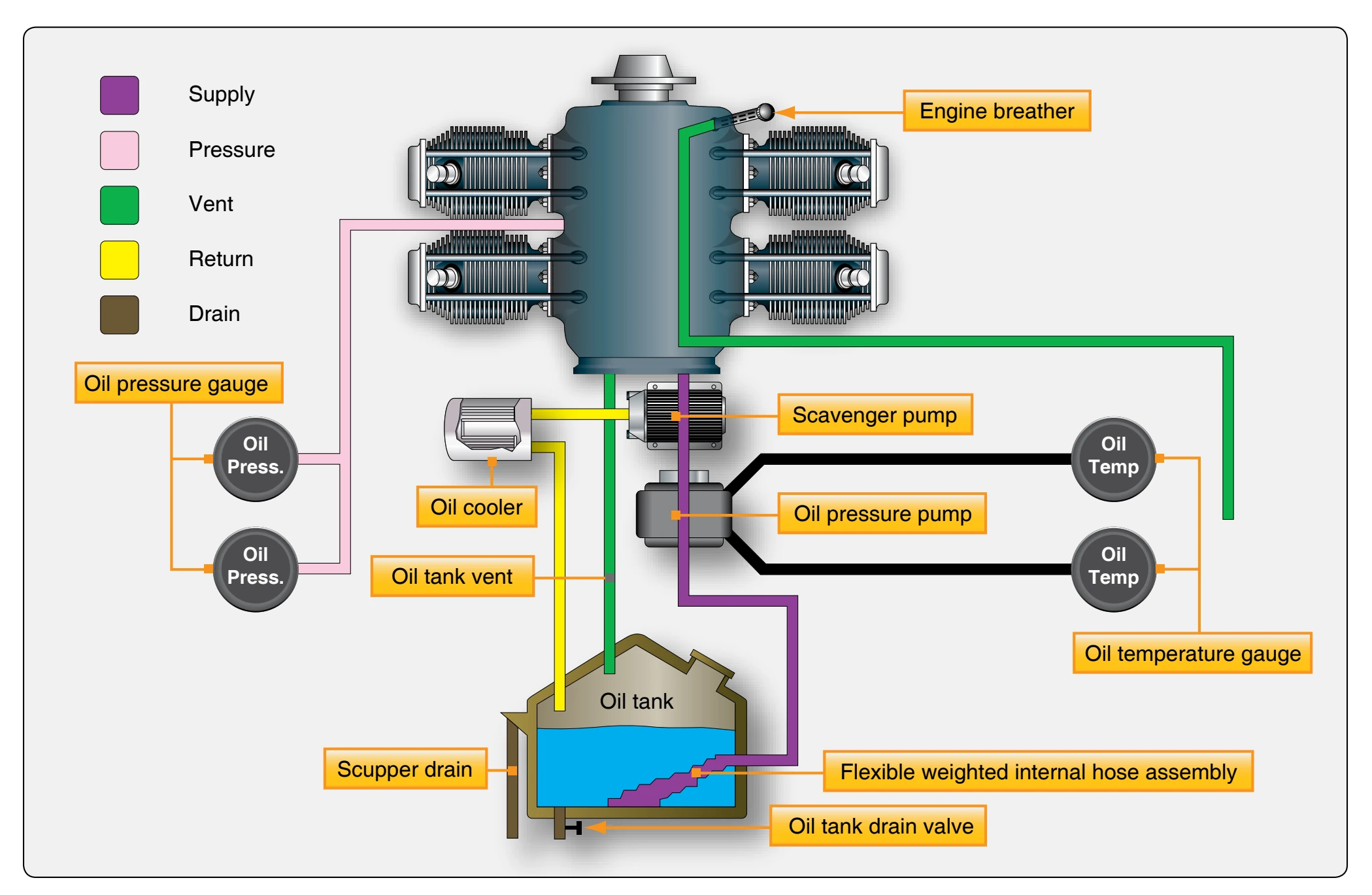
of the tank capacity or 0.5 gallons. Each filler cap of an oil tank that is used with an engine must provide an oil-tight seal. The oil tank usually is placed close to the engine and high enough above the oil pump inlet to ensure gravity feed.
Oil tank capacity varies with the different types of aircraft, but it is usually sufficient to ensure an adequate supply of oil for the total fuel supply. The tank filler neck is positioned to provide sufficient room for oil expansion and for foam to collect.
The filler cap or cover is marked with the word OIL. A drain in the filler cap well disposes of any overflow caused by the filling operation. Oil tank vent lines are provided to ensure proper tank ventilation in all attitudes of flight. These lines are usually connected to the engine crankcase to prevent the loss of oil through the vents. This indirectly vents the tanks to the atmosphere through the crankcase breather.
Early large radial engines had many gallons of oil in their tank. To help with engine warm up, some oil tanks had a builtin hopper or temperature accelerating well. [Figure 6-5] This well extended from the oil return fitting on top of the oil tank to the outlet fitting in the sump in the bottom of the tank. In some systems, the hopper tank is open to the main oil supply at the lower end. Other systems have flapper-type valves that separate the main oil supply from the oil in the hopper. The opening at the bottom of the hopper in one type and the flapper valve-controlled openings in the other allow oil from the main tank to enter the hopper and replace the oil consumed by the engine. Whenever the hopper tank includes
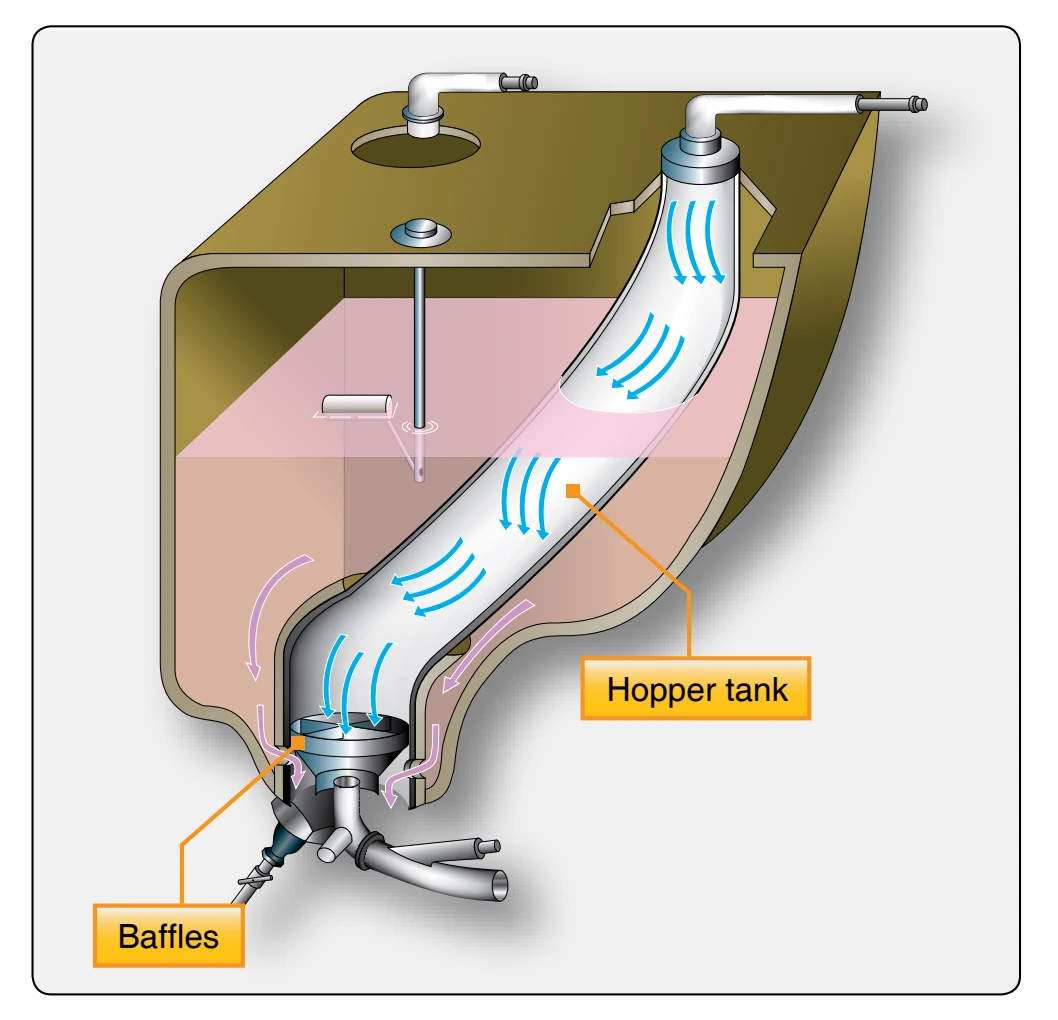
the flapper controlled openings, the valves are operated by differential oil pressure. By separating the circulating oil from the surrounding oil in the tank, less oil is circulated. This hastens the warming of the oil when the engine was started. Very few of these types of tanks are still in use and most are associated with radial engine installations.
Generally, the return line in the top of the tank is positioned to discharge the returned oil against the wall of the tank in a swirling motion. This method considerably reduces foaming that occurs when oil mixes with air. Baffles in the bottom of the oil tank break up this swirling action to prevent air from being drawn into the inlet line of the oil pressure pump. Foaming oil increases in volume and reduces its ability to provide proper lubrication. In the case of oil-controlled propellers, the main outlet from the tank may be in the form of a standpipe so that there is always a reserve supply of oil for propeller feathering in case of engine failure. An oil tank sump, attached to the undersurface of the tank, acts as a trap for moisture and sediment. [Figure 6-4] The water and sludge can be drained by manually opening the drain valve in the bottom of the sump.
Most aircraft oil systems are equipped with the dipstick-type quantity gauge, often called a bayonet gauge. Some larger aircraft systems also have an oil quantity indicating system that shows the quantity of oil during flight. One type system consists essentially of an arm and float mechanism that rides the level of the oil and actuates an electric transmitter on top of the tank. The transmitter is connected to a flight deck gauge that indicates the quantity of oil.
Oil Pump
Oil entering the engine is pressurized, filtered, and regulated by units within the engine. They are discussed along with the external oil system to provide a concept of the complete oil system.
As oil enters the engine, it is pressurized by a gear-type pump. [Figure 6-6] This pump is a positive displacement pump that consists of two meshed gears that revolve inside the housing. The clearance between the teeth and housing is small. The pump inlet is located on the left and the discharge port is connected to the engine’s system pressure line. One gear is attached to a splined drive shaft that extends from the pump housing to an accessory drive shaft on the engine. Seals are used to prevent leakage around the drive shaft. As the lower gear is rotated counterclockwise, the driven idler gear turns clockwise.
As oil enters the gear chamber, it is picked up by the gear teeth, trapped between them and the sides of the gear chamber, then it is carried around the outside of the gears and discharged from the pressure port into the oil screen passage. The pressurized oil flows to the oil filter, where any solid particles suspended in the oil are separated from it, preventing possible damage to moving parts of the engine.
Oil under pressure then opens the oil filter check valve mounted in the top of the filter. This valve is used mostly
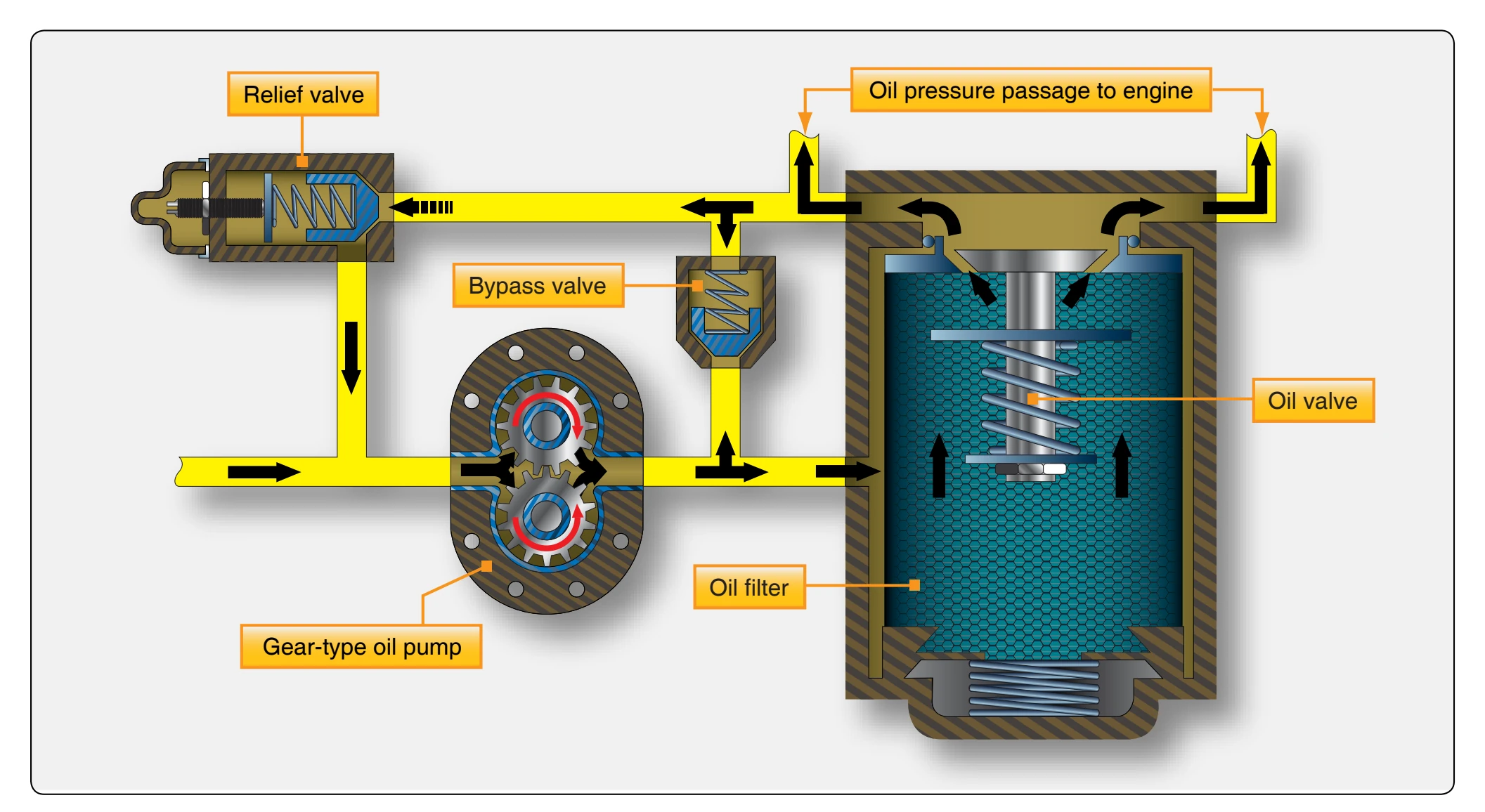
with dry sump radial engines and is closed by a light spring loading of 1 to 3 pounds per square inch (psi) when the engine is not operating to prevent gravity-fed oil from entering the engine and settling in the lower cylinders or sump area of the engine. If oil were allowed to gradually seep by the rings of the piston and fill the combustion chamber, it could cause a liquid lock. This could happen if the valves on the cylinder were both closed, and the engine was cranked for start. Damage could occur to the engine.
The oil filter bypass valve, located between the pressure side of the oil pump and the oil filter, permits unfiltered oil to bypass the filter and enter the engine if the oil filter is clogged or during cold weather if congealed oil is blocking the filter during engine start. The spring loading on the bypass valve allows the valve to open before the oil pressure collapses the filter; in the case of cold, congealed oil, it provides a low-resistance path around the filter. Dirty oil in an engine is better than no lubrication.