
Chapter 8
Engine Removal & Replacement
Dehydrating Agents
There are a number of substances (referred to as desiccants) that can absorb moisture from the atmosphere in sufficient quantities to be useful as dehydrators. One of these is silica gel. This gel is an ideal dehydrating agent since it does not dissolve when saturated.
As a corrosion preventive, bags of silica gel are placed around and inside various accessible parts of a stored engine. It is also used in clear plastic plugs, called dehydrator plugs, that can be screwed into engine openings, such as the spark plug holes. Cobalt chloride is added to the silica gel used in dehydrator plugs. This additive makes it possible
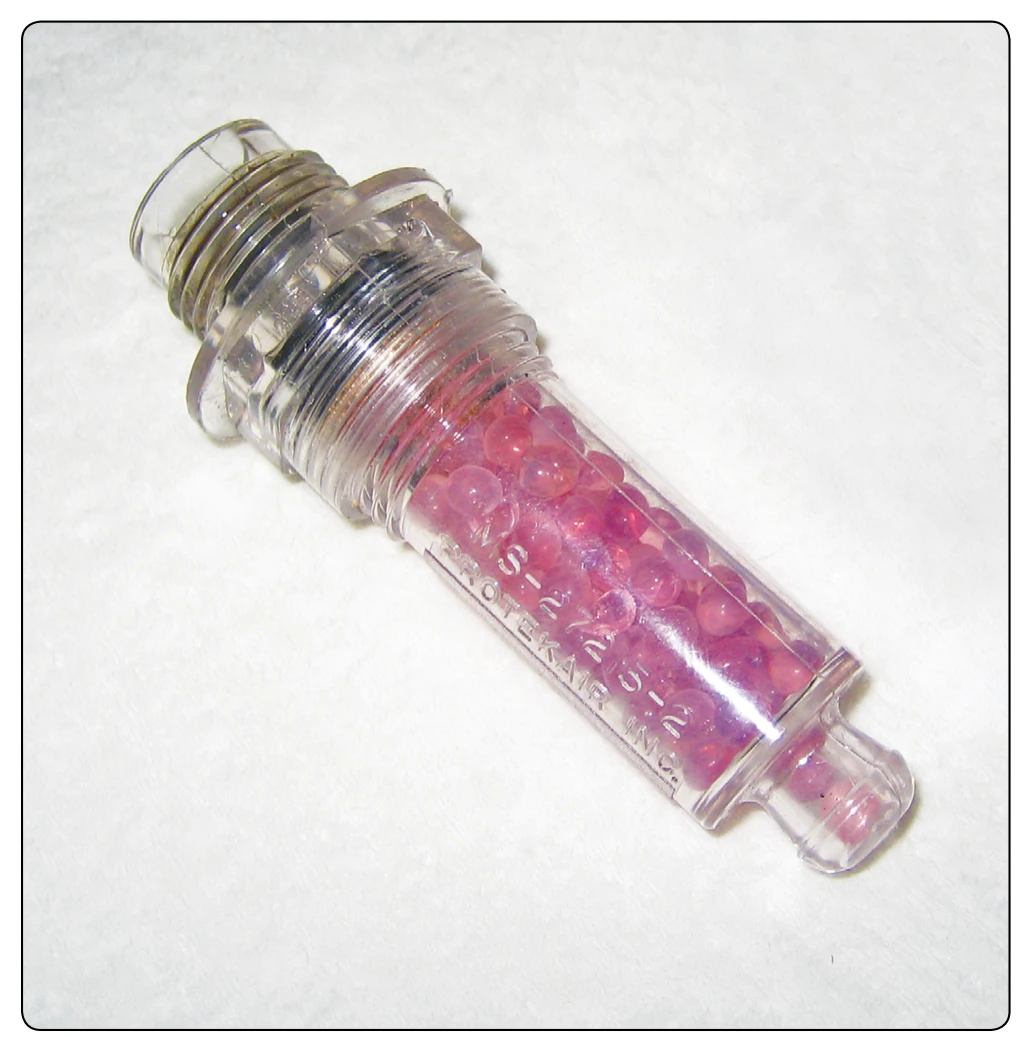
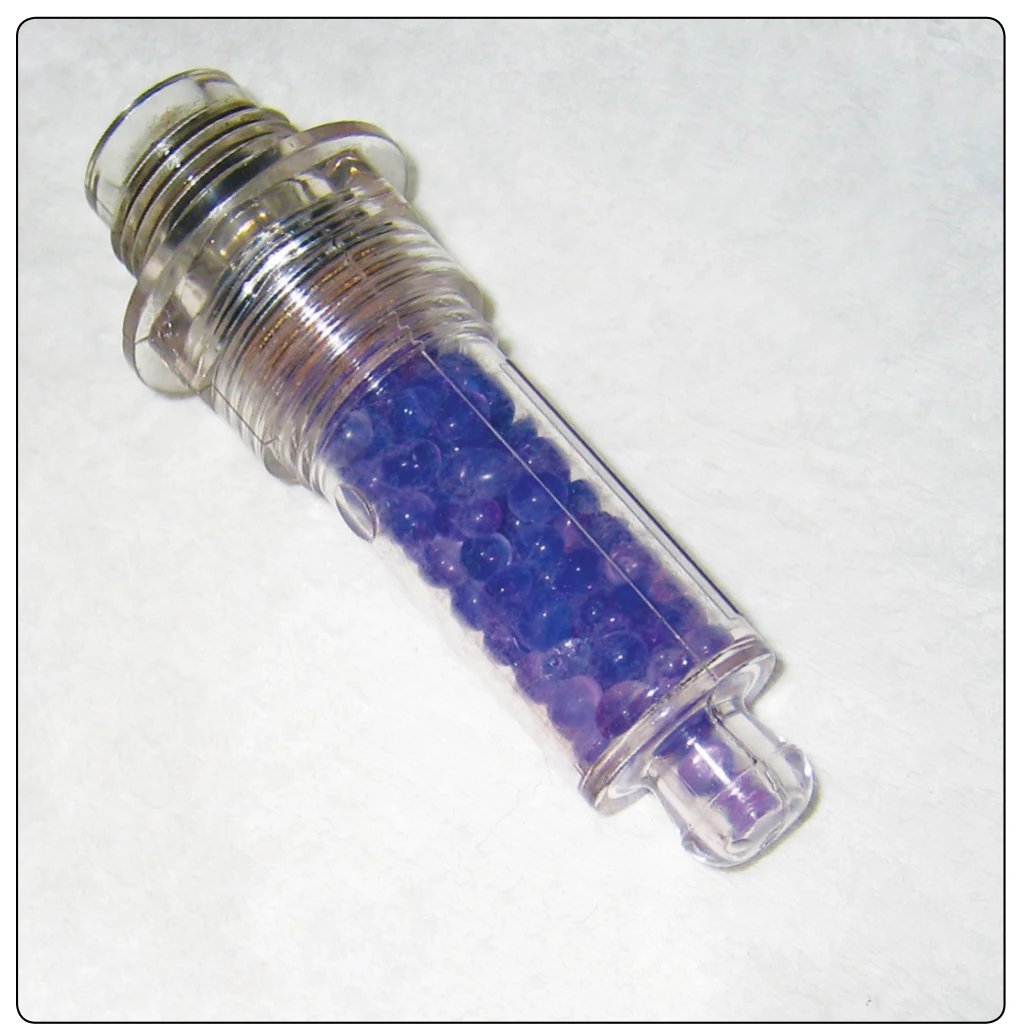
for the plugs to indicate the moisture content, or relative humidity, of the air surrounding the engine. The cobaltchloride-treated silica gel remains a bright blue color with low relative humidity; as the relative humidity increases, the shade of the blue becomes progressively lighter, becoming lavender at 30 percent relative humidity and fading through the various shades of pink [Figure 8-18], until at 60 percent relative humidity it is a natural or white color. Some types of dehydrator plugs can be dried by removing the silica gel and heating the gel to dry it out, returning it to its original blue color. [Figure 8-19] When the relative humidity is less than 30 percent, corrosion does not normally take place. Therefore, if the dehydrator plugs are bright blue, the air in the engine has so little moisture that internal corrosion is held to a minimum. This same cobalt-chloride-treated silica gel is used in humidity indicator envelopes. These envelopes can be fastened to the stored engine so that they can be inspected through a small window in the shipping case or metal engine container. All desiccants are sealed in containers to prevent their becoming saturated with moisture before they are used. Care should be taken never to leave the container open or improperly closed.
Engine Preservation & Return to Service
Before an engine is placed in temporary or indefinite storage, it should be operated and filled with a corrosion-preventive oil mixture added in the oil system to retard corrosion by coating the engine’s internal parts. Drain the normal lubricating oil from the sump or system and replace with a preservative oil mixture according to the manufacturer’s instructions. Operate the engine until normal operating temperatures are obtained for at least one hour.
Always take the appropriate precautions when turning or working around a propeller. After the flight, remove all the spark plug leads and the top spark plugs.
To prevent corrosion, spray each cylinder interior with corrosion-preventive mixture to prevent moisture and oxygen from contacting the deposits left by combustion. Spray the cylinders by inserting the nozzle of the spray gun into each spark plug hole and playing the gun to cover as much area as possible. Before spraying, each cylinder to be treated should be at the bottom center position and the oil at room temperature. This allows the entire inside of the cylinder to become coated with corrosion-preventive mixture. After spraying each engine cylinder at bottom center, respray each cylinder while the crankshaft is stationary with none of the cylinder’s pistons at top dead center.
The crankshaft must not be moved after this final spraying, or the seal of corrosion-preventive mixture between the pistons and cylinder walls are broken. Air can then enter past the pistons into the engine. Also, the coating of corrosionpreventive mixture on the cylinder walls is scraped away, exposing the bare metal to possible corrosion. The engine should have a sign attached similar to the following: “DO NOT TURN CRANKSHAFT—ENGINE PRESERVED PRESERVATION DATE ____________.”
When preparing the engine for storage, dehydrator plugs are
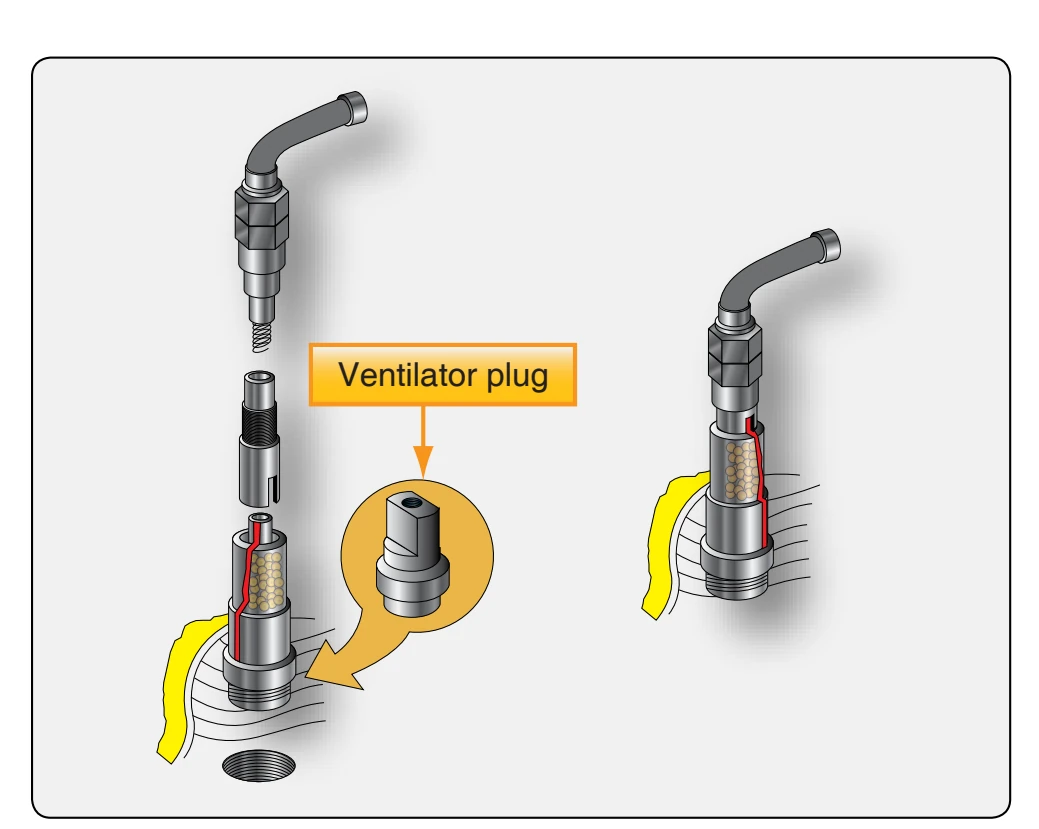
screwed into the spark plug opening of each cylinder. If the engine is to be stored in a wooden shipping case, the ignition harness leads are attached to the dehydrator plugs with lead supports. [Figure 8-20] Special ventilatory plugs are installed in the spark plug holes of an engine stored horizontally in a storage container. Any engine being prepared for storage must receive thorough treatment around the exhaust ports. Because the residue of exhaust gases is potentially very corrosive, a corrosion-preventive mixture must be sprayed into each exhaust port, including the exhaust valve. After the exhaust ports have been thoroughly coated, a moisture-proof and oil-proof gasket backed by a metal or wooden plate should be secured over the exhaust ports using the exhaust stack mounting studs and nuts. These covers form a seal to prevent moisture from entering the interior of the engine through the exhaust ports. Engines stored in metal containers usually have special ventilatory covers. Another point at which the engine must be sealed is the intake manifold. If the carburetor is to remain on the engine during storage, the throttle valve should be wired open and a seal installed over the air inlet. But, if the carburetor is removed and stored separately, the seal is made at the carburetor mounting pad. The seal used in either instance can be an oil-proof and moisture-proof gasket, backed by a wooden or metal plate securely bolted into place. Silica gel should be placed in the intake manifold to absorb moisture. The silica gel bags are usually suspended from the cover plate. This eliminates the possibility of forgetting to remove the silica gel bags when the engine is eventually removed from storage. A ventilatory cover, without silica gel bags attached, can be used when the engine is stored in a metal container.
After the following details have been taken care of, the engine is ready to be packed into its container. If the engine has not been spray coated with corrosion-preventive mixture, the propeller shaft and propeller shaft thrust bearing must be coated with the compound. Then, a plastic sleeve, or moisture-proof paper, is secured around the shaft, and a threaded protector cap is screwed onto the propeller retaining nut threads.
All engine openings into which dehydrator plugs (or ventilatory plugs if the engine is stored in a metal container) have not been fitted must be sealed. At points where corrosion-preventive mixture can seep from the interior of the engine, such as the oil inlet and outlet, oil-proof and moisture-proof gasket material backed by a metal or wooden plate should be used. At other points moisture-proof tape can be used if it is carefully installed.
Before its installation in a shipping container, the engine should be carefully inspected to determine if the following accessories, which are not a part of the basic engine, have been removed: spark plugs and spark plug thermocouples, remote fuel pump adapters (if applicable), propeller hub attaching bolts (if applicable), starters, generators, vacuum pumps, hydraulic pumps, propeller governors, and enginedriven fuel pumps.
- Remove seals and all desiccant bags.
- Remove cylinder dehydrators and plugs or spark plugs from upper and lower spark plug holes.
- Remove oil sump drain plug and drain the corrosion preventive mixture. Replace drain plug, torque and safety. Remove oil filter. Install new oil filter, torque and safety. Service the engine with oil in accordance with the manufacturer’s instructions.
- Disconnect all spark plug leads.
- Verify that magneto switches are connected to magnetos and that they are in the off position and P-leads are grounded.
- Throttle position CLOSED.
- Mixture control IDLE-CUT-OFF.
- Set brakes and block aircraft wheels. Ensure that aircraft tiedowns are installed and verify that the cabin door latch is open.
- Do not stand within the arc of the propeller blades while turning the propeller.