
Chapter 8
Engine Removal & Replacement
Spectrometric Oil Analysis Engine Inspection Program
Spectrometric oil analysis program allows an oil sample to be analyzed and searched for the presence of minute metallic elements. Due to oil circulation throughout an aircraft engine, every lubricant that is in service contains microscopic particles of metallic elements called wear metals. As the engine operates over a certain amount of time, the oil picks up very small particles that stay suspended in the oil. Oil analysis programs identify and measure these particles in parts per million (PPM) by weight. The analyzed elements are grouped into categories, such as wear metals and additives, and their measurement in PPM provides the data that expert analysts can use as one of many tools to determine the engine’s condition. If certain metals have an increase in PPM, it can be a signal of component wear or pending failure of the engine. The amount of wear metals is recorded and noted each time a sample is taken. If the amount of wear metals increases beyond a normal rate, then the operator can be notified quickly so repair, a recommended specific maintenance procedure, or inspection can be ordered.
The advantage of oil analysis is an increase in safety by noticing an engine problem before engine failure. It also saves money by finding engine problems before they become large problems or complete engine failure. This procedure can be used for both turbine and reciprocating engines. Oil analysis can be used to diagnose impending engine failure and would be a reason for removing the engine from the aircraft and sending it to overhaul.
Turbine Engine Condition Monitoring Programs
Many turbine engines are monitored by an engine condition program that helps determine the health of the engine in service. This can also be called trend analysis performance monitoring, but it consists mainly of monitoring certain engine parameters daily and watching for trend shifts or changes in the engine parameters. A shift in key parameters (change over time) could be a warning that the engine has serious internal deterioration and should be overhauled.
Engine Operational Problems
Engines are usually removed when there are consistent engine operational problems. Engine operational problems generally include, but are not limited to, one or more of the following conditions:
- Excessive engine vibration; this is especially true with turbine engines.
- Backfiring, or misfiring, either consistent or intermittent due to valve train or other mechanical defect in reciprocating engines.
- Turbine engines that exceed normal operating parameters or life limited components exceeding maximum time in service or cycles.
- Low power output, generally caused by low compression, with reciprocating engines and internal engine deterioration or damage with turbines.
General Procedures for Engine Removal & Installation
Preparation of Engines for Installation
After the decision has been made to remove an engine, the preparation of the replacement engine must be considered. The maintenance procedures and methods used vary widely. Commercial operators, whose maintenance operations require the most efficient and expeditious replacement of aircraft engines, usually rely on a system that utilizes the quick-engine-change assembly (QECA), also sometimes referred to as the engine power package. The QECA is essentially a powerplant and the necessary accessories installed in the engine.
Other operators of aircraft equipped with reciprocating engines sometimes use a different replacement method in these repair facilities because engine changes often occur at random intervals. Such replacement engines may be partially or wholly built up with the necessary accessories and subassemblies, or they may be stored as received from the manufacturer in packing boxes, cases, or cans and are uncrated and built up for installation only when needed to replace an engine.
QECA Buildup Method for Changing of Engines
Because the QECA system is most commonly used with large turbine engines used in the airlines, such engines are used to describe QECA buildup and installation procedures. Many of these procedures are applicable to all other methods of engine buildup and installation.
The following study of QECA buildup is not designed to outline procedures to follow in a practical application; always use those recommended by the manufacturer. The procedures included in this chapter provide a logical sequence in following a QECA and its components through the stages of a typical buildup to gain a better understanding of units and systems interconnection. The components of a
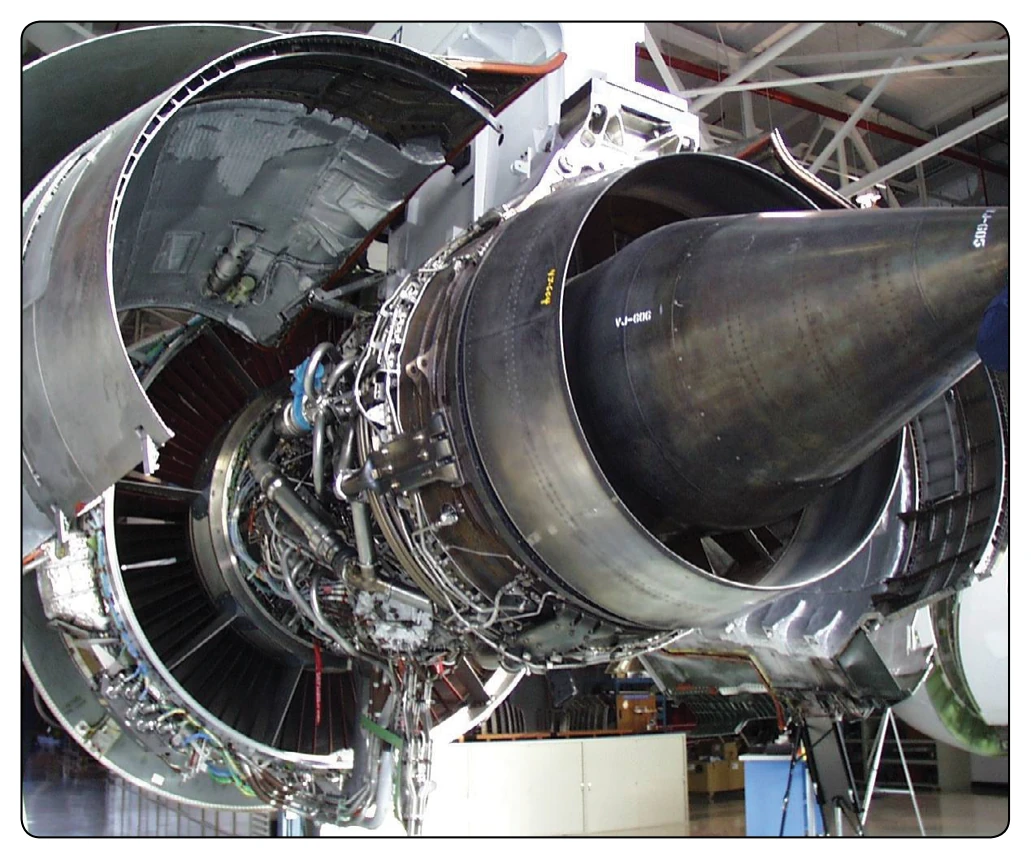
QECA are illustrated in Figure 8-1. As shown, the QECA consists of several units. On many aircraft, the engines are mounted in streamlined housings called nacelles that extend from the wings. These nacelles are divided into two main sections: wing nacelle and engine nacelle. The wing nacelle is that portion of the nacelle that is attached to the wing structure. The engine nacelle is that portion of the nacelle that is constructed separately from the wing. Also, the wing nacelles normally contain lines and units of the oil, fuel, and hydraulic systems, as well as linkages and other controls for the operation of the engine.
The firewall is usually the foremost bulkhead of the engine nacelle and differs from most other aircraft bulkheads in that it is constructed of stainless steel or some other fire-resistant material. [Figure 8-2] The primary purpose of the firewall is to
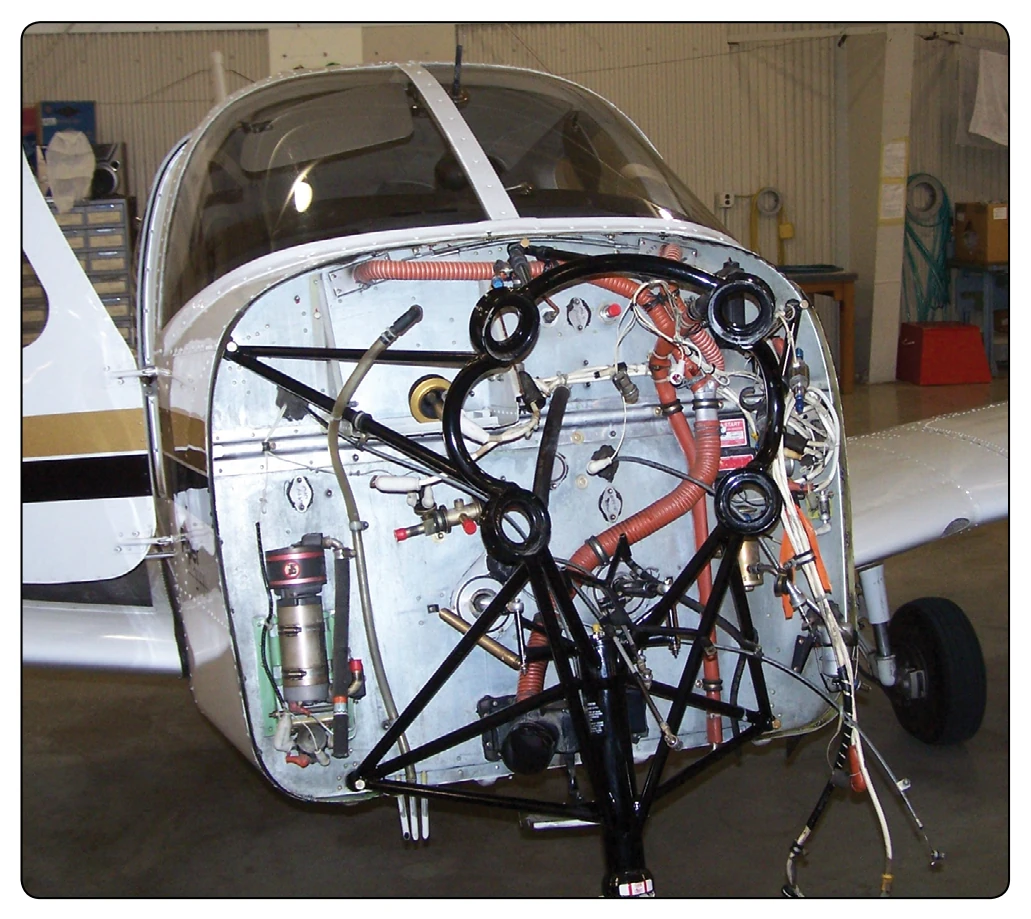
confine any engine fire to the engine nacelle. It also provides a mounting surface for units within the engine nacelle and a point of disconnect for lines, linkages, and electrical wiring that are routed between the engine and the aircraft. Without this firewall, an engine fire would have ready access to the interior of the aircraft. Since the consequences of an engine fire are obvious, the necessity of sealing all unused openings in the firewall cannot be overstressed.