Chapter 9
Engine Fire Protection Systems
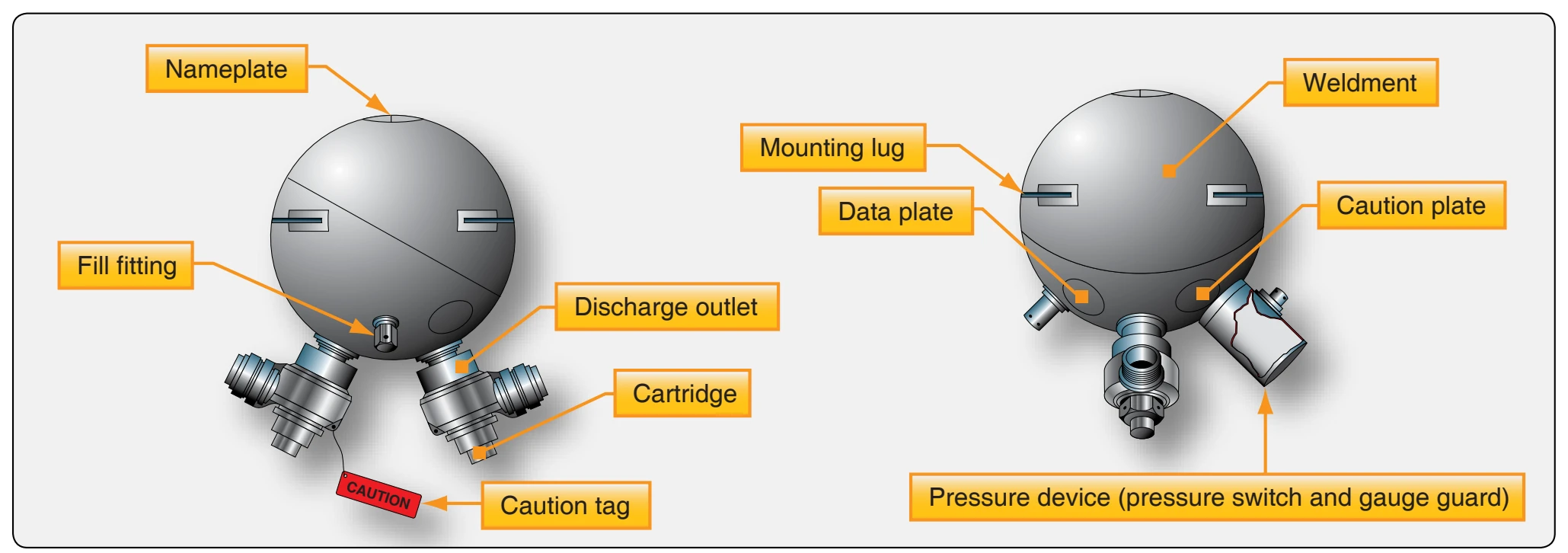
Fire extinguisher containers (HRD bottles) store a liquid halogenated extinguishing agent and pressurized gas (typically nitrogen) normally manufactured from stainless steel. Depending upon design considerations, alternate materials are available including titanium. Containers are also available in a wide range of capacities and are produced under Department of Transportation (DOT) specifications or exemptions. Most aircraft containers are spherical in design, which provides the lightest weight possible. However, cylindrical shapes are available where space limitations are a factor. Each container incorporates a temperature/pressure sensitive safety relief diaphragm that prevents container pressure from exceeding container test pressure in the event of exposure to excessive temperatures. [Figure 9-9]
Discharge Valves
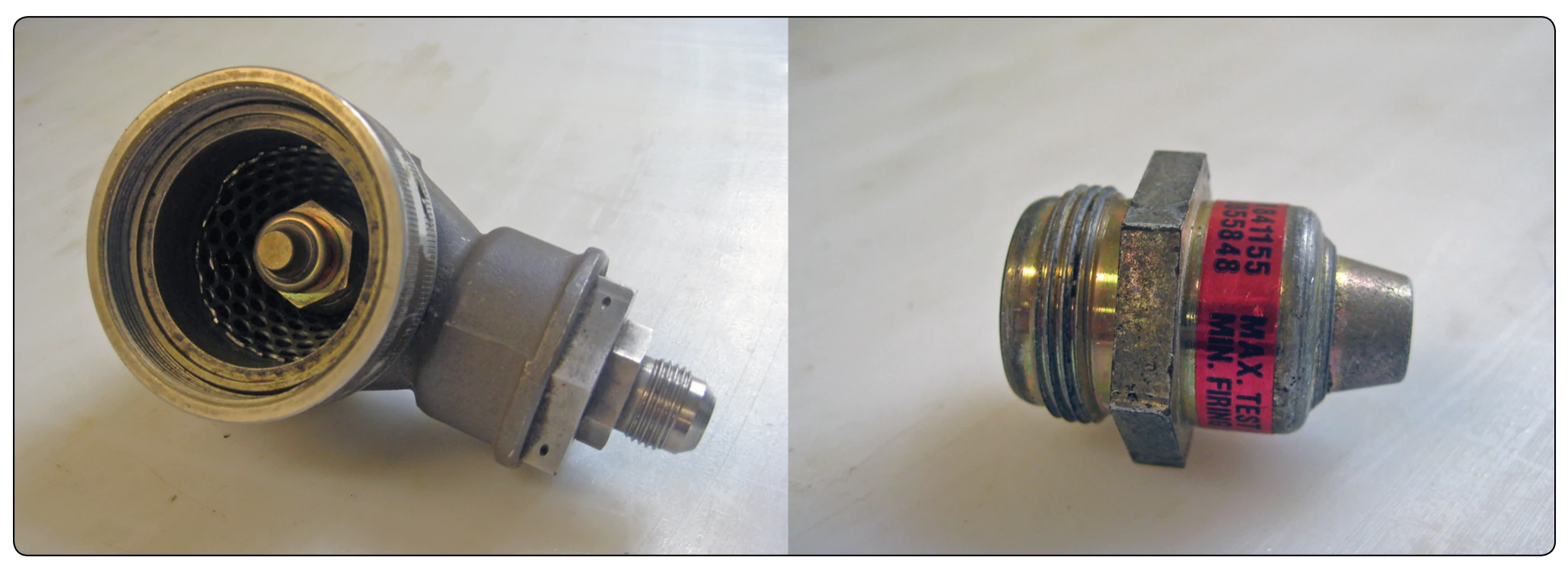
Discharge valves are installed on the containers. A cartridge (squib) and frangible disc type valve are installed in the outlet of the discharge valve assembly. Special assemblies having solenoid-operated or manually-operated seat type valves are also available. Two types of cartridge disc-release techniques are used. Standard release type uses a slug driven by explosive energy to rupture a segmented closure disc. For high temperature or hermetically sealed units, a direct explosive impact type cartridge is used, which applies fragmentation impact to rupture a prestressed corrosionresistant steel diaphragm. Most containers use conventional metallic gasket seals that facilitate refurbishment following discharge. [Figure 9-10]
Pressure Indication
A wide range of diagnostics are utilized to verify the fire extinguisher agent charge status. A simple visually indicated gauge is available, typically a vibration-resistant helical bourdon-type indicator. [see Figure 9-9]
A combination gauge switch visually indicates actual container pressure and also provides an electrical signal if container pressure is lost, precluding the need for discharge indicators. A ground checkable diaphragm-type low-pressure switch is commonly used on hermetically sealed containers. The Kidde system also has a temperature compensated pressure switch that tracks the container pressure variations with temperatures by using a hermetically sealed reference chamber.
Two-Way Check Valve
A complete line of two-way check valves is available, manufactured from either lightweight aluminum or steel. These valves are required in a two-shot system to prevent the agent in a reserve container from backing up into the previous emptied main container. Valves are supplied with either MS-33514 or MS-33656 fitting configurations.
Discharge Indicators
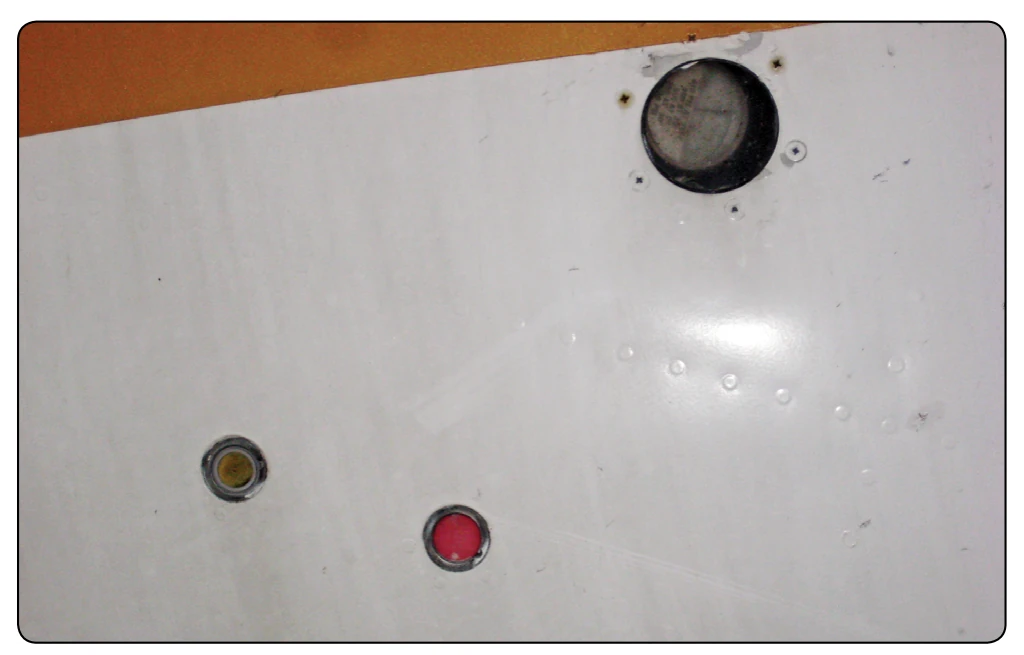
Discharge indicators provide immediate visual evidence of container discharge on fire extinguishing systems. Two kinds of indicators can be furnished: thermal and discharge. Both types are designed for aircraft and skin mounting. [Figure 9-11]
Thermal Discharge Indicator (Red Disc)
The thermal discharge indicator is connected to the fire container relief fitting and ejects a red disc to show when container contents have dumped overboard due to excessive heat. The agent discharges through the opening created when the disc blows out. This gives the flight and maintenance crews an indication that the fire extinguisher container needs to be replaced before the next flight.
Yellow Disc Discharge Indicator
If the flight crew activates the fire extinguisher system, a yellow disc is ejected from the skin of the aircraft fuselage. This is an indication for the maintenance crew that the fire extinguishing system was activated by the flight crew, and that the fire extinguishing container needs to be replaced before the next flight.
Fire Switch
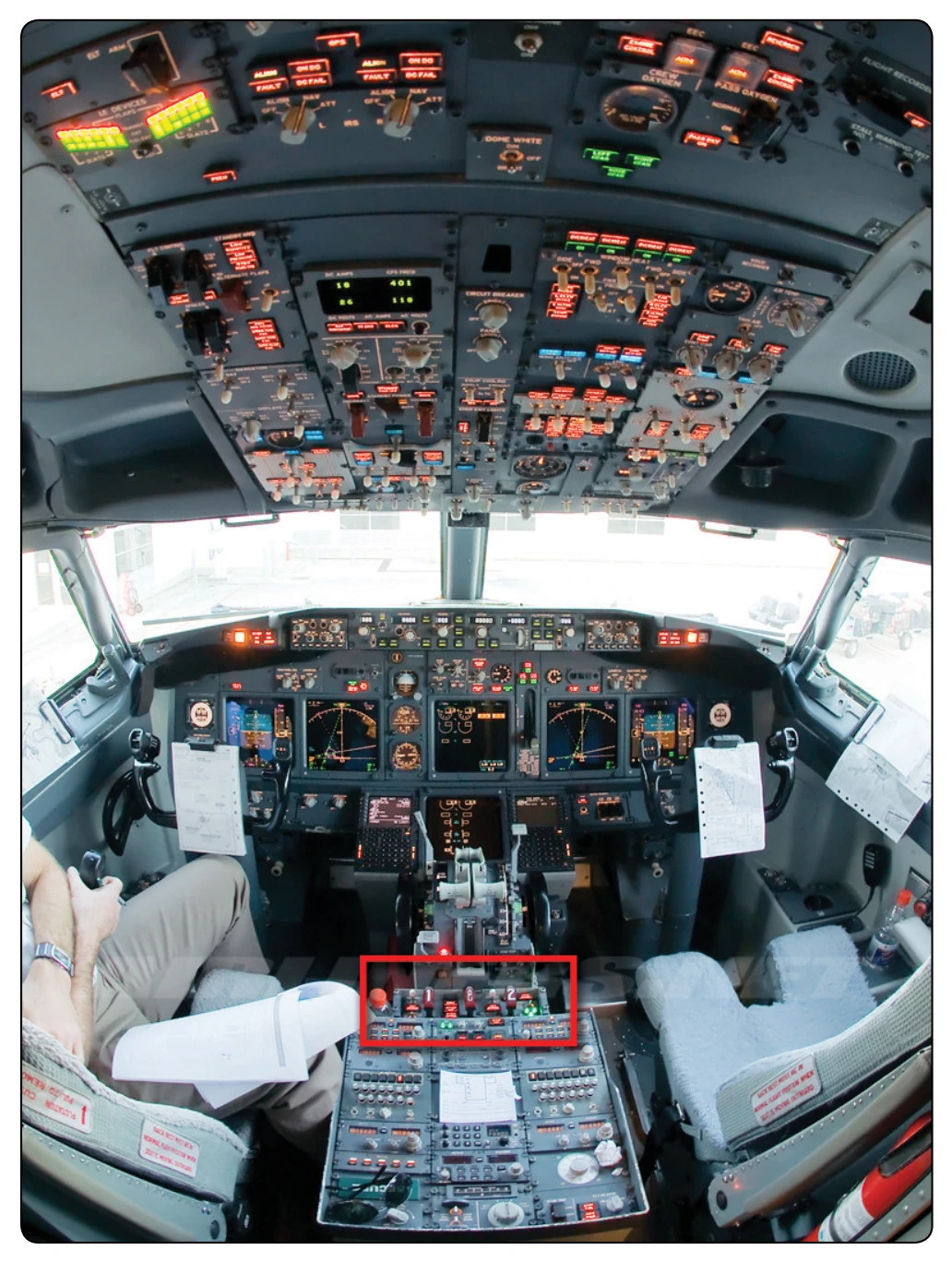
Fire switches are typically installed on the center overhead panel or center console in the flight deck. [Figure 9-12] When the fire switch is activated, the following happens: the engine stops because the fuel control shuts off, the engine is isolated from the aircraft systems, and the fire extinguishing system is activated. Some aircraft use fire switches that need to be pulled and turned to activate the system, while others use a push-type switch with a guard. To prevent accidental activation of the fire switch, a lock is installed that releases the fire switch only when a fire has been detected. This lock can be manually released by the flight crew if the fire detection