Chapter 15
Weather Radar
15.1 Introduction
The most effective tool to detect precipitation is radar. Radar, which is an acronym that stands for “radio detection and ranging,” has been used to detect precipitation since the 1940s. Radar enhancements have enabled more precision in detecting and displaying precipitation.
15.2 Principles of Weather Radar
The radar used by the NWS is called the Weather Surveillance Radar—1988 Doppler (WSR-88D). The prototype radar was built in 1988.
It is essential to understand some principles of weather radar. This will allow correct interpretation of WSR-88D images. This chapter will also include a comparison between some WSR-88D principles and aircraft radar principles. These comparisons will help explain the strengths and limitations of the WSR-88D and aircraft radar.
15.2.1 Antenna
The antenna (see Figure 15-1) alternately emits and receives radio waves into the atmosphere. Pulses of energy from the radio waves may strike a target. If they do, part of that energy will return to the antenna.
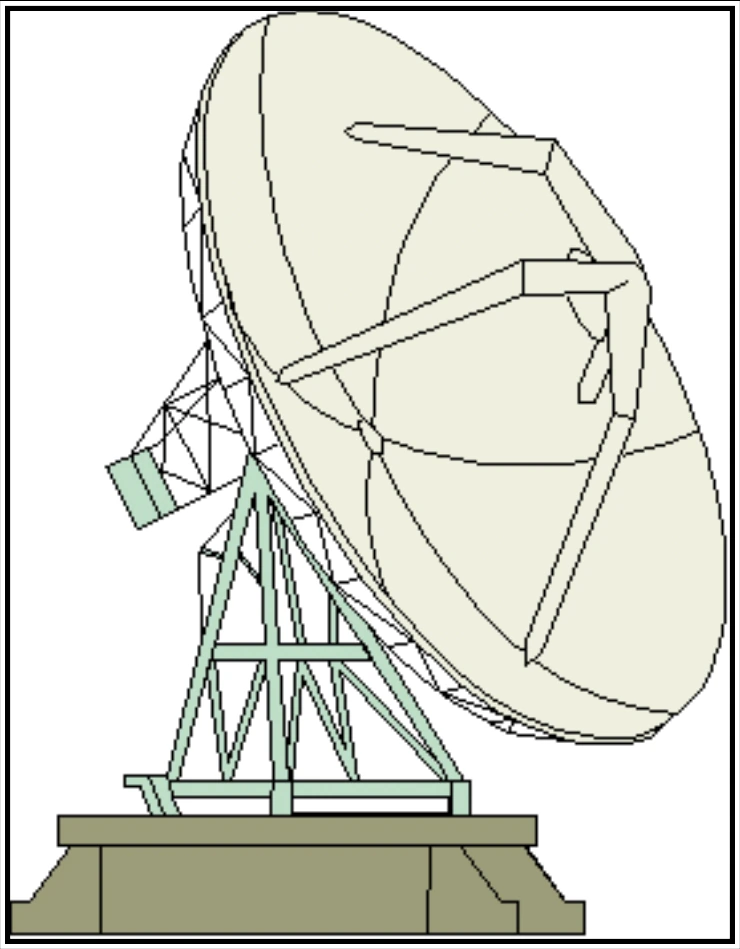
The shape of an antenna determines the shape of a beam. The WSR-88D has a parabolic-shaped antenna. This focuses the radio waves into a narrow, coned-shaped beam. The antenna can be tilted to scan many altitudes of the atmosphere.
15.2.2 Backscattered Energy
The amount of energy returned directly back to the radar after striking a target is called backscattered energy (see Figure 15-2).
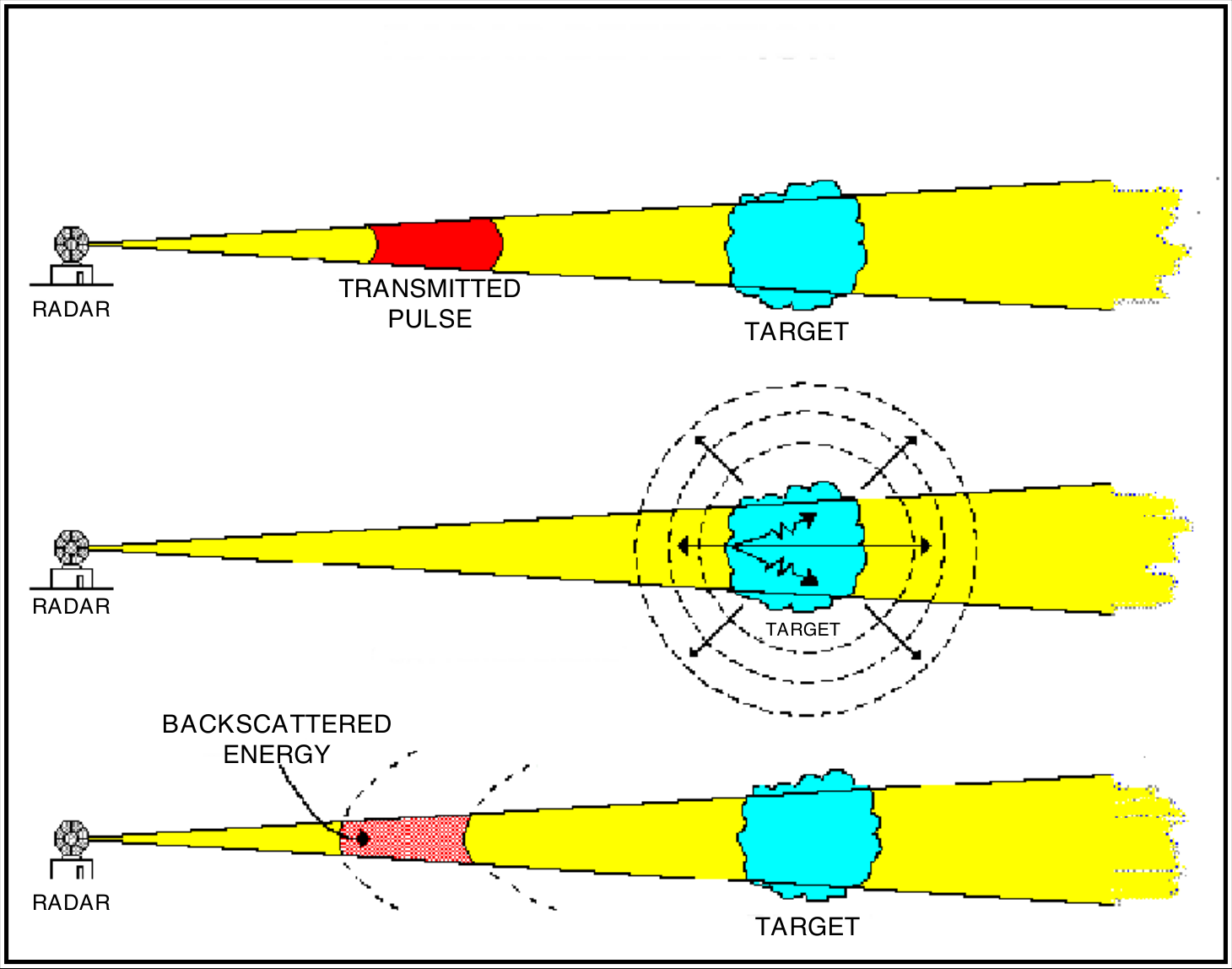
Targets may include precipitation, clouds, dust, birds, insects, buildings, air mass boundaries, terrain features, wind farms/turbines, etc. Reflectivity is a measurement of the amount of backscattered energy. An echo is the appearance on a radar display of the backscattered energy (i.e., reflectivity).
15.2.3 Power Output
The WSR-88D has a peak power output of 750 kilowatts (kW). This allows for better detection of low reflectivity (small) targets in the atmosphere, such as clouds, dust, insects, etc.
Most aircraft radars have a peak power output of less than 50 kW. Therefore, smaller targets are difficult to detect with aircraft radar.
15.2.4 Wavelengths
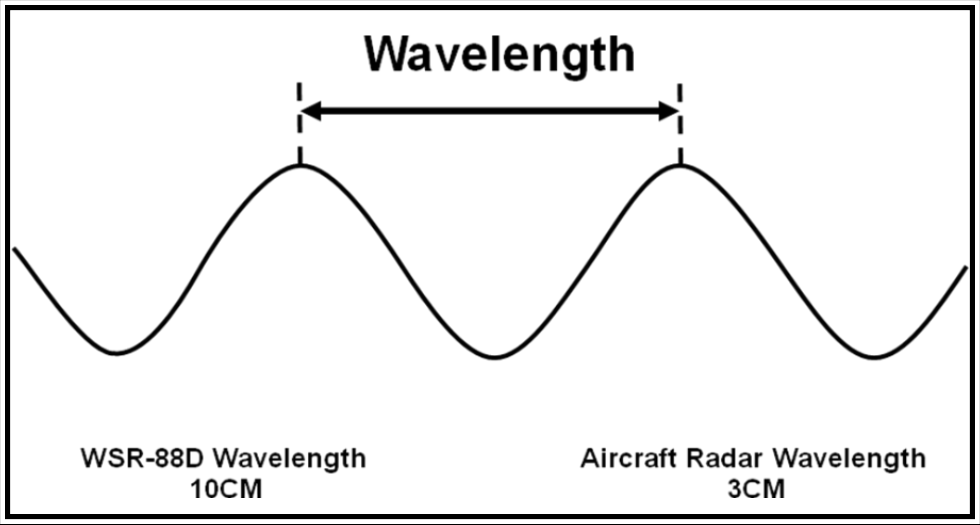
The wavelength is the distance between two crests or two troughs within the radio wave emitted from the radar (see Figure 15-3). The WSR-88D has a wavelength of 10 cm. Most aircraft radars have a wavelength of 3 cm. Although shorter wavelengths are better at detecting smaller targets, they are significantly more attenuated than longer wavelengths.