
Chapter 6
Airplane Attitude Instrument Flying
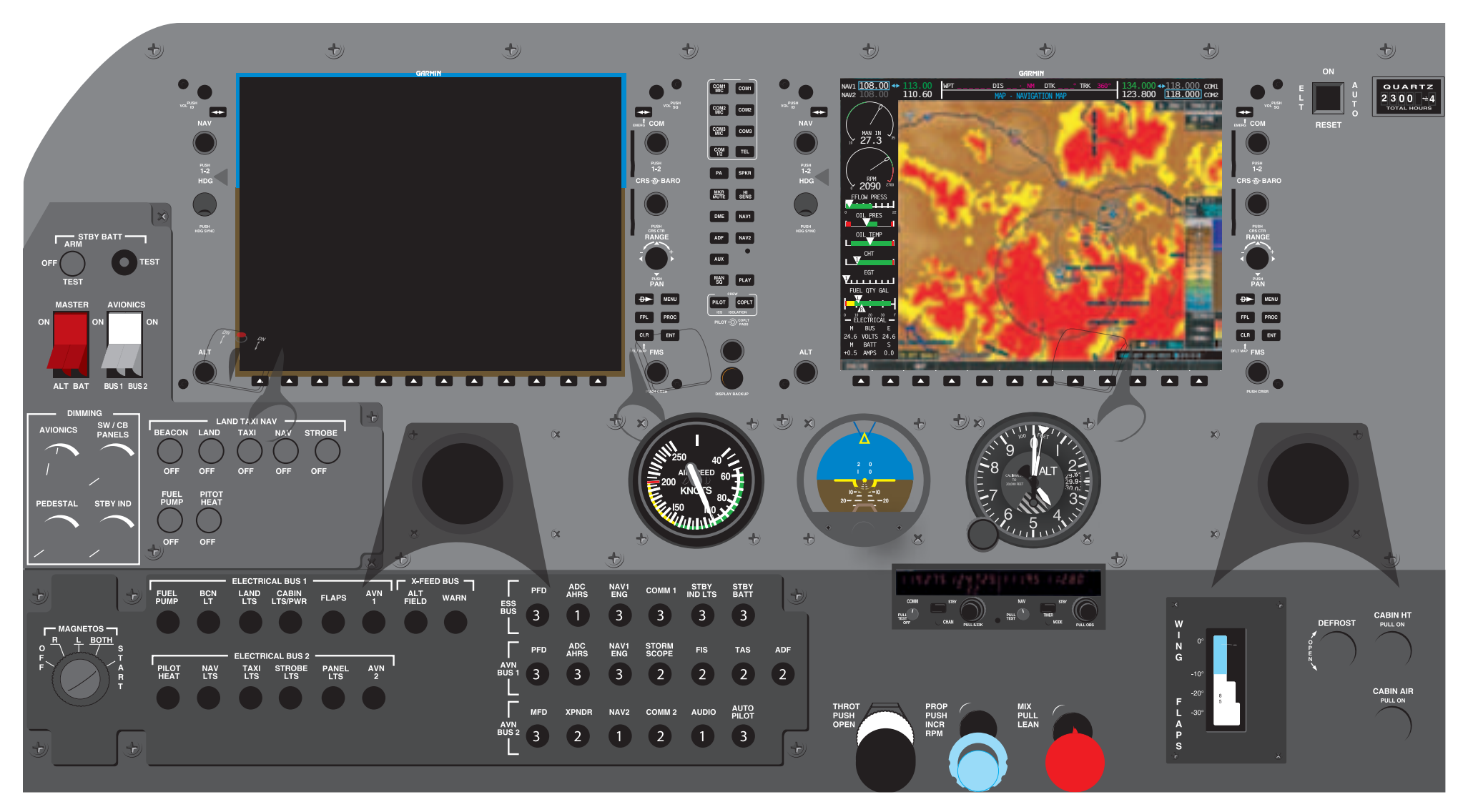
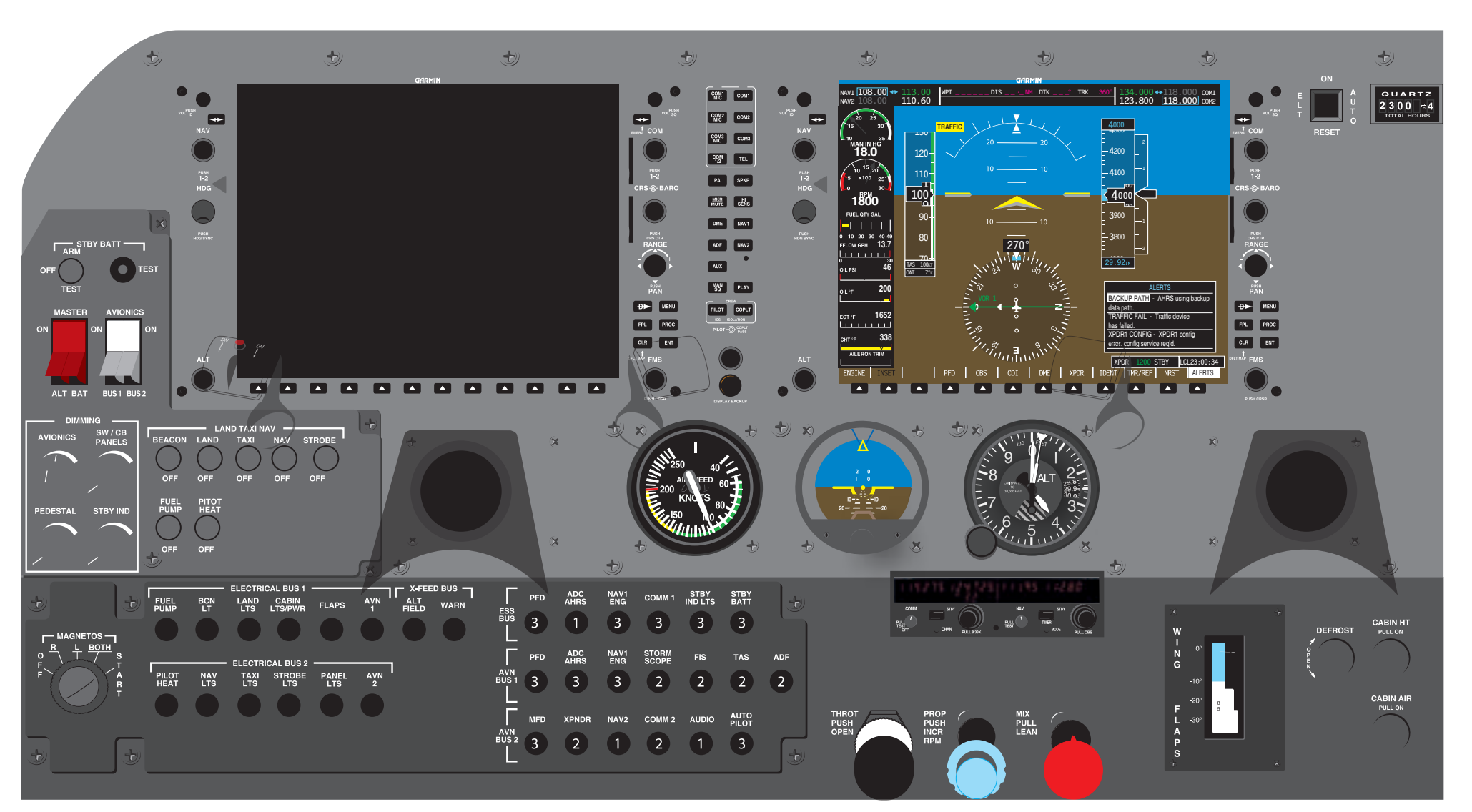
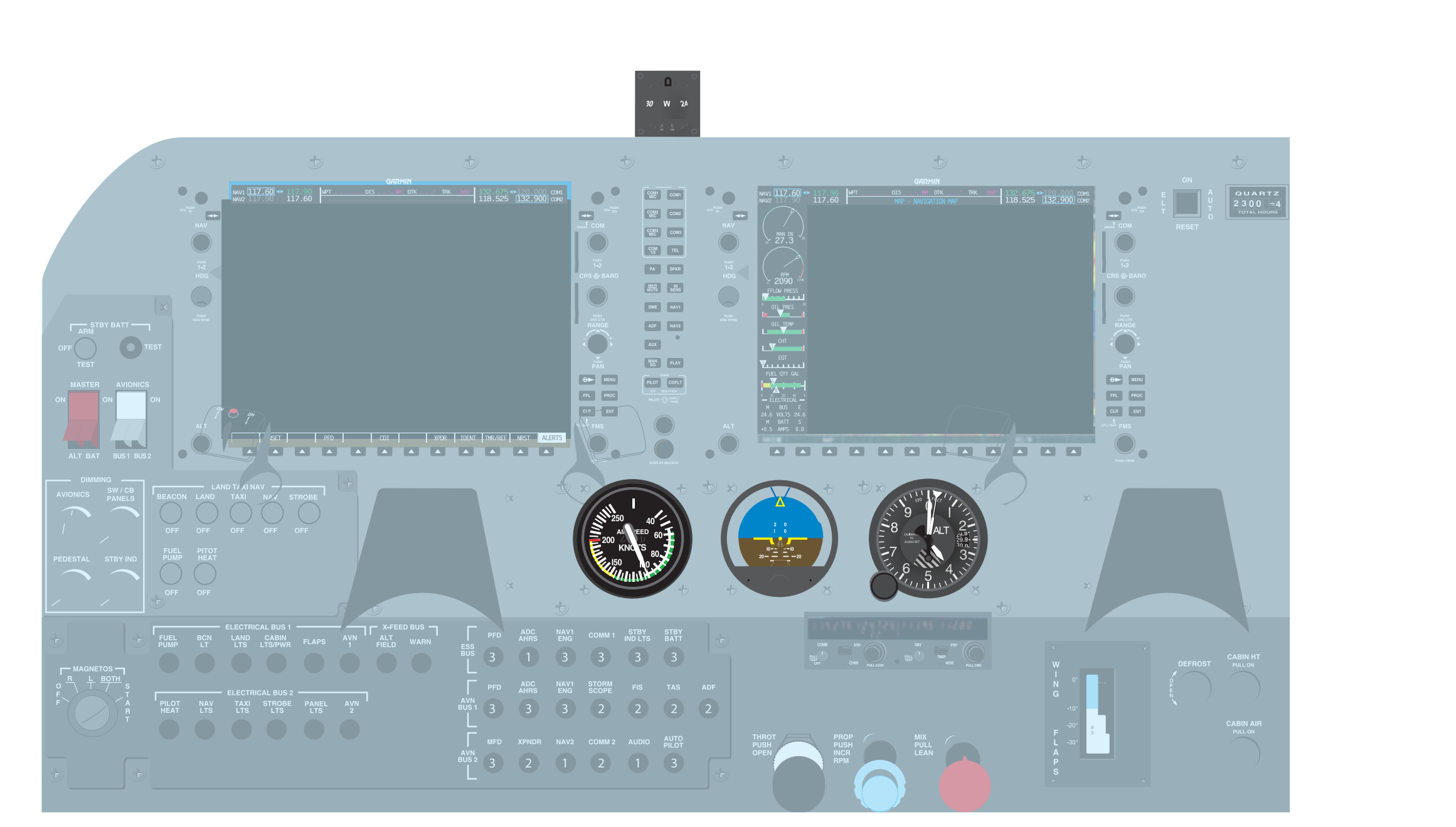
Control and Performance Method
Aircraft performance is accomplished by controlling the aircraft attitude and power output. Aircraft attitude is the relationship of its longitudinal and lateral axes to the Earth’s horizon. When flying in instrument flight conditions, the pilot controls the attitude of the aircraft by referencing the flight instruments and manipulating the power output of the engine to achieve the performance desired. This method can be used to achieve a specific performance level enabling a pilot to perform any basic instrument maneuver.
The instrumentation can be broken up into three different categories: control, performance, and navigation.
Control Instruments
The control instruments depict immediate attitude and power changes. The instrument for attitude display is the attitude indicator. Power changes are directly reflected on the manifold pressure gauge and the tachometer. [Figure 6-25] All three of these instruments can reflect small adjustments, allowing for precise control of aircraft attitude.
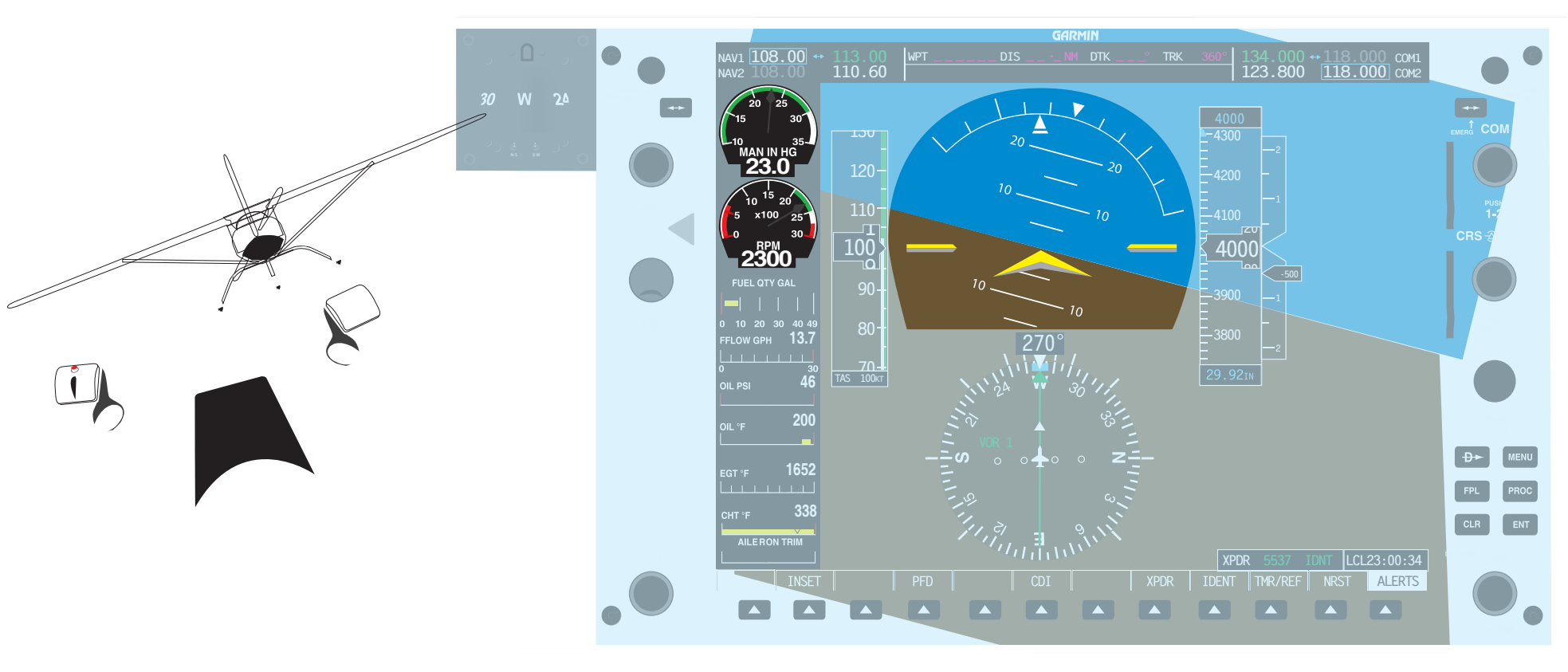
In addition, the configuration of the power indicators installed in each aircraft may vary to include the following types of power indicators: tachometers, manifold pressure indicator, engine pressure ratio indicator, fuel flow gauges, etc.
The control instruments do not indicate how fast the aircraft is flying or at what altitude it is flying. In order to determine these variables and others, a pilot needs to refer to the performance instruments.
Performance Instruments
The performance instruments directly reflect the performance the aircraft is achieving. The speed of the aircraft can be referenced on the airspeed indicator. The altitude can be referenced on the altimeter. The aircraft’s climb performance can be determined by referencing the vertical speed indicator (VSI). [Figure 6-26] Other performance instruments available are the heading indicator, pitch attitude indicator, and the slip/skid indicator.
The performance instruments most directly reflect a change in acceleration, which is defined as change in velocity or direction. Therefore, these instruments indicate if the aircraft is changing airspeed, altitude, or heading, which are horizontal, vertical, or lateral vectors.
Navigation Instruments
The navigation instruments are comprised of global positioning system (GPS) displays and indicators, very high frequency omnidirectional range/nondirectional radio beacon (VOR/NDB) indicators, moving map displays, localizer, and glideslope (GS) indicators. [Figure 6-27] The instruments indicate the position of the aircraft relative to a selected navigation facility or fix. Navigation instruments allow the pilot to maneuver the aircraft along a predetermined path of ground-based or spaced-based navigation signals without reference to any external visual cues. The navigation instruments can support both lateral and visual inputs.
The Four-Step Process Used to Change Attitude
In order to change the attitude of the aircraft, the pilot must make the proper changes to the pitch, bank, or power settings of the aircraft. Four steps (establish, trim, cross-check, and adjust) have been developed in order to aid in the process.
Establish
Any time the attitude of the aircraft requires changing, the pilot must adjust the pitch and/or bank in conjunction with power to establish the desired performance. The changes in pitch and bank require the pilot to reference the attitude indicator in order to make precise changes. Power changes should be verified on the tachometer, manifold pressure gauge, etc. To ease the workload, the pilot should become familiar with the approximate pitch and power changes necessary to establish a specified attitude.