
Chapter 2
En Route Operations
- On the VOR, set the course selector to 0° and the track bar (TB) indicator should read center. The TO-FROM indicator should read FROM.
- Set the course selector to 180° and the TO-FROM indicator should read TO and the TB should then be centered.
VOR Checkpoint Signs
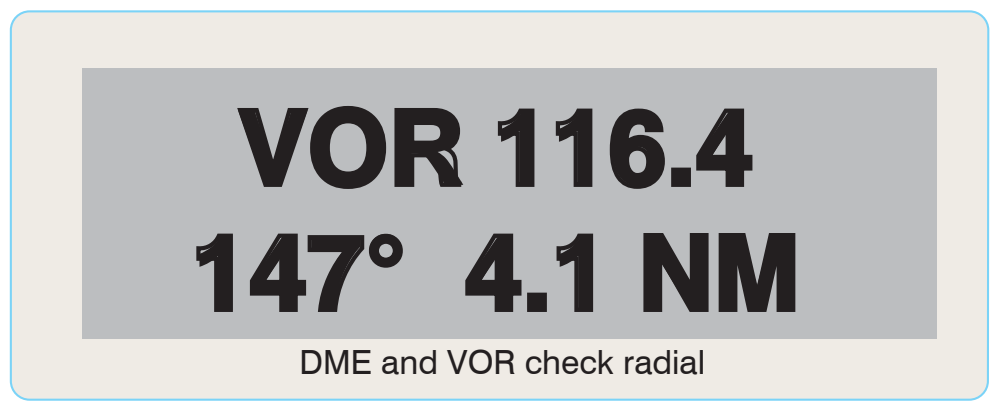
Many aerodromes have VOR checkpoint signs that are located beside the taxiways. [Figure 2-51] These signs indicate the exact point on the aerodrome that there is sufficient signal strength from a VOR to check the aircraft’s VOR receiver against the radial designated on the sign. Listed below are the steps to use at a VOR checkpoint:
- Tune the proper VOR frequency.
- Identify the VOR frequency.
- Set the published radial on the course deviation indicator (CDI).
- Confirm that the TB is centered.
- Check the needle sensitivity by changing the omnibearing select (OBS) 10° each way.
- Set the reciprocal of the radial and check the TO FROM flag change.
- The maximum permissible difference between aircraft equipment and the designated radial is 4° and 0.5 NM of the posted distance.
Dual VOR Check
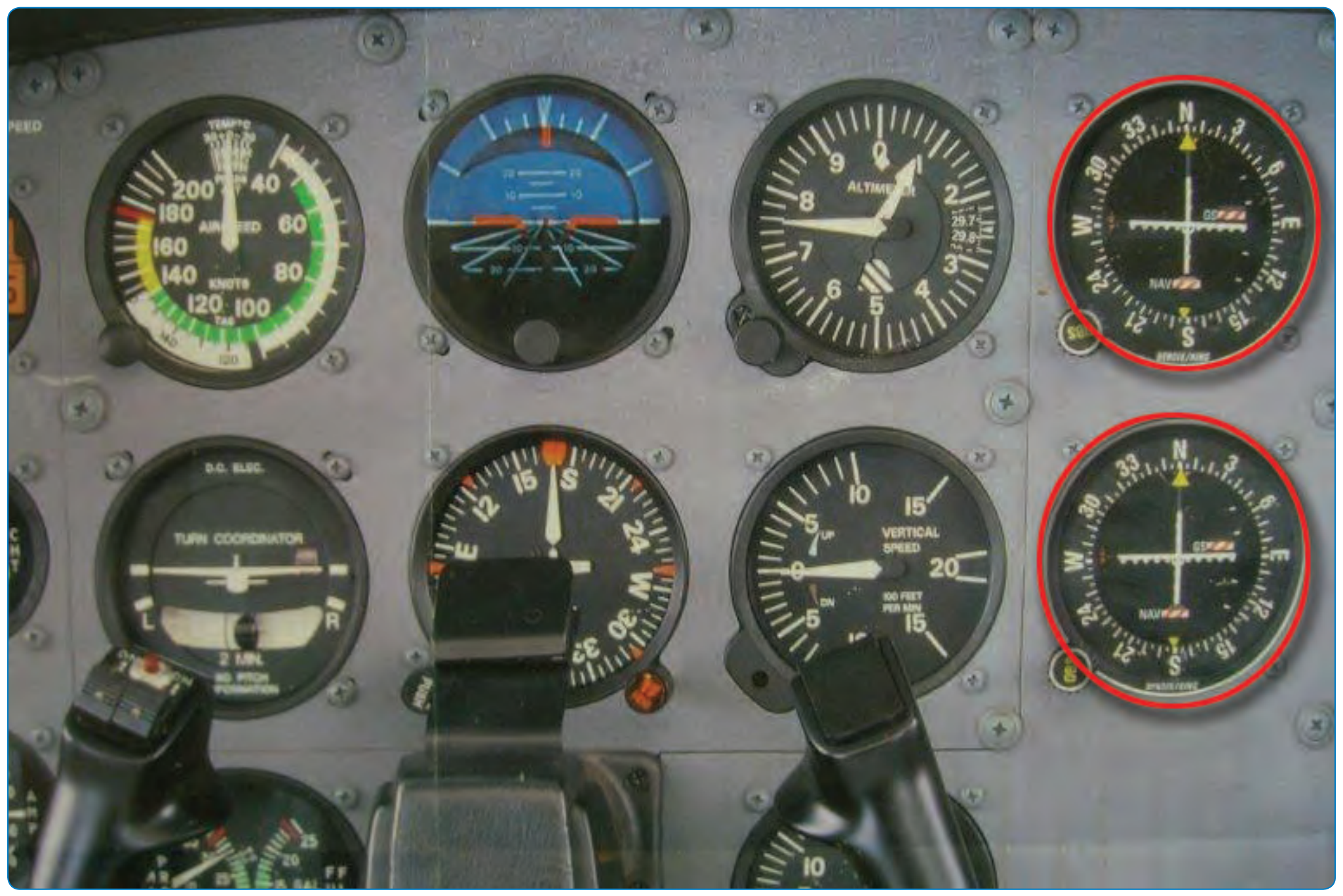
If a VOT or VOR checkpoint is not available and the aircraft is equipped with dual VORs, the equipment may be checked against one another by tuning both sets to the VOR facility at the same time and noting the indicated bearings to that station. [Figure 2-52] A difference greater than 4° between the two VORs indicates that one of the receivers may be out of tolerance.
Airborne VOR Check
VOR equipment can also be checked for accuracy while in flight by flying over a fix or landmark located on a published radial and noting the indicated radial. Variances of more than 6° from the published radial should be considered out of tolerance and not be used for IFR navigation.
NDB Accuracy Check
The pilot must identify an NDB before using it for navigation, and continuously monitor it while using it for an instrument approach. The lack of an IDENT may indicate that the NDB is out of service, even though it may still be transmitting (for instance for maintenance or test purposes). If an incorrect IDENT is heard, then the NDB should not be used.
RNAV Accuracy Check
RNAV accuracy checks may differ depending on the different type of equipment and manufacturer. When available, all written procedures should be followed.
Below is a list of generic checks that should be used when checking the accuracy of the system prior to flight.
- System initialization—pilots should confirm that the navigation database is current and verify that the aircrafts present position has been entered correctly.
- Active flight plan check—the active flight plan should be checked by comparing the aeronautical charts, departure and arrival procedures, and other applicable documents with the map display.
- Prior to takeoff—ensure that the RNAV system is available. If possible, check to see that the system is updating when aircraft position is changing.