
Chapter 5
Improvement Plans
Introduction
In the upcoming years, exciting new technologies will be developed and implemented to help ease air traffic congestion, add to system capacity, and enhance safety. Some of these seamless changes will be invisible to pilots. Others will entail learning new procedures, aircraft equipment, and systems that will introduce powerful new capabilities and dramatically increase the safety of all flight operations.
Next Generation Air Transportation (NextGen) System
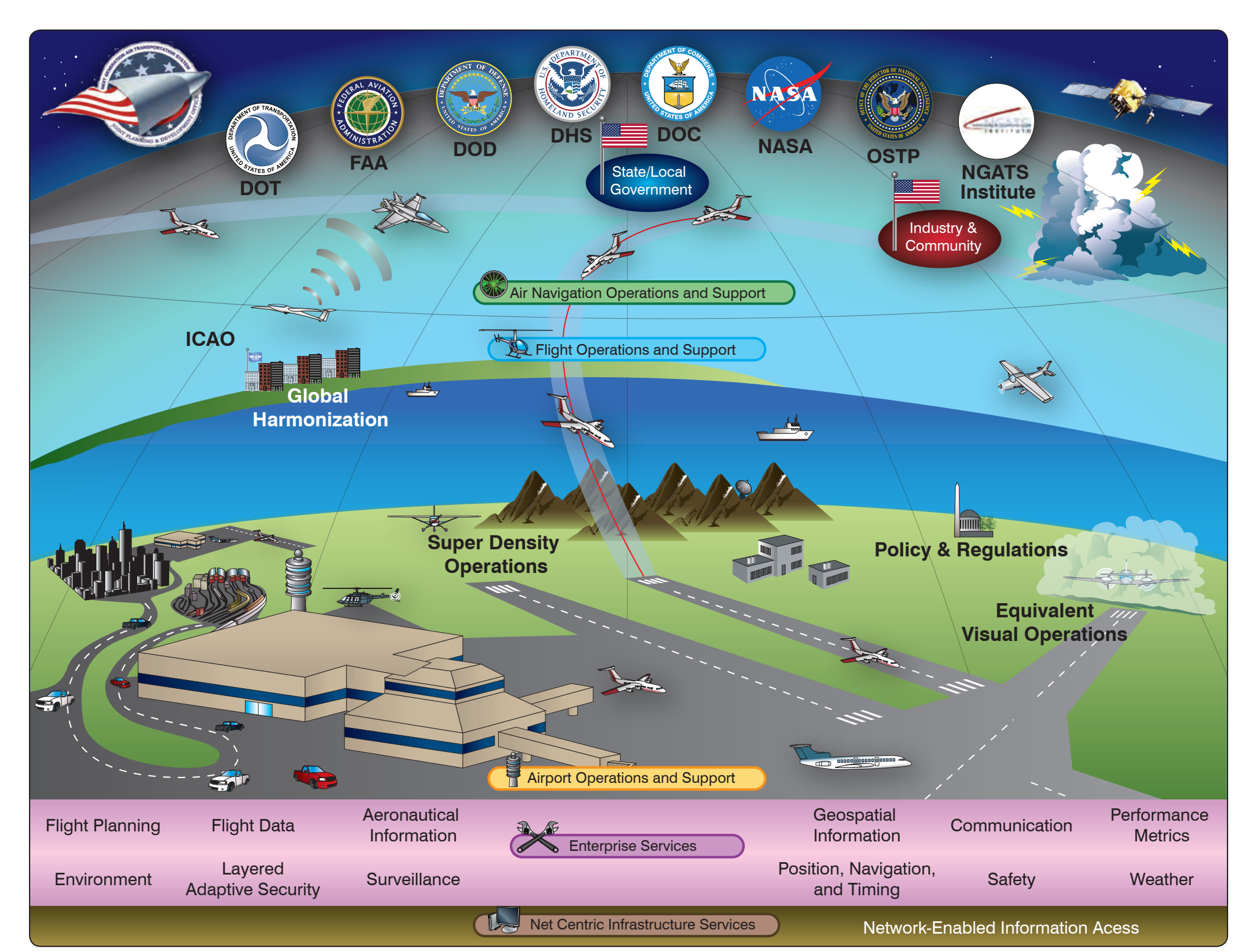
Next Generation Air Transportation System (NextGen) is a comprehensive overhaul of the National Airspace System (NAS) designed to make air travel more convenient and dependable, while ensuring flights are as safe and secure as possible. It moves away from ground-based surveillance and navigation to new and more dynamic satellite-based systems and procedures, and introduces new technological innovations in areas such as weather forecast, digital communications, and networking. [Figure 5-1] When fully implemented, NextGen will safely allow aircraft to fly more closely together on more direct routes, reducing delays, and providing unprecedented benefits for the environment and the economy through reductions in carbon emissions, fuel consumption, and noise. [Figure 5-2]
Implementation in stages across the United States is due between 2012 and 2025. In order to implement NextGen, the FAA will undertake a wide-range transformation of the entire United States air transportation system. NextGen consists of the following five systems:
- Automatic dependent surveillance-broadcast (ADS-B)—automatically broadcasts the aircraft’s position and other aircraft specific information to air traffic control (ATC) ground facilities and nearby aircraft equipped with ADS-B In. Effective January 1, 2020 all aircraft operating in certain controlled U.S. airspace will be required to operate ADS-B Out equipment at all times. While Global Navigation Satellite System (GNSS) is not mandated by rule as the position sensor, it is currently the only position source that meets the rule’s performance requirements. Aircraft broadcasting ADS-B Out data provide ATC and cooperating ADS-B-In aircraft more precise on-the- ground or in-the-air positioning information based on the increased frequency of the data broadcasts and the accuracy of GNSS. ADS-B will provide a complete picture of air traffic for ATC and pilots of ADS-B In-equipped aircraft. The FAA’s
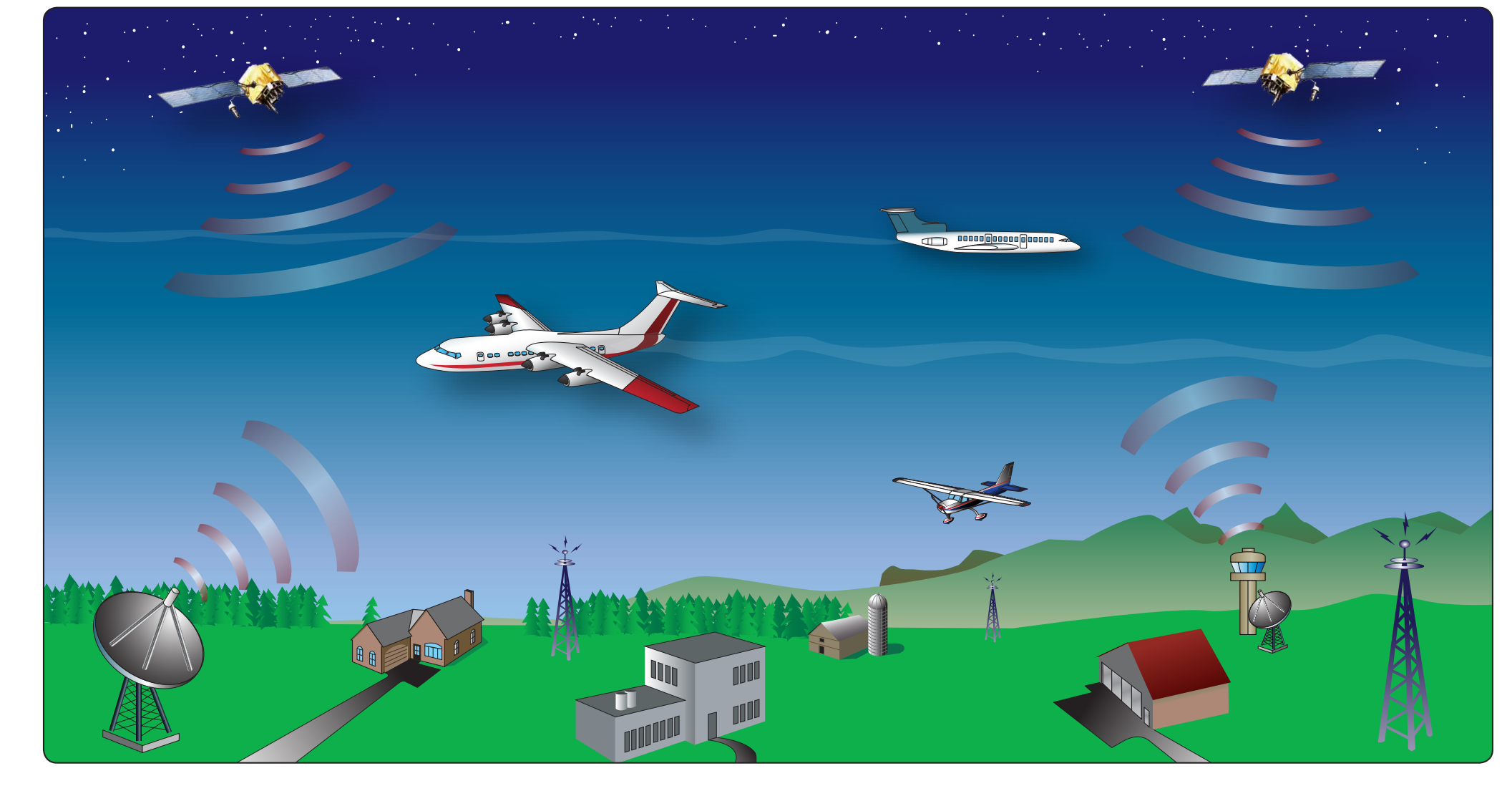
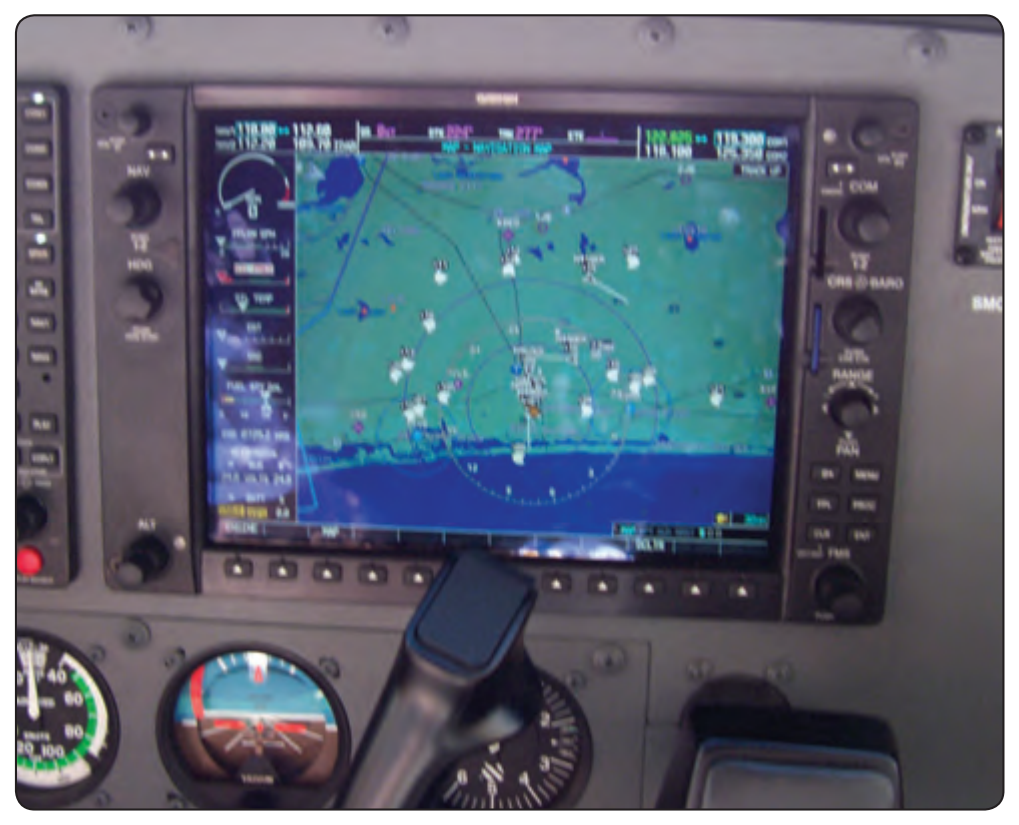
ADS-B ground infrastructure is complete and ATC now uses ADS-B for aircraft tracking both in the air and on the ground at many airports.
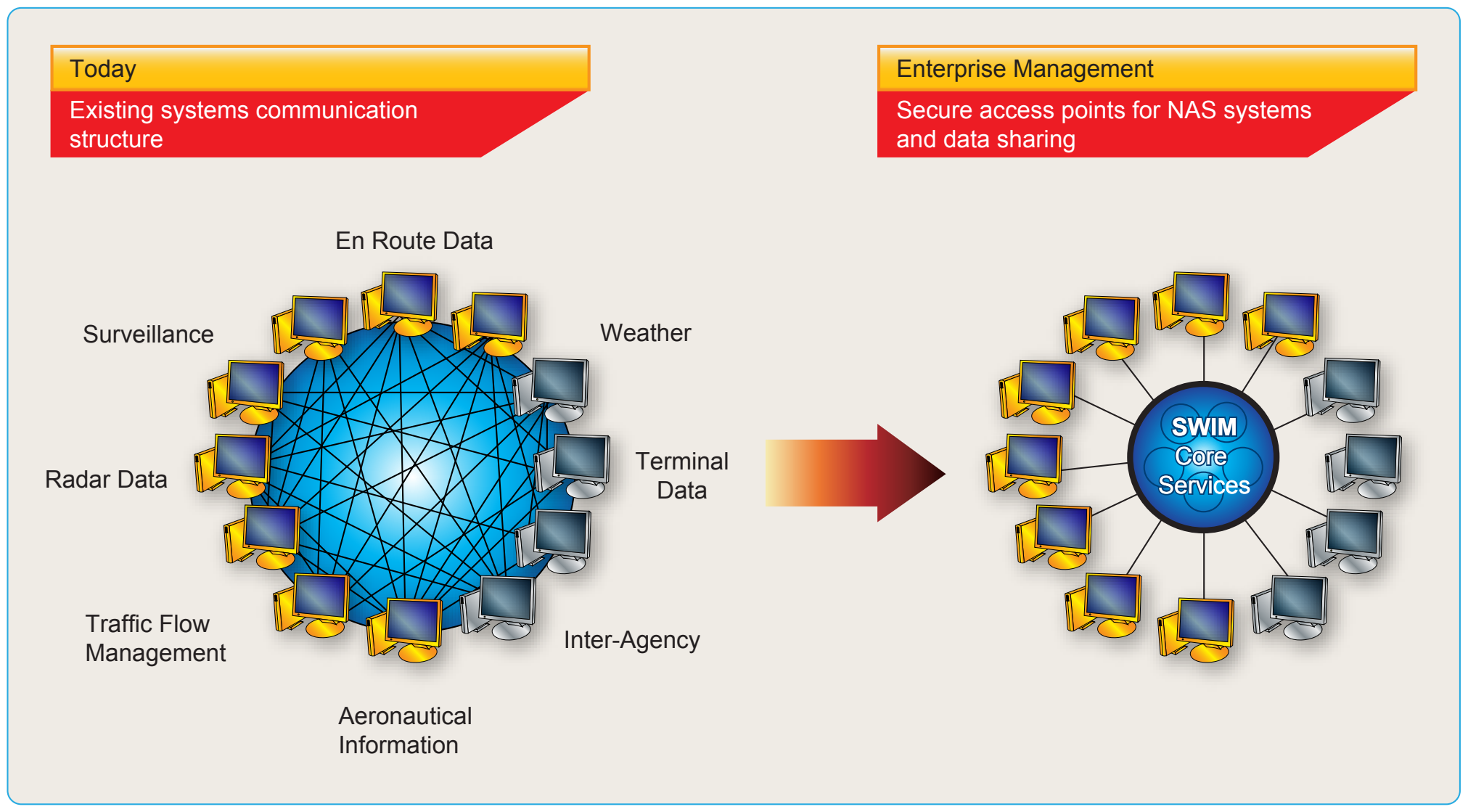
- System wide information management (SWIM)— will provide a single infrastructure and information management system to deliver high quality, timely data to many users and applications. By reducing the number and types of interfaces and systems, SWIM will reduce data redundancy and better facilitate multi- user information sharing. SWIM will also enable new modes of decision-making as information is more easily accessed. [Figure 5-4]
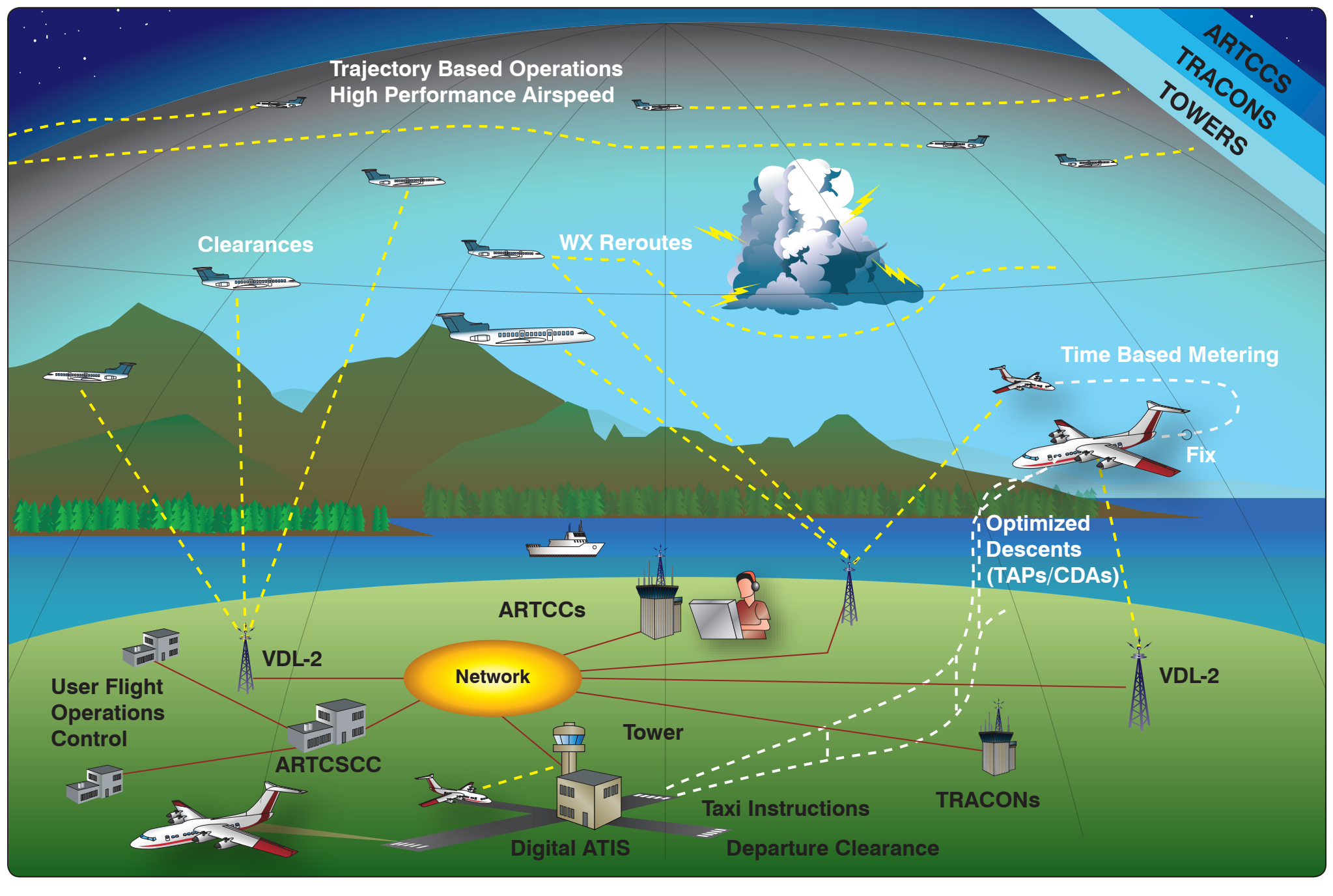
- Next generation data communications—current communications between aircrew and ATC, and between air traffic controllers, are largely realized through voice communications. Initially, the introduction of data communications will provide an additional means of two-way communication for ATC clearances, instructions, advisories, flight crew requests, and reports. With the majority of aircraft data link equipped, the exchange of routine controller-pilot messages and clearances via data link will enable controllers to handle more traffic. This will improve ATC productivity, enhancing capacity and safety. [Figure 5-5]
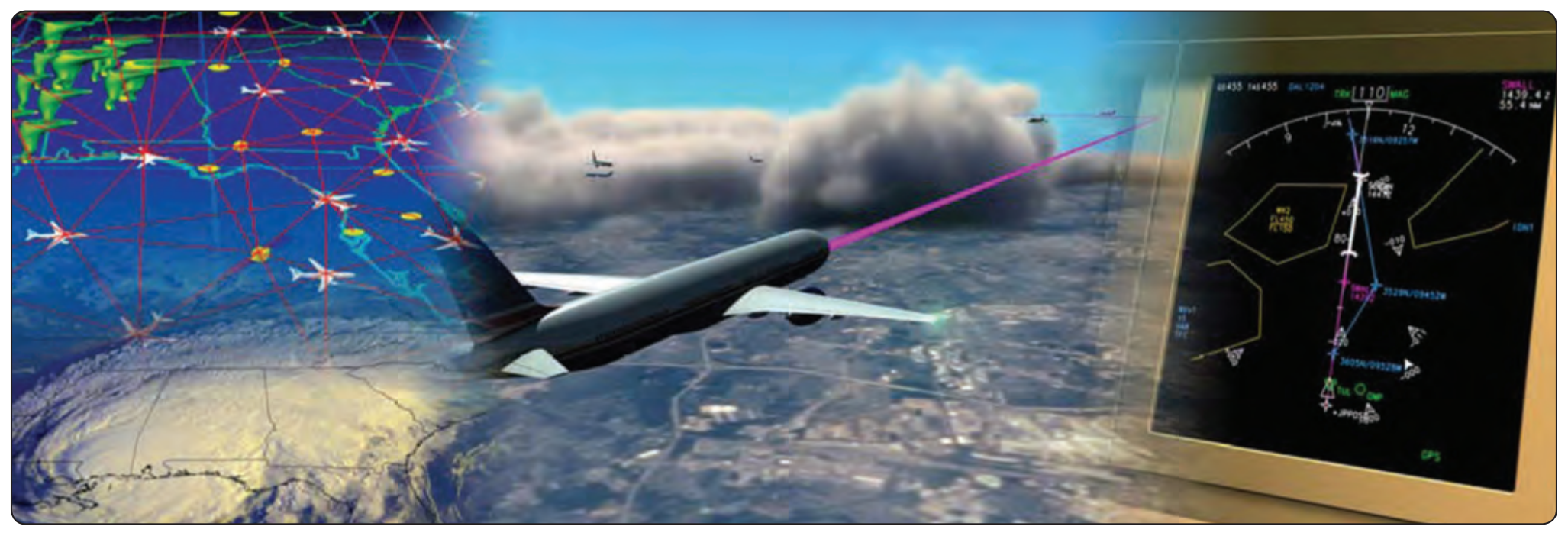
- Next generation network enabled weather (NNEW)— seventy percent of NAS delays are attributed to weather every year. The goal of NNEW is to cut weather-related delays at least in half. Tens of thousands of global weather observations and sensor reports from ground, airborne, and space-based sources will fuse into a single national weather information system updated in real time. NNEW will provide a common weather picture across the NAS and enable better air transportation decision-making. [Figure 5-6]
- NAS voice switch (NVS)—there are currently seventeen different voice switching systems in the NAS; some in use for more than twenty years. NVS will replace these systems with a single air/ground
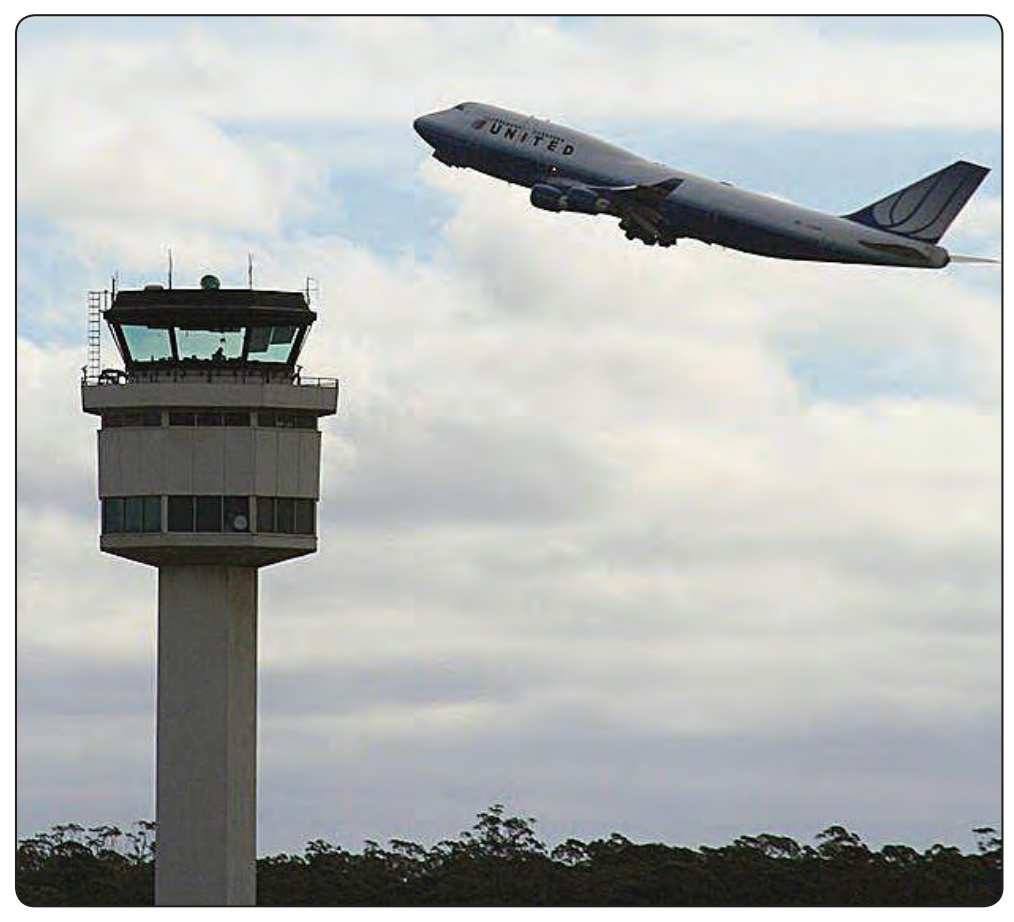
and ground/ground voice communications system. [Figure 5-7]
NextGen Existing Improvements
The goal of NextGen is to provide new capabilities that make air transportation safer and more reliable while improving the capacity of the NAS and reducing aviation’s impact on the environment. Below is a list of some of the capabilities for operational use that have already been implemented through NextGen.
- Starting in December 2009, the FAA began controlling air traffic over the Gulf of Mexico, an area of active airspace where surveillance was never before possible, using the satellite-based technology of ADS-B. For aircraft flying over the Gulf of Mexico, where no radar coverage is available, ATC can safely and more efficiently separate air traffic with the real-time visual representation of air traffic provided by ADS-B. It also provides pilots with