Chapter 7
Repairs, Alterations, and Manufacture
Introduction
Inspection requirements are the mainstay of the parachute rigger, but of equal importance is the repair and maintenance of the parachute and its related systems. When the parachute is new, it is expected to function as designed. As it is used and ages, however, it begins to wear and its condition changes, which over time could result in a malfunction of the system. It is the rigger’s responsibility during inspections to identify any condition that might result in the parachute being considered non-airworthy and dangerous. In the course of training, the rigger candidate learns to identify those conditions that may be unsafe. The trainee also learns how to undertake the necessary repairs to return the parachute to its original, airworthy configuration. As we look at repairs it becomes very evident that inspection is the initial part of the process of any repair.
14.00 5.75- 3.25-19.00 6.38 As stated in Chapter 1 of this handbook, Regulations and Human Factors, it is imperative that riggers be able to distinguish between minor and major repairs. This ensures that riggers do not exceed the limitations of their certificate or endanger the parachute user. The basic rule for repairs is to return the damaged parachute or component to its original airworthy configuration. However, in many instances, the remanufacture of the parachute may not be practical or cost effective. In these cases, there are approved repair techniques riggers can use to return the parachute to service. These techniques form an important part of the rigger’s store of knowledge. To make a decision as to the confirmation for the possible need for repairs, we must first understand the Federal Aviation Administration (FAA) requirement of inspection.
Inspection Process
Chapter 5 of this handbook, Inspection and Packing, addresses the purpose of the 180-day cycle as required by the FAA. This action insures that the approved/certificated parachute assembly meets the standards and conditions for safe return to service; it also become the cornerstone of the maintenance and repair process.
The confirmation of wear or damage is critical in the determination of actions that may be needed as set forth in Title 14 of the Code of Federal Regulations (14 CFR) part 43 and key in the assessment of actions and clarity of the repair that may need to be performed.
As is the character of any device or object, use and physical location conditions (heat, moisture, sand, dirt) over time cause wear to an item and, on occasion, misuse or improper actions during use result in damage. Certain parts or areas of a device incur more wear or damage according to use, action of handling, and contact with other components. Knowledge of this aspect should require increased or location specific consideration during the inspection process.
This recognition possibility of high-wear components or areas does not decrease or eliminate the inspection of any other part of the parachute assembly. It only identifies that the wear or damage probabilities are greater at these locations. These areas are referred to as common wear or damage patterns and apply to both round and square parachutes and parachute assemblies. These types of common wear/damage pattern applies in greater detail to the parachute that is utilized as the main parachute and deployed on each jump in sport use.
The inspection of a reserve canopy after deployment should be very concise and complete. Much care should be taken for a very thorough inspection of the parachute and related components. Parachutes are manufactured in two categories: approved (certificated) and non-approved (non-certificated). All reserve emergency use parachutes are approved (certificated) and are tested to FAA-required Technical Standard Order (TSO) standards. They are used and maintained by FAA standards (inspection and repaired by FAA-certificated rigger or the manufacturer) as airframe and powerplant (A&P) mechanics are used.
Non-approved or non-certificated parachutes are generally main parachutes, and related components, which can be packed, used, and repaired outside of FAA maintenance and repair requirements. Rigger inspections and rigger repairs are highly recommended but not required. Inspection of and approved (certificated) parachute calls for inspection of all related components, which are listed below. Related components are parts of the parachute, deployment system, harness, and container system, and any item that has responsibility for containment, deployment, or operation of an approved (certificated) parachute and are a critical part of the assembly. They must be inspected for use the same as the reserve parachute.
- Deployment bag (freebag, safety stow)
- Bridle and pilot chute
- Slider, slider fabric, and grommets
- Rapid links (soft links)
- Rapid link covers (soft link covers)
- All seams and seam fabric
- Suspension lines and line attachments
- Ripcord housing and attachments
- Ripcord assembly
- Upper and lower skins of canopy, all load and non-load bearing ribs, all cross ports
All of these areas can sustain wear or damage during normal use. The event of use at very high speeds can be contributed to the possibility of increased damage from exceeding the maximum speed allowed during deployment.
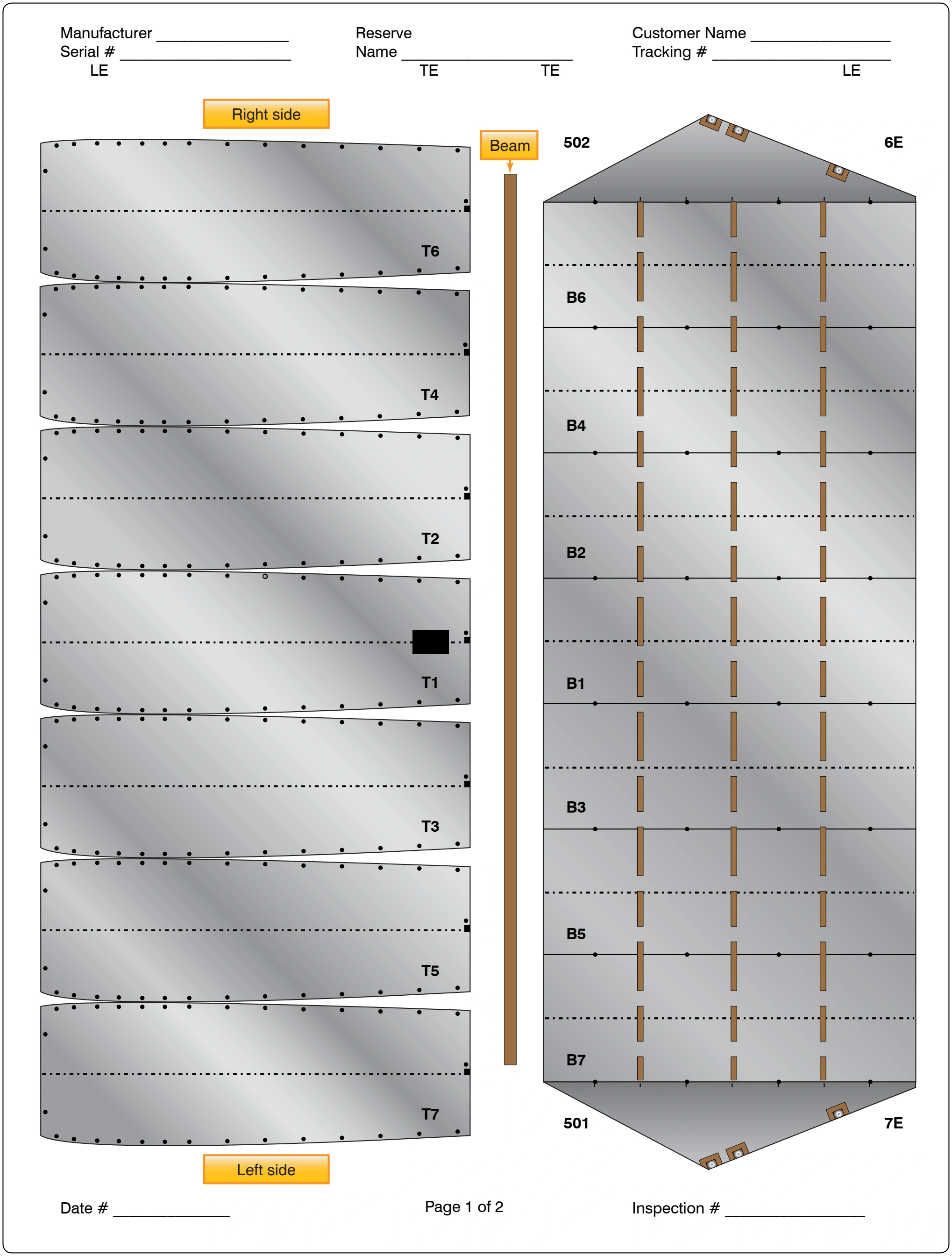
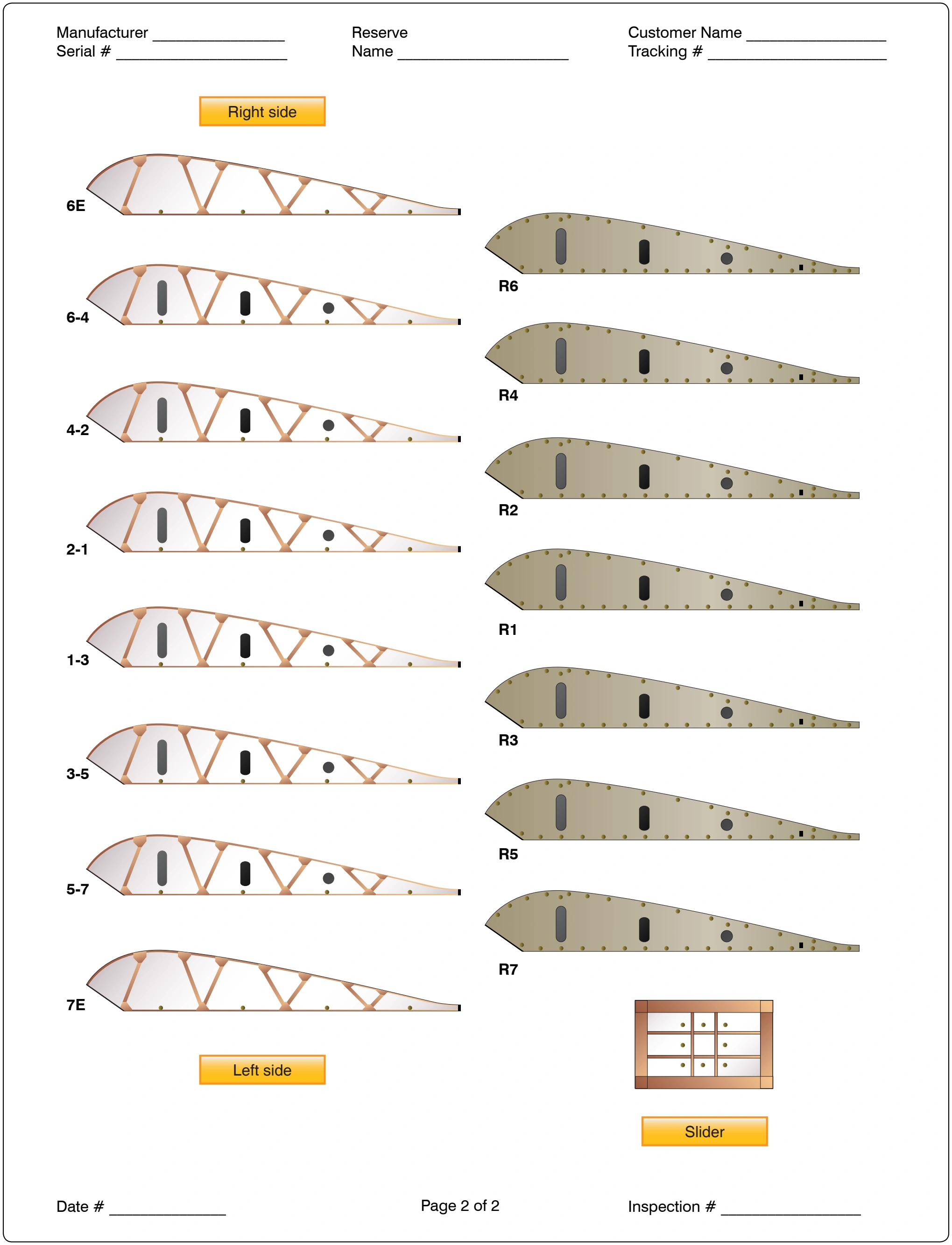
During inspection of certificated/approved parachutes, it is advisable to map related damage found on a chart which is shown in Figure 7-1. This chart can be used to describe the location of needed repair to a customer, assist in quickly locating the damage, and answer questions that the manufacturer may have relating to possible repair. [Figure 7-1]
If a rigger were to receive a damaged sport main canopy for repair, it would be advantageous to gain as much information as possible as to the cause and situation that created the damage. Inspection of the canopy should be as follows:
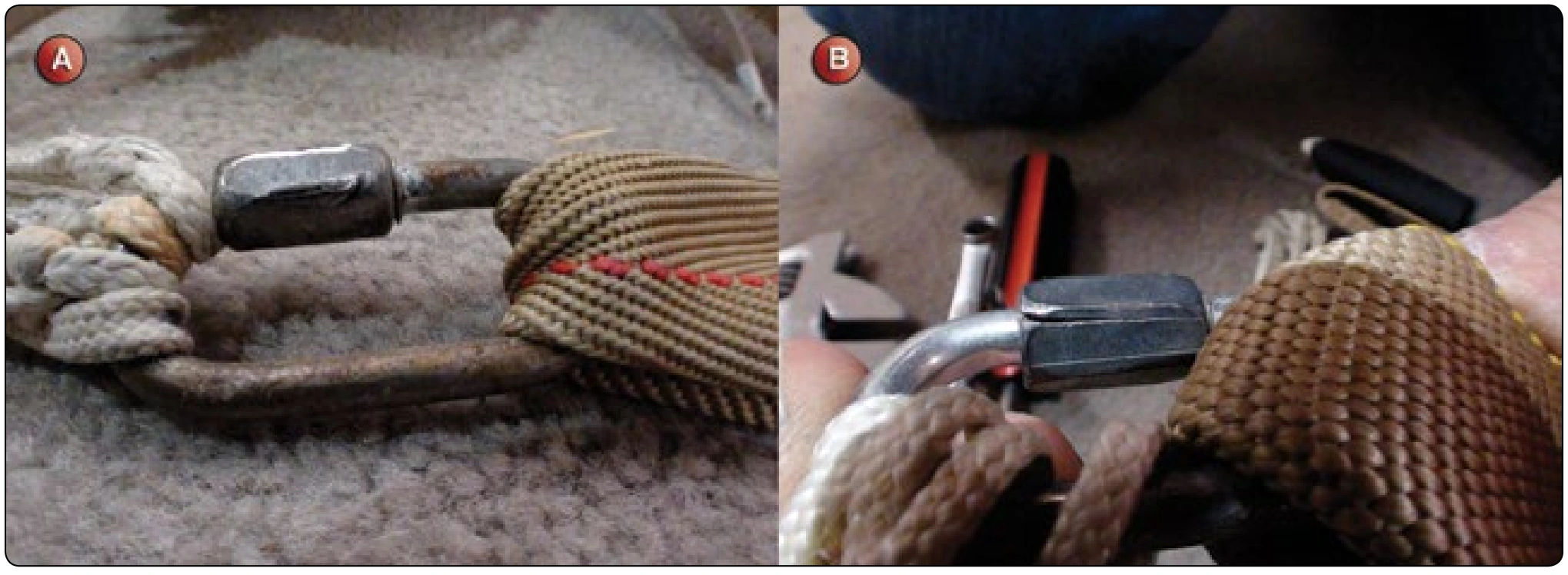
- Links—condition and confirmation of barrel condition (not cracked or stripped), soft links, installation, condition, tacked in place. [Figure 7-2A and B]
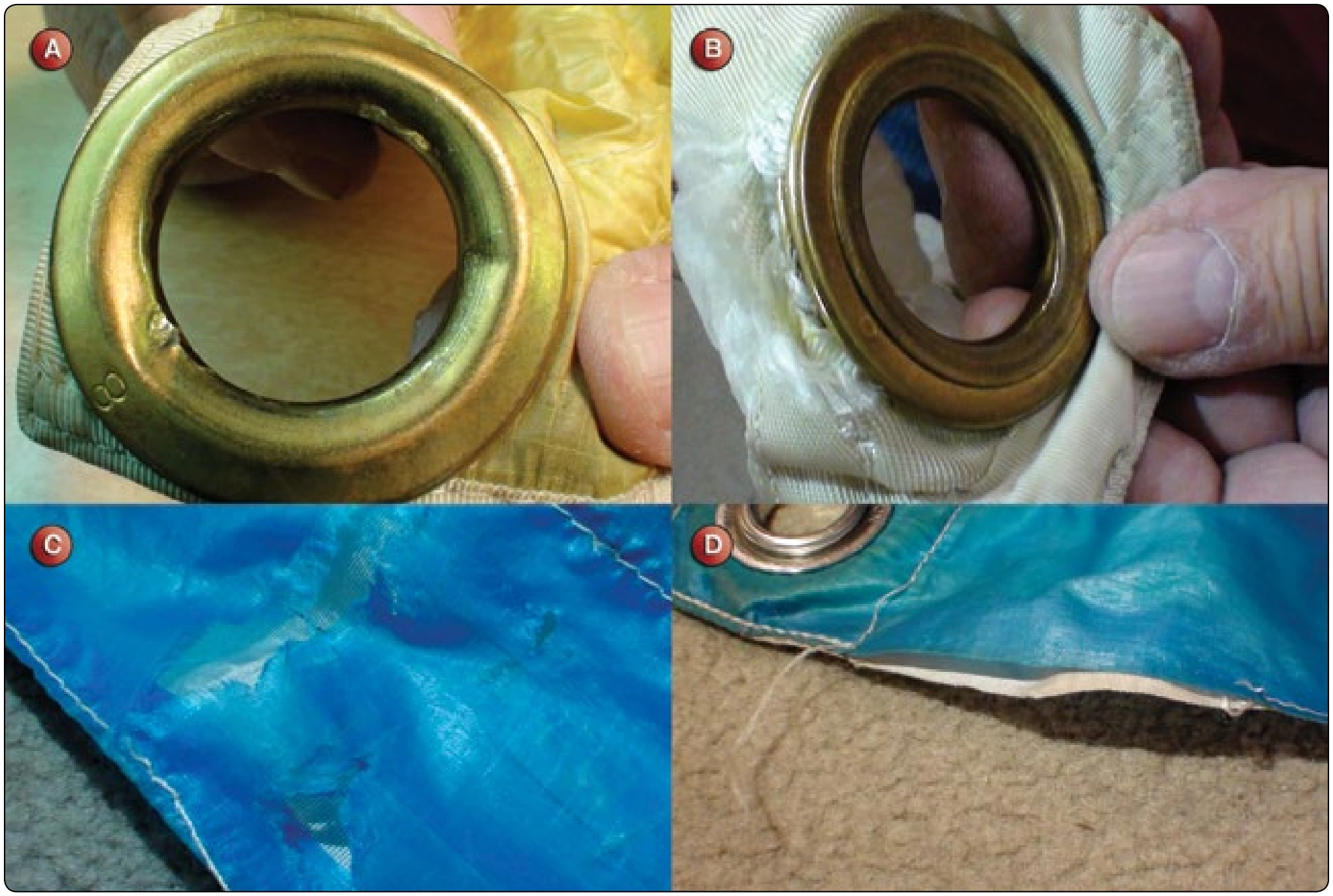
- Slider—check fabric for rips and burns; grommets for dents, nicks, or damage. [Figure 7-3A, B, C, and D]
- Grommet protectors—confirm they are installed correctly and in good condition. [Figure 7-4A and B]