
Chapter 14
Aeronautical Decision Making
Risk Elements— The four components of a flight that make up the overall situation.
NTSB— National Transportation Safety Board.
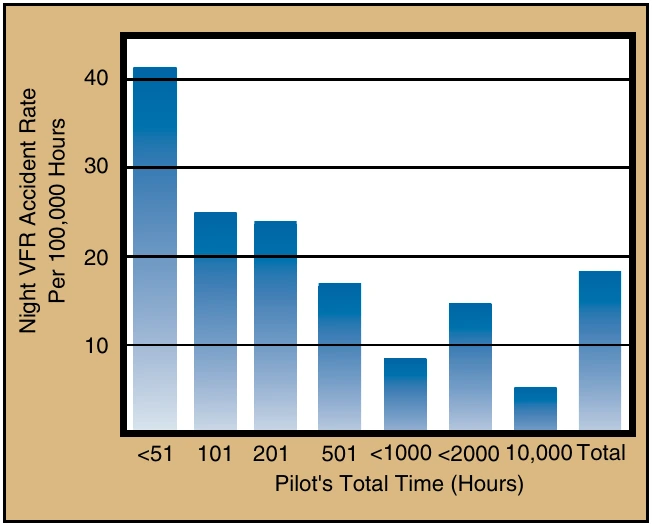
Factors Affecting Decision Making
It is important to point out the fact that being familiar with the decision-making process does not ensure that you will have the good judgment to be a safe pilot. The ability to make effective decisions as pilot in command depends on a number of factors. Some circumstances, such as the time available to make a decision, may be beyond your control. However, you can learn to recognize those factors that can be managed, and learn skills to improve decision-making ability and judgment.
Pilot Self-Assessment
The pilot in command of an aircraft is directly responsible for, and is the final authority as to, the operation of that aircraft. In order to effectively exercise that responsibility and make effective decisions regarding the outcome of a flight, you must have an understanding of your limitations. Your performance during a flight is affected by many factors, such as health, recency of experience, knowledge, skill level, and attitude.
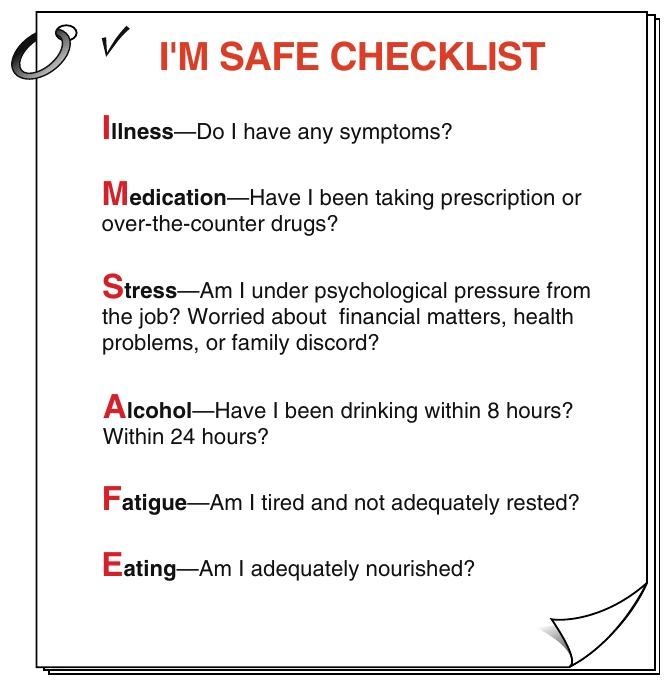
Exercising good judgment begins prior to taking the controls of an aircraft. Often, pilots thoroughly check their aircraft to determine airworthiness, yet do not evaluate their own fitness for flight. Just as a checklist is used when preflighting an aircraft, a personal checklist based on such factors as experience, currency, and comfort level can help determine if you are prepared for a particular flight. Specifying when refresher training should be accomplished and designating weather minimums, which may be higher than those listed in Title 14 of the Code of Federal Regulations (14 CFR) part 91, are elements that may be included on a personal checklist. In addition to a review of personal limitations, you should use the I’M SAFE Checklist to further evaluate your fitness for flight. [Figure 14-5]
Recognizing Hazardous Attitudes
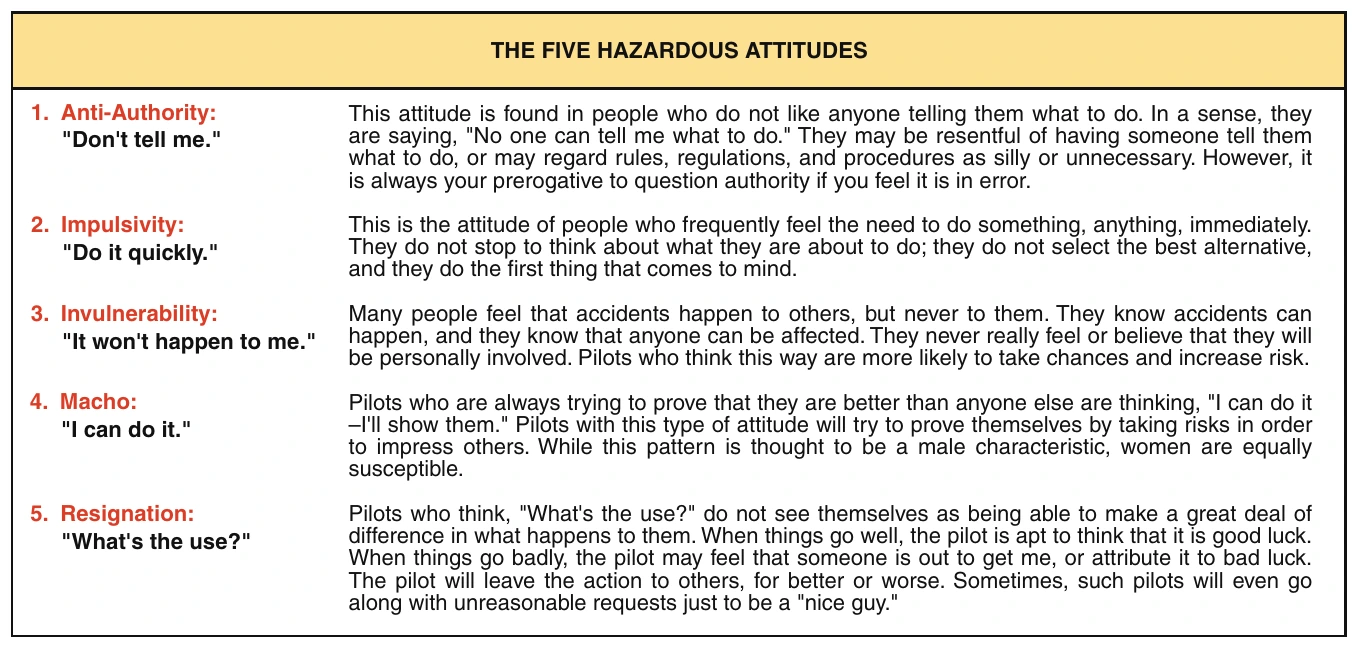
Being fit to fly depends on more than just your physical condition and recency of experience. For example, attitude affects the quality of your decisions. Attitude can be defined as a personal motivational predisposition to respond to persons, situations, or events in a given manner. Studies have identified five hazardous attitudes that can interfere with your ability to make sound decisions and exercise authority properly. [Figure 14-6]
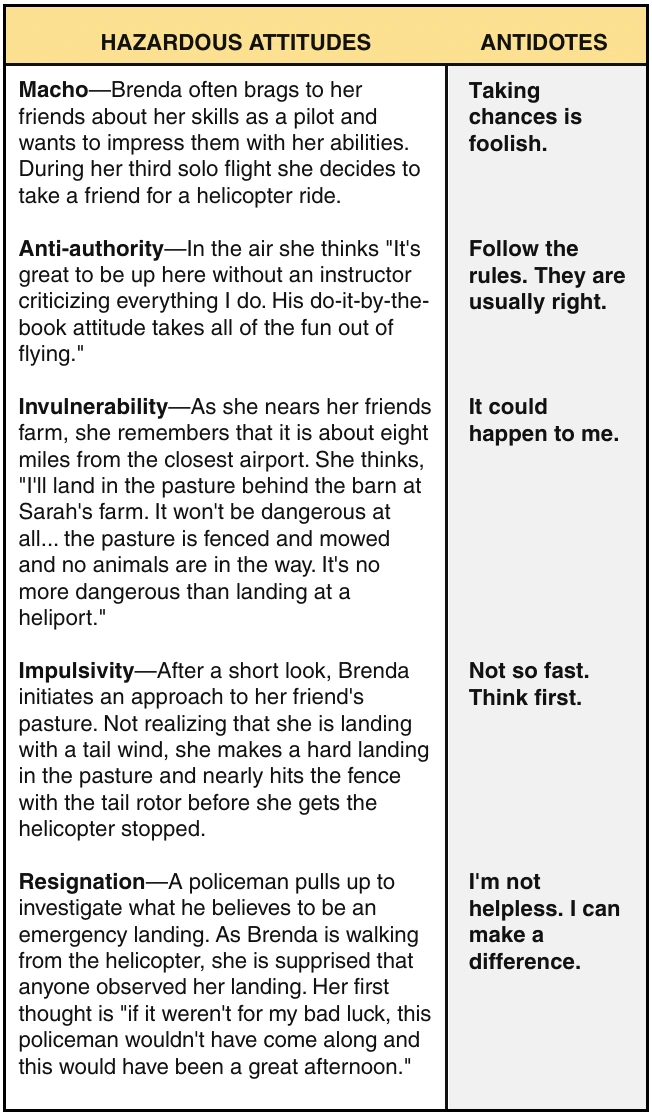
Hazardous attitudes can lead to poor decision making and actions that involve unnecessary risk. You must examine your decisions carefully to ensure that your choices have not been influenced by hazardous attitudes, and you must be familiar with positive alternatives to counteract the hazardous attitudes. These substitute attitudes are referred to as antidotes. During a flight operation, it is important to be able to recognize a hazardous attitude, correctly label the thought, and then recall its antidote. [Figure 14-7]
Stress management
Everyone is stressed to some degree all the time. A certain amount of stress is good since it keeps a person alert and prevents complacency. However, effects of stress are cumulative and, if not coped with adequately, they eventually add up to an intolerable burden.
Performance generally increases with the onset of stress, peaks, and then begins to fall off rapidly as stress levels exceed a person’s ability to cope. The ability to make effective decisions during flight can be impaired by stress. Factors, referred to as stressors, can increase a pilot’s risk of error in the cockpit. [Figure 14-8]
There are several techniques to help manage the accumulation of life stresses and prevent stress overload.
For example, including relaxation time in a busy schedule and maintaining a program of physical fitness can help reduce stress levels. Learning to manage time more effectively can help you avoid heavy pressures imposed by getting behind schedule and not meeting deadlines. Take an assessment of yourself to determine your capabilities and limitations and then set realistic goals. In addition, avoiding stressful situations and encounters can help you cope with stress.