
Chapter 13
Aircraft Landing Gear Systems
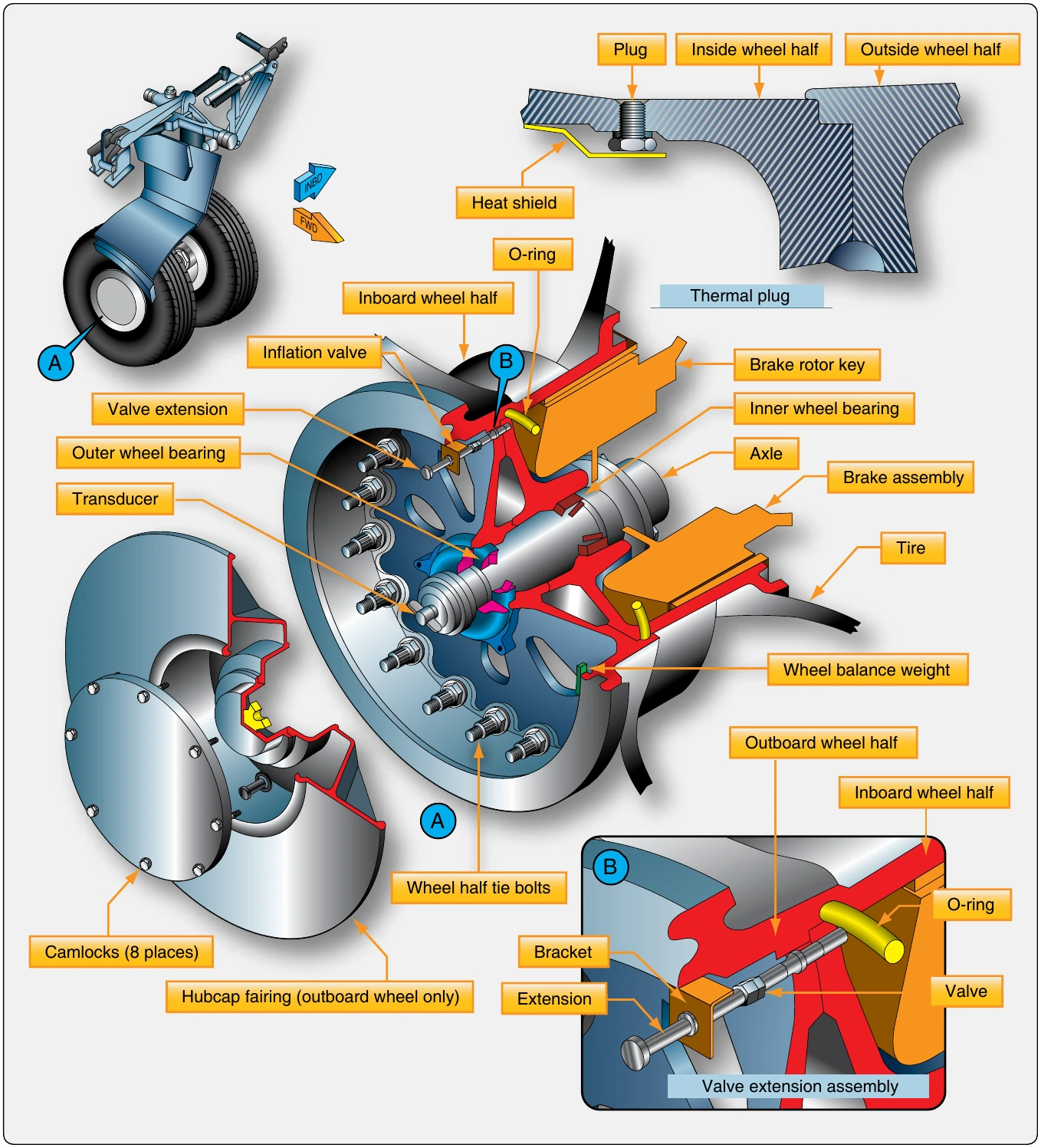
Outboard Wheel Half
The outboard wheel half bolts to the inboard wheel half to make up the wheel assembly upon which the tire is mounted.
The center boss is constructed to receive a bearing cup and bearing assembly as it does on the inboard wheel half. The outer bearing and end of the axle is capped to prevent contaminants from entering this area. Aircraft with anti-skid brake systems typically mount the wheel-spin transducer here. It is sealed and may also serve as a hub cap. The 737 outer wheel half illustrated in Figure 13-60 also has a hub cap fairing over the entire wheel half. This is to fair it with the wind since the outer wheel half does not close behind a gear door on this aircraft. Hub caps may also be found on fixed gear aircraft.
The outboard wheel half provides a convenient location of the valve stem used to inflate and deflate tubeless tires. Alternately, it may contain a hole through which a valve stem extension may pass from the inner wheel half or the valve stem itself may fit through such a hole if a tube-type tire is used.
Wheel Inspection
An aircraft wheel assembly is inspected while on the aircraft as often as possible. A more detailed inspection and any testing or repairs may be accomplished with the wheel assembly removed from the aircraft.
On Aircraft Inspection
The general condition of the aircraft wheel assemblies can be inspected while on the aircraft. Any signs of suspected damage that may require removal of the wheel assembly from the aircraft should be investigated.
Proper Installation
The landing gear area is such a hostile environment that the technician should inspect the landing gear including the wheels, tires, and brakes whenever possible. Proper installation of the wheels should not be taken for granted. All wheel tie bolts and nuts must be in place and secure. A missing bolt is grounds for removal, and a thorough inspection of the wheel halves in accordance with the wheel manufacturer’s procedures must be performed due to the stresses that may have occurred. The wheel hub dust cap and anti-skid sensor should also be secure. The inboard wheel half should interface with the brake rotor with no signs of chafing or excessive movement. All brake keys on the wheel must be present and secure.
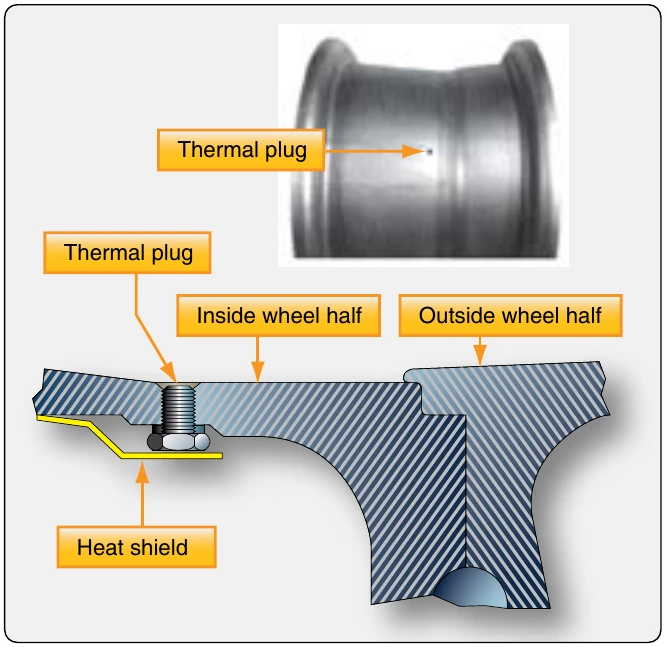
Examine the wheels for cracks, flaked paint, and any evidence of overheating. Inspect thermal plugs to ensure no sign of the fusible alloy having been melted. Thermal plugs that have permitted pressure loss in the tire require that the wheel assembly be removed for inspection. All other wheels with brakes and thermal plugs should be inspected closely while on the aircraft to determine if they too have overheated. Each wheel should be observed overall to ensure it is not abnormally tilted. Flanges should not be missing any pieces, and there should be no areas on the wheel that show significant impact damage.
Axle Nut Torque
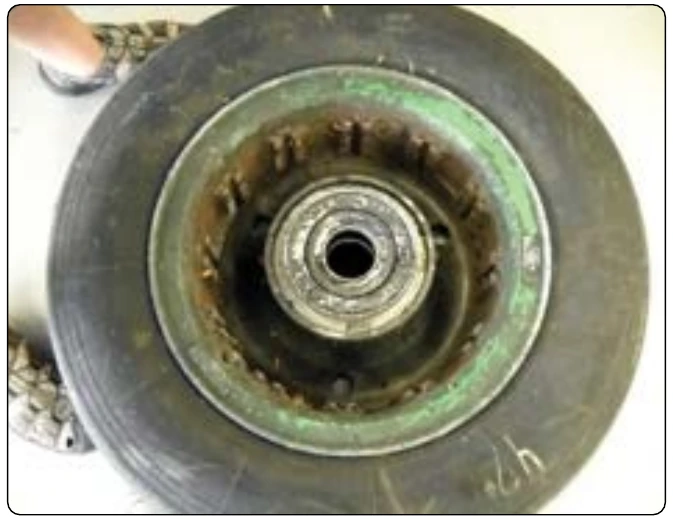
Axle nut torque is of extreme importance on an aircraft wheel installation. If the nut is too loose, the bearing and wheel assembly may have excessive movement. The bearing cup(s) could loosen and spin, which could damage the wheel. There could also be impact damage from the bearing rollers which leads to bearing failure. [Figure 13-63] An over-torqued axle nut prevents the bearing from properly accepting the weight load of the aircraft. The bearing spins without sufficient lubrication to absorb the heat caused by the higher friction level. This too leads to bearing failure. All aircraft axle nuts must be installed and torqued in accordance with the airframe manufacturer’s maintenance procedures.
Off Aircraft Wheel Inspection
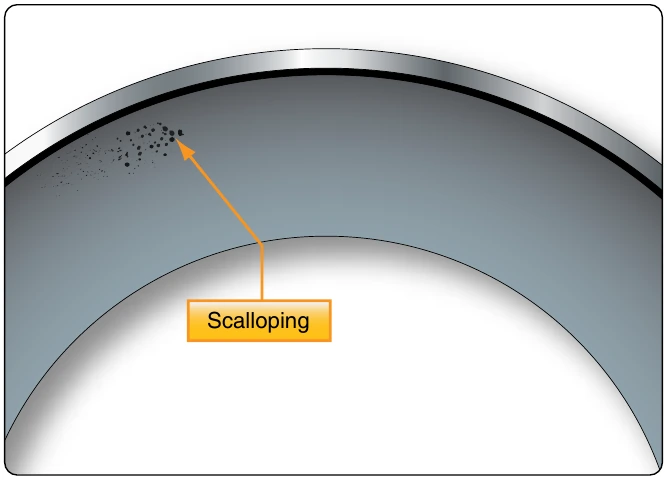
Discrepancies found while inspecting a wheel mounted on the aircraft may require further inspection with the wheel removed from the aircraft. Other items such as bearing condition, can only be performed with the wheel assembly removed.A complete inspection of the wheel requires that the tire be removed from the wheel rim. Observe the following caution when removing a wheel assembly from an aircraft.
Caution: Deflate the tire before starting the procedure of removing the wheel assembly from the aircraft. Wheel assemblies have been known to explode while removing the axle nut, especially when dealing with high pressure, high performance tires. The torque of the nut can be the only force holding together a defective wheel or one with broken tie bolts. When loosened, the high internal pressure of the tire can create a catastrophic failure that could be lethal to the technician. It is also important to let aircraft tires cool before removal. Three hours or more is needed for cool down. Approach the wheel assembly from the front or rear, not broadside. Do not stand in the path of the released air and valve core trajectory when removing air from the tire as it could seriously injure the technician should it release from the valve stem.