
Chapter 13
Aircraft Landing Gear Systems
In addition to tread wear, an aircraft tire should be inspected for damage. Cuts, bruises, bulges, imbedded foreign objects, chipping, and other damage must be within limits to continue the tire in service. Some acceptable methods of dealing with this type of damage are described below. All damage, suspected damage, and areas with leaks should be marked with chalk, a wax marker, paint stick, or other device before the tire is deflated or removed. Often, it is impossible to for retread should be marked in damaged areas to enable closer inspection of the extent of the damage before the new tread is installed. [Figure 13-138]
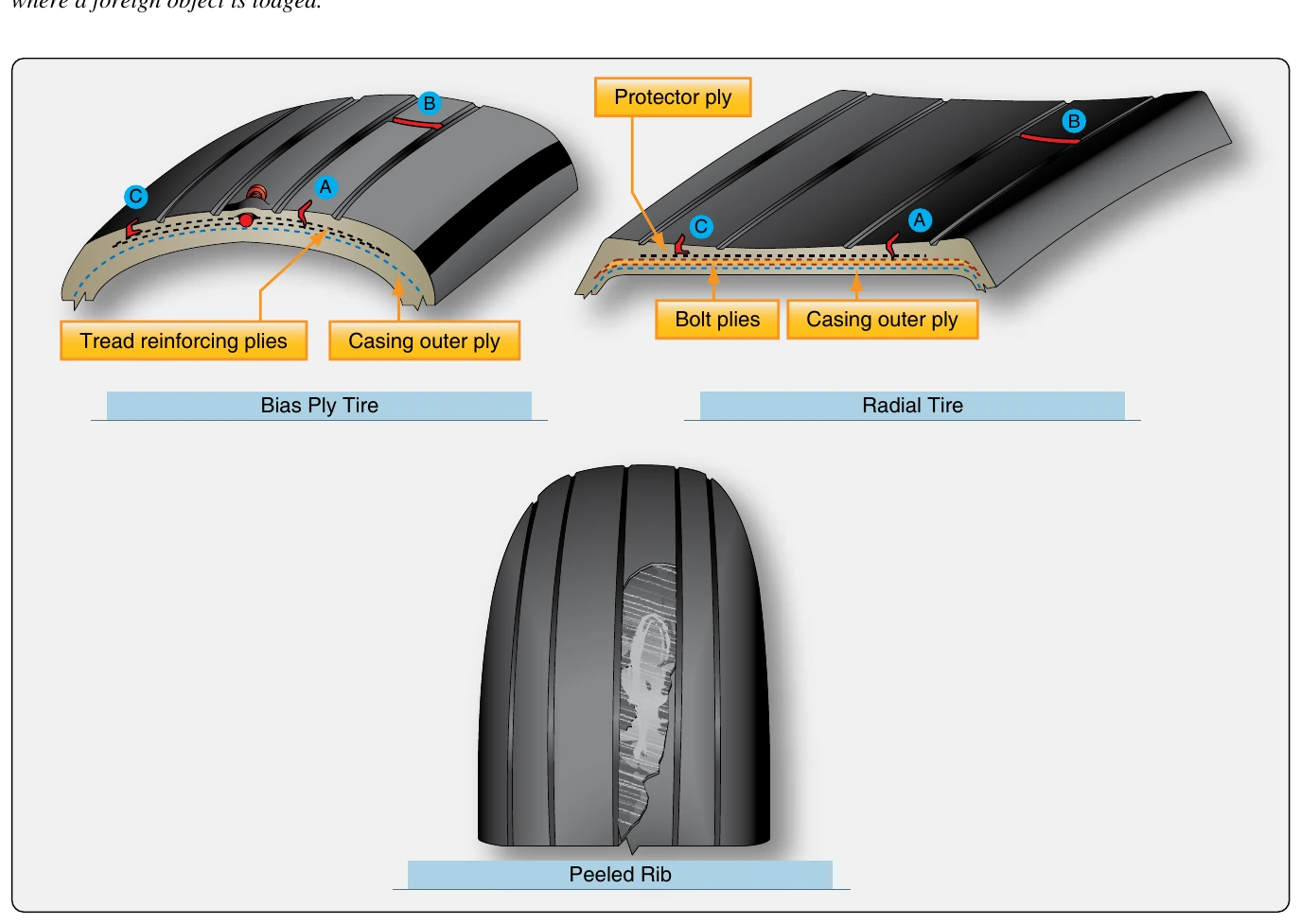
Foreign objects imbedded in a tire’s tread are of concern and should be removed when not imbedded beyond the tread. Objects of questionable depth should only be removed after the tire has been deflated. A blunt awl or appropriately sized screwdriver can be used to pry the object from the tread. Care must be exercised to not enlarge the damaged area with the removal tool. [Figure 13-139] Once removed, assess the remaining damage to determine if the tire is serviceable. A round hole caused by a foreign object is acceptable only if it is 3⁄8-inch or less in diameter. Embedded objects that penetrate or expose the casing cord body of a bias ply tire or the tread belt layer of a radial tire cause the tire to become unairworthy and it must be removed from service.
Cuts and tread undercutting can also render a tire unairworthy. A cut that extends across a tread rib is cause for tire removal. These can sometimes lead to a section of the rib to peel off the tire. [Figure 13-140] Consult the aircraft maintenance manual, airline operations manual, or other technical documents applicable to the aircraft tire in question.
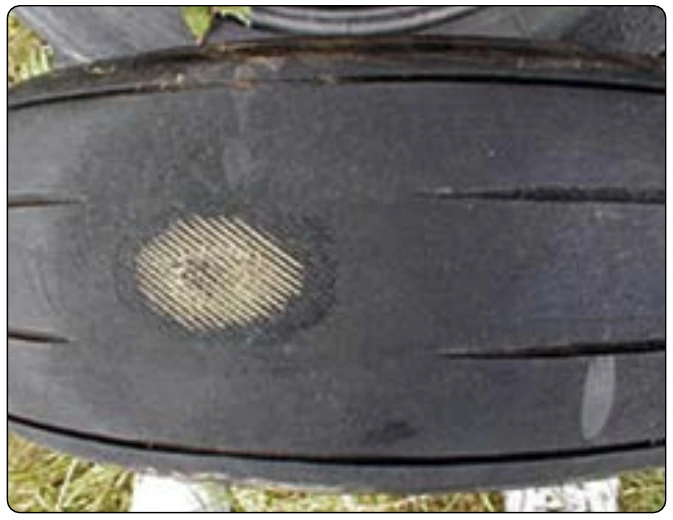
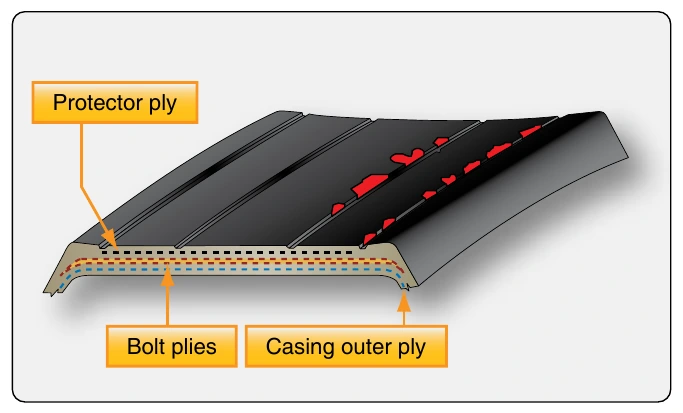
A flat spot on a tire is the result of the tire skidding on the runway surface while not rotating. This typically occurs when the brakes lock on while the aircraft is moving. If the flat spot damage does not expose the reinforcing ply of a bias tire or the protector ply of a radial tire, it may remain in service. However, if the flat spot causes vibration, the tire must be removed. Landing with a brake applied can often cause a severe flat spot that exposes the tire under tread. It can also cause a blowout. The tire must be replaced in either case. [Figure 13-141]
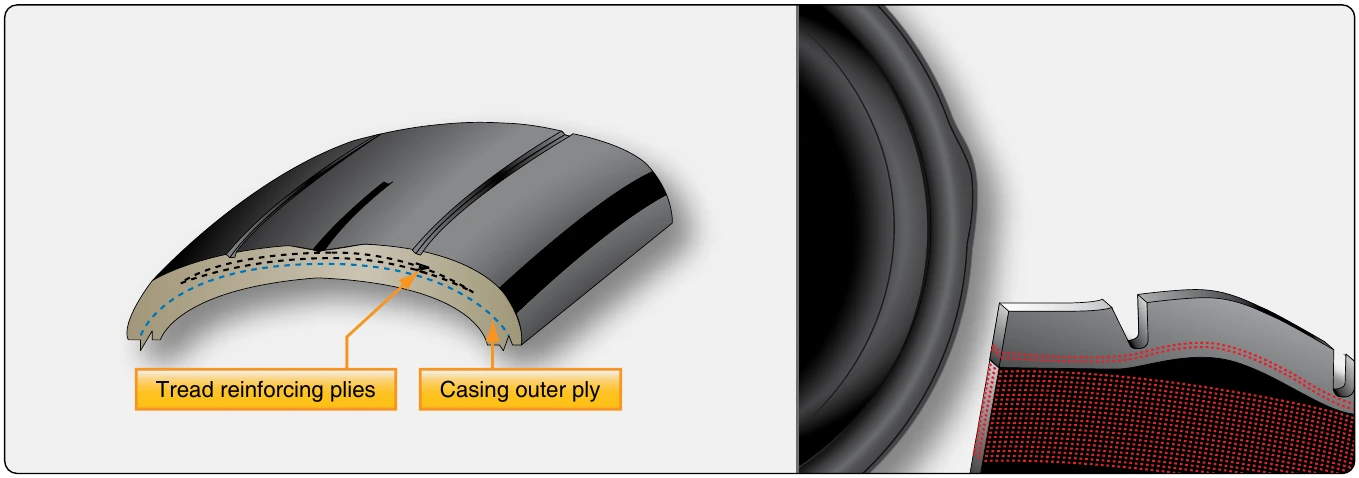
Abulge or separation of the tread from the tire carcass is cause for immediate removal and replacement of the tire. Mark the area before deflation as it could easily become undetectable without air in the tire. [Figure 13-142]
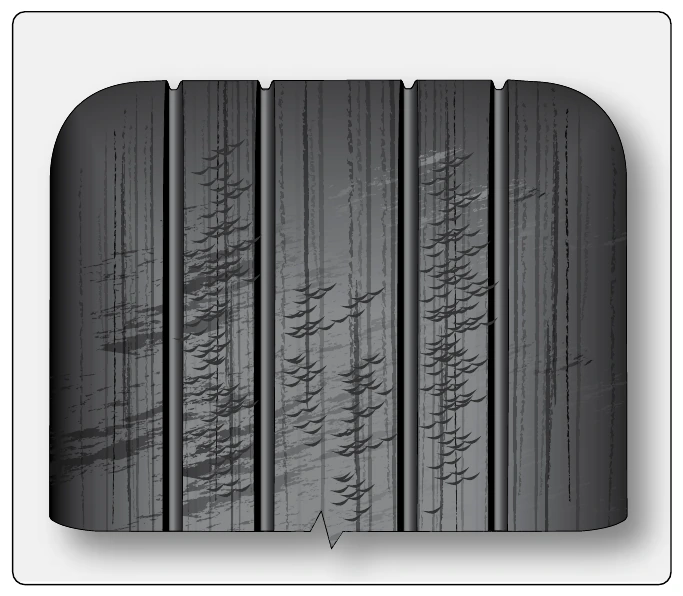
Operation on a grooved runway can cause an aircraft tire tread to develop shallow chevron shaped cuts. These cuts are allowed for continued service, unless chunks or cuts into the fabric of the tire result. Deep chevrons that cause a chunk of the tread to be removed should not expose more than 1 square inch of the reinforcing or protector ply. Consult the applicable inspection parameters to determine the allowable extent of chevron cutting. [Figure 13-143]
Tread chipping and chunking sometimes occurs at the edge of the tread rib. Small amounts of rubber lost in this way are permissible. Exposure of more than 1 square inch of the reinforcing or protector ply is cause for removal of the tire. [Figure 13-144]
Cracking in a tread groove of an aircraft tire is generally not acceptable if more than ¼-inch of the reinforcing or protector ply is exposed. Groove cracks can lead to undercutting of the tread, which eventually can cause the entire tread to be thrown from the tire. [Figure 13-145]
Oil, hydraulic fluid, solvents, and other hydrocarbon substances contaminate tire rubber, soften it, and make it spongy. A contaminated tire must be removed from service. If any volatile fluids come in contact with the tire, it is best to wash the tire or area of the tire with denatured alcohol followed by soap and water. Protect tires from contact with potentially harmful fluids by covering tires during maintenance in the landing gear area.
Tires are also subject to degradation from ozone and weather. Tires on aircraft parked outside for long periods of times can be covered for protection from the elements. [Figure 13-146]
Sidewall Condition
The primary function of the sidewall of an aircraft tire is protection of the tire carcass. If the sidewall cords are exposed due to a cut, gouge, snag, or other injury, the tire must be replaced. Mark the area of concern before removal of the tire. Damage to the sidewall that does not reach the cords is typically acceptable for service. Circumferential cracks or slits in the sidewall are unacceptable. A bulge in a tire sidewall indicates possible delamination of the sidewall carcass plies. The tire must immediately be removed from service.
Weather and ozone can cause cracking and checking of the sidewall. If this extends to the sidewall cords, the tire must be removed from service. Otherwise, sidewall checking as show in Figure 13-147 does not affect the performance of the tire and it may remain in service.
Tire Removal
Removal of any tire and wheel assembly should be accomplished following all aircraft manufacturer’s instructions for the procedure. Safety procedures are designed for the protection of the technician and the maintenance of aircraft parts in serviceable condition. Follow all safety procedures to prevent personal injury and damage to aircraft parts and assemblies.