
Chapter 13
Aircraft Landing Gear Systems
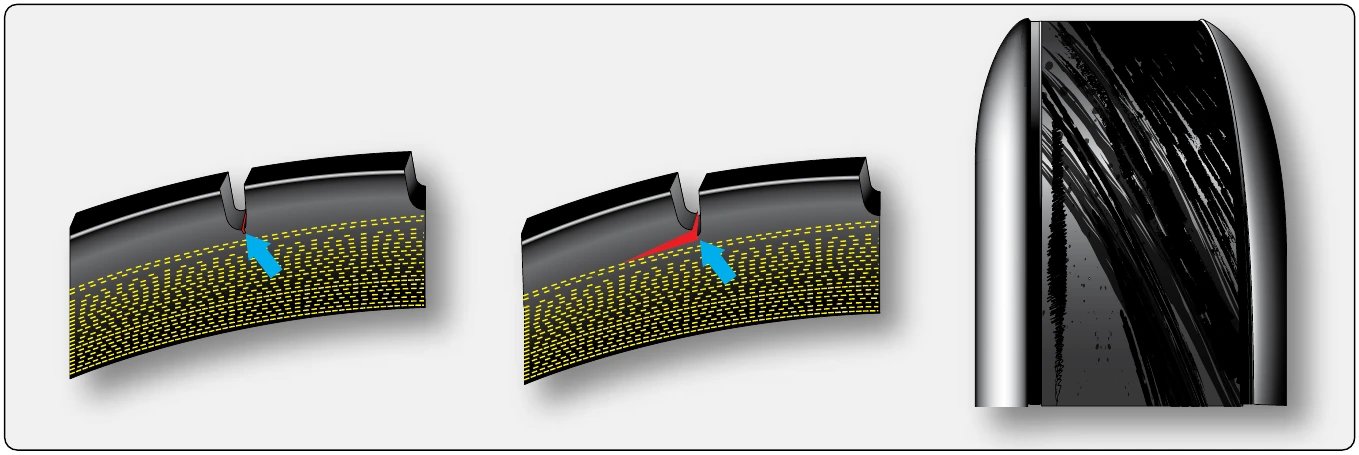
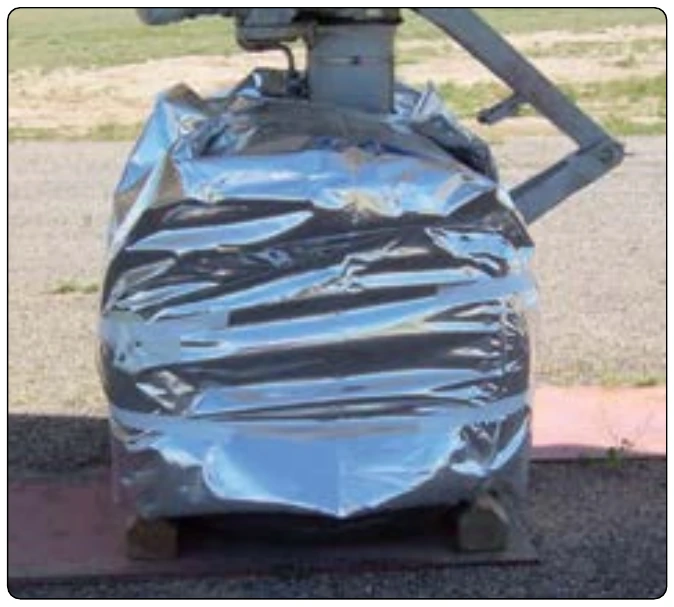
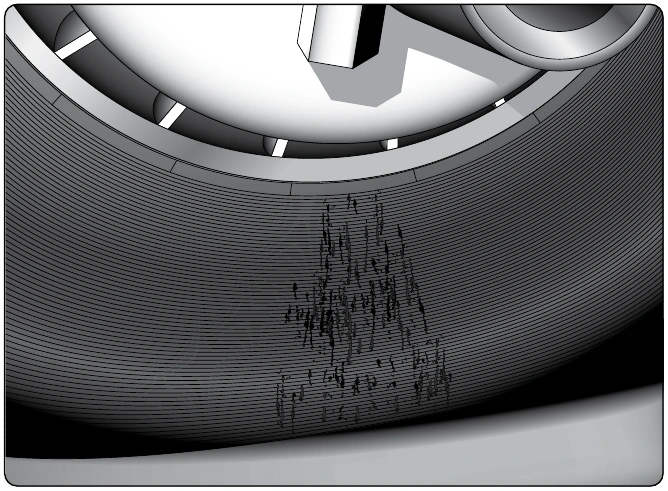
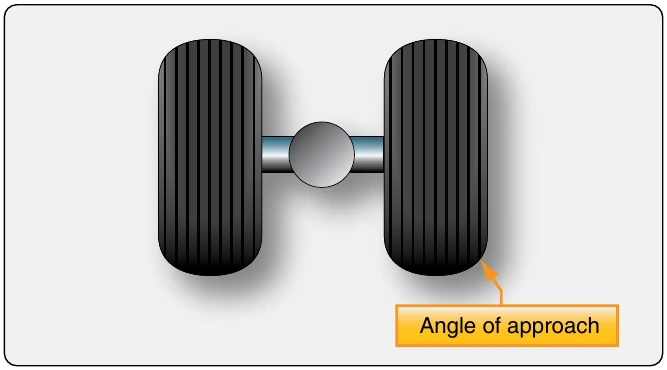
An aircraft tire and wheel assembly, especially a high-pressure assembly that has been damaged or overheated, should be treated as though it may explode. Never approach such a tire while its temperature is still elevated above ambient temperature. Once cooled, approach a damaged tire and wheel assembly from an oblique angle advancing toward the shoulder of the tire. [Figure 13-148]
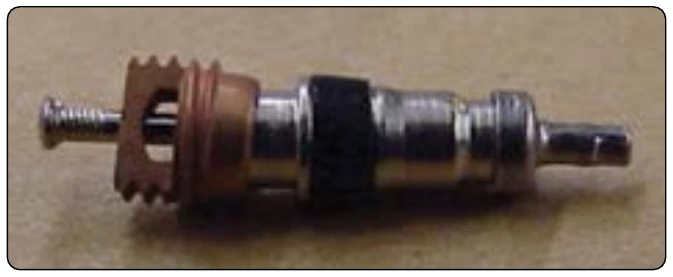
Deflate all unserviceable and damaged tires before removal from the aircraft. Use a valve core/deflation tool to deflate the tire. Stand to the side—away from the projectile path of the valve core. A dislodged valve core propelled by internal tire pressure can cause serious human injury. When completely deflated, remove the valve core. [Figure 13-149] A tire and wheel assembly in airworthy condition may be removed to access other components for maintenance without deflating the tire. This is common practice, such as when accessing the brake when the wheel assembly is immediately reinstalled.
For tracking purposes, ensure damaged areas of a tire are marked before deflation. Record all known information about an unserviceable tire and attach it to the tire for use by the retread repair station.
Once removed from the aircraft, a tire must be separated from the wheel rim upon which it is mounted. Proper equipment and technique should be followed to avoid damage to the tire and wheel. The wheel manufacturer’s maintenance information is the primary source for dismounting guidelines.
The bead area of the tire sits firmly against the rim shoulder and must be broken free. Always use proper bead breaking equipment for this purpose. Never pry a tire from a wheel rim as damage to the wheel is inevitable. The wheel tie bolts must remain installed and fully tightened when the bead is broken from the rim to prevent damage to the wheel half mating surfaces.
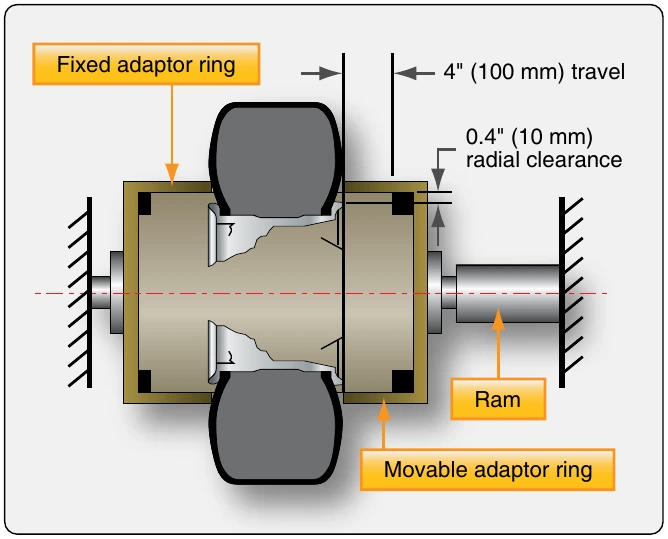
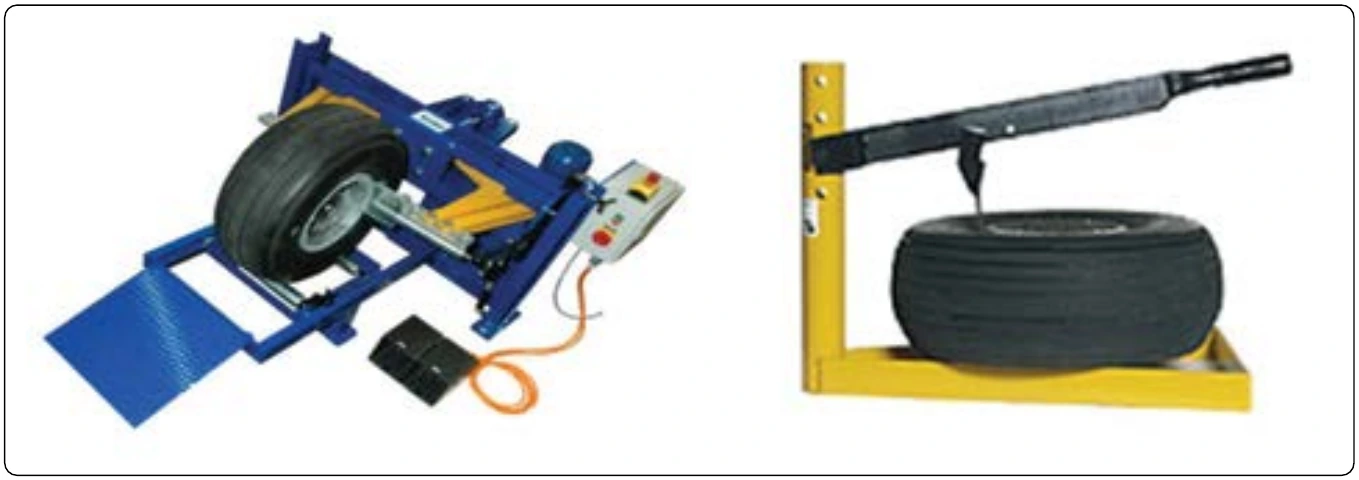
When the bead breaking press contact surface is applied to the tire, it should be as close to the wheel as possible without touching it during the entire application of pressure. Tires and rims of different sizes require contact pads suitable for the tire. Hand presses and hydraulic presses are available. Apply the pressure and hold it to allow the bead to move on the rim. Gradually progress around the rim until the tire bead is broken free. Ring-type bead breakers apply pressure around the circumference of the entire sidewall so rotation is not required. [Figure 13-150] Once the bead is broken free, the wheel halves may be disassembled. [Figure 13-151]
Radial tires have only one bead bundle on each side of the tire. The sidewall is more flexible in this area than a bias ply tire. The proper tooling should be used, and pressure should be applied slowly to avoid heavy distortion of the sidewall. Lubrication may be applied and allowed to soak into the tire-wheel interface. Only soapy tire solutions should be used. Never apply a hydrocarbon-based lubricant to an aircraft tire as this contaminates the rubber compound used to construct the tire. Beads on tube-type and tubeless tires are broken free in a similar manner.
Tire Inspection Off of the Aircraft
Once a tire has been removed from the wheel rim, it should be inspected for condition. It may be possible to retread the tire at an approved repair station and return it to service. A sequential inspection procedure helps ensure no parts of the tire are overlooked. Mark and record the extent of all damage. Advisory Circular (AC) 43-13-1 gives general guidelines for tire inspection and repair. Tires must only be repaired by those with the experience and equipment to do so. Most tire repairs are accomplished at a certified tire repair facility.
When inspecting a tire removed from the aircraft, pay special attention to the bead area since it must provide an air tight seal to the wheel rim and transfer forces from the tire to the rim. Inspect the bead area closely as it is where the heat is concentrated during tire operation. Surface damage to the chafer is acceptable and can be repaired when the tire is retreaded. Other damage in the bead area is usually cause for rejection. Damage to the turn-ups, ply separation at the bead, or a kinked bead are examples of bead area damage that warrant the tire be discarded. The bead area of the tire may sustain damage or have an altered appearance or texture on a tire that has been overheated. Consult a certified tire repair station or re-tread facility when in doubt about the condition observed. The wheel rim must also be inspected for damage. An effective seal without slippage, especially on tubeless tires, is dependent on the condition and integrity of the wheel in the bead seat area.
Overheating of a tire weakens it even though the damage might not be obvious. Any time a tire is involved in an aborted takeoff, severe braking, or the thermal plug in the wheel has melted to deflate the tire before explosion, the tire must be removed. On a dual installation, both tires must be removed. Even if only one tire shows obvious damage or deflates, the loads experienced by the mate are excessive. Internal damage such as ply separation, is likely. The history of having been through an overheat event is all that is required for the tire to be discarded.
Damaged or suspected damaged areas of the tire should be re-inspected while the tire is off the aircraft. Cuts can be probed to check for depth and extent of damage below the tread. In general, damage that does not exceed 40 percent of the tire plies can be repaired when the tire is retreaded. Small punctures with a diameter on the tire inner surface of less than 1⁄8-inch and a diameter on the outer surface of less than ¼-inch can also be repaired and retreaded. A bulge caused by ply separation is reason to discard a tire. However, a bulge caused by tread separation from the tire carcass may be repairable during retread. Exposed sidewall cord or sidewall cord damage is unacceptable, and the tire cannot be repaired or retreaded. Consult the tire manufacturer or certified retreader for clarification on damage to a tire.