Chapter 14
Aircraft Fuel Systems
Surfactants
Surfactants are liquid chemical contaminants that naturally occur in fuels. They can also be introduced during the refining or handling processes. These surface-active agents usually appear as tan to dark brown liquid when they are present in large quantities. They may even have a soapy consistency. Surfactants in small quantities are unavoidable and pose little threat to fuel system functioning. Larger quantities of surfactants do pose problems. In particular, they reduce the surface tension between water and the fuel and tend to cause water and even small particles in the fuel to remain suspended rather than settling into the sumps. Surfactants also tend to collect in filter elements making them less effective.
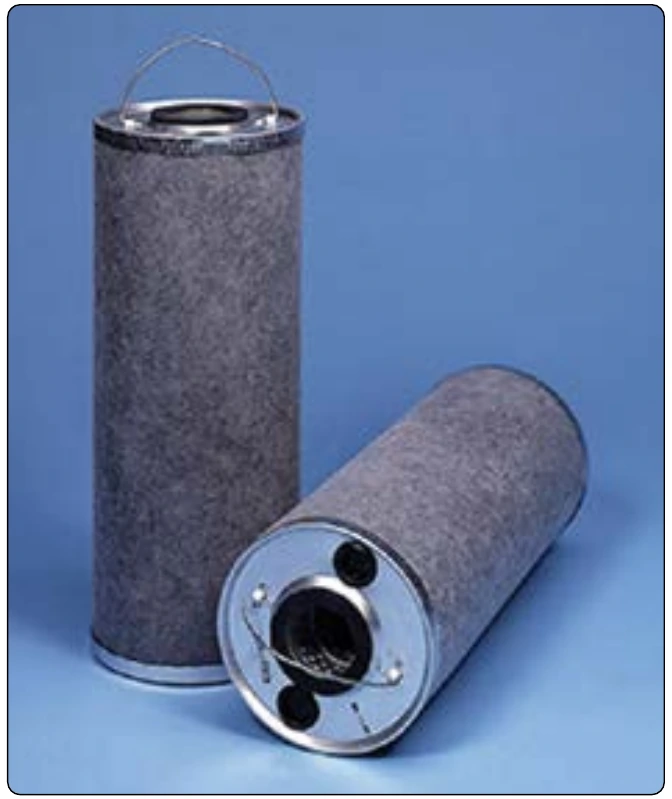
Surfactants are usually in the fuel when it is introduced into the aircraft. Discovery of either excessive quantities of dirt and water making their way through the system or a sudsy residue in filters and sumps may indicate their presence. The source of fuel should be investigated and avoided if found to contain a high level of these chemicals. As mentioned, slow settling rates of solids and water into sumps is a key indicator that surfactant levels are high in the fuel. Most quality fuel providers have clay filter elements on their fuel dispensing trucks and in their fixed storage and dispensing systems.
These filters, if renewed at the proper intervals, remove most surfactants through adhesion. Surfactants discovered in the aircraft systems should be traced to the fuel supply source and the use and condition of these filters. [Figure 14-95]
Microorganisms
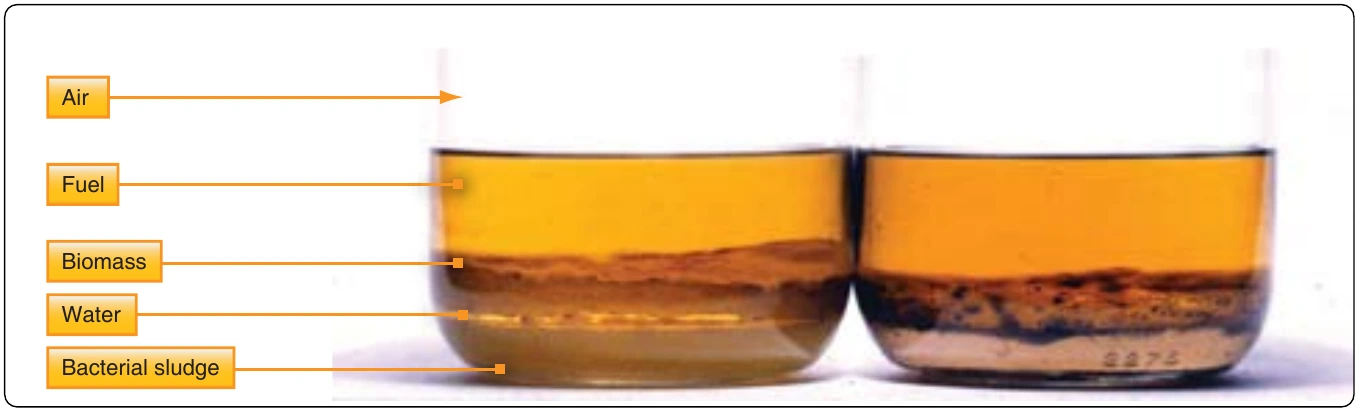
The presence of microorganisms in turbine engine fuels is a critical problem. There are hundreds of varieties of these life forms that live in free water at the junction of the water and fuel in a fuel tank. They form a visible slime that is dark brown, grey, red, or black in color. This microbial growth can multiply rapidly and can cause interference with the proper functioning of filter elements and fuel quantity indicators. Moreover, the slimy water/microbe layer in contact with the fuel tank surface provides a medium for electrolytic corrosion of the tank. [Figure 14-96] Since the microbes live in free water and feed on fuel, the most powerful remedy for their presence is to keep water from accumulating in the fuel. Fuel 100 percent free of water is not practicable. By following best practices for sump draining and filter changes, combined with care of fuel stock tanks used to refuel aircraft, much of the potential for water to accumulate in the aircraft fuel tanks can be mitigated. The addition of biocides to the fuel when refueling also helps by killing organisms that are present.
Foreign Fuel Contamination
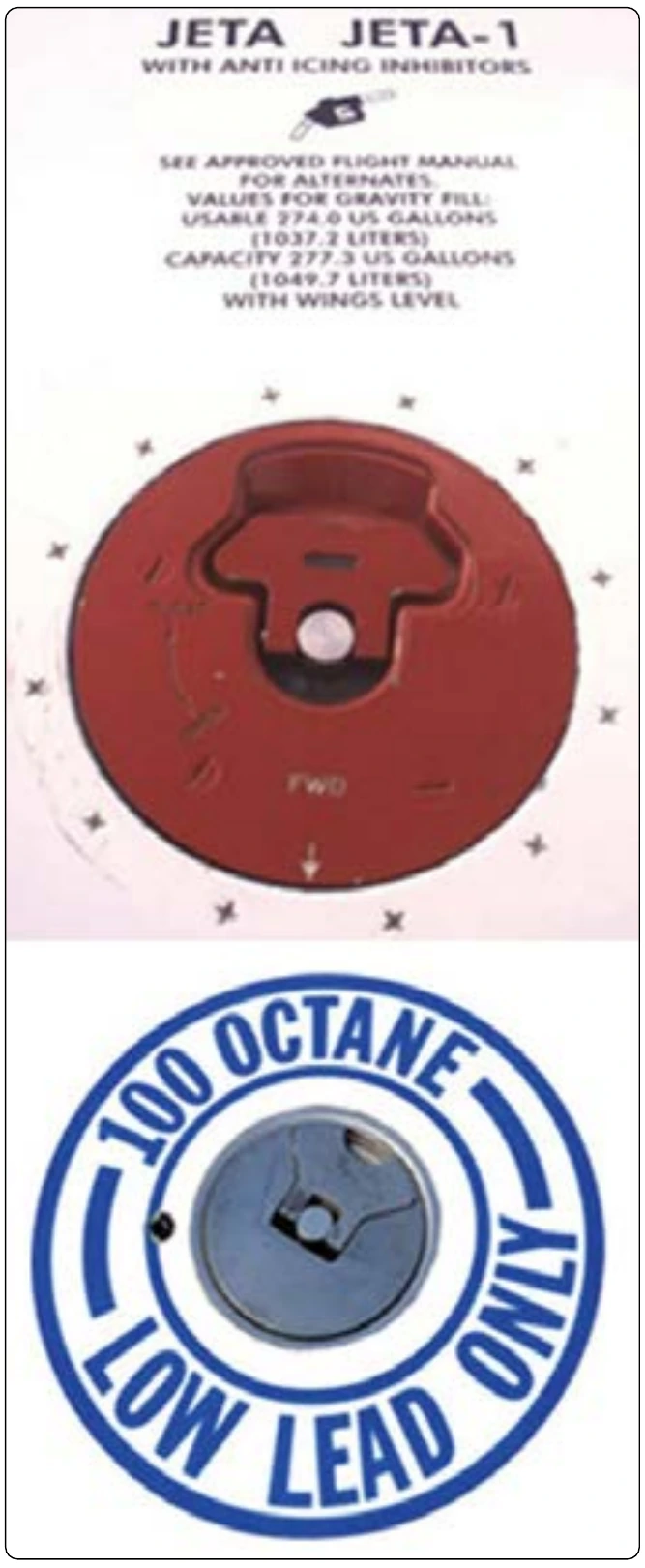
Aircraft engines operate effectively only with the proper fuel. Contamination of an aircraft’s fuel with fuel not intended for use in that particular aircraft can have disastrous consequences. It is the responsibility of all aviators to put forth effort continuously to ensure that only the fuel designed for the operation of the aircraft’s engine(s) is put into the fuel tanks. Each fuel tank receptacle or fuel cap area is clearly marked to indicate which fuel is required. [Figure 14-97]
If the wrong fuel is put into an aircraft, the situation must be rectified before flight. If discovered before the fuel pump is operated and an engine is started, drain all improperly filled tanks. Flush out the tanks and fuel lines with the correct fuel and then refill the tanks with the proper fuel. However, if discovered after an engine has been started or attempted to be started, the procedure is more in depth. The entire fuel system, including all fuel lines, components, metering device(s) and tanks, must be drained and flushed. If the engines have been operated, a compression test should be accomplished, and the combustion chamber and pistons should be borescope inspected. Engine oil should be drained, and all screens and filters examined for any evidence of damage. Once reassembled and the tanks have been filled with the correct fuel, a full engine run-up check should be performed before releasing the aircraft for flight.
Contaminated fuel caused by the introduction of small quantities of the wrong type of fuel into an aircraft may not look any different when visually inspected, making a dangerous situation more dangerous. Any person recognizing that this error has occurred must ground the aircraft. The lives of the aircraft occupants are at stake.
Detection of Contaminants
Visual inspection of fuel should always reveal a clean, bright looking liquid. Fuel should not be opaque, which could be a sign of contamination and demands further investigation. As mentioned, the technician must always be aware of the fuel’s appearance, as well as when and from what sources refueling has taken place. Any suspicion of contamination must be investigated.
In addition to the detection methods mentioned for each type of contamination above, various field and laboratory tests can be performed on aircraft fuel to expose contamination. A common field test for water contamination is performed by adding a dye that dissolves in water but not fuel to a test sample drawn from the fuel tank. The more water present in the fuel, the greater the dye disperses and colors the sample.
Another common test kit commercially available contains a grey chemical powder that changes color to pink or purple when the contents of a fuel sample contains more than 30 parts per million (ppm) of water. A 15-ppm test is available for turbine engine fuel. [Figure 14-98] These levels of water are considered generally unacceptable and not safe for operation of the aircraft. If levels are discovered above these amounts, time for the water to settle out of the fuel should be given or the aircraft should be defueled and refueled with acceptable fuel.
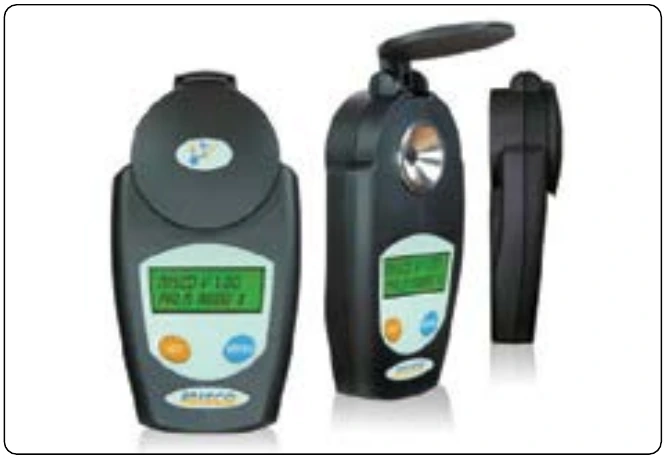
The presence and level of microorganisms in a fuel tank can also be measured with a field device. The test detects the metabolic activity of bacteria, yeast, and molds, including sulfate reducing bacteria, and other anaerobe microorganisms. This could be used to determine the amount of anti-microbial agent to be added to the fuel. The testing unit is shown in
Bug test kits test fuel specifically for bacteria and fungus. While other types of microorganisms may exist, this semi-quantitative test is quick and easy to perform. Treat a fuel sample with the product and match the color of the sample to the chart for an indication of the level of bacteria and fungus present. These are some of the most common types of microorganisms that grow in fuel; if growth levels of fungus and bacteria are acceptable, the fuel could be usable. [Figure 14-100] Fuel trucks and fuel farms may make use of laser contaminant identification technology. All fuel exiting the storage tank going into the servicing hose is passed through the analyzer unit. Laser sensing technology determines the difference between water and solid particle contaminants. When an excessive level of either is detected, the unit automatically shuts off flow to the fueling nozzle. Thus, aircraft are fueled only with clean dry fuel. When surfactant filters are combined with contaminant identification technology and microorganism detection, chances of delivering clean fuel to the aircraft engines are good. [Figure 14-101]