
Chapter 14
Aircraft Fuel Systems
Fuel System Servicing
Maintaining aircraft fuel systems in acceptable condition to deliver clean fuel to the engine(s) is a major safety factor in aviation. Personnel handling fuel or maintaining fuel systems should be properly trained and use best practices to ensure that the fuel, or fuel system, are not the cause of an incident or accident.
Checking for Fuel System Contaminants
Continuous vigilance is required when checking aircraft fuel systems for contaminants. Daily draining of strainers and sumps is combined with periodic filter changes and inspections to ensure fuel is contaminant free. Turbine powered engines have highly refined fuel control systems through which flow hundreds of pounds of fuel per hour of operation. Sumping alone is not sufficient. Particles are suspended longer in jet fuel due to its viscosity. Engineers design a series of filters into the fuel system to trap foreign matter. Technicians must supplement these with cautious procedures and thorough visual inspections to accomplish the overall goal of delivering clean fuel to the engines.
Keeping a fuel system clean begins with an awareness of the common types of contamination. Water is the most common. Solid particles, surfactants, and microorganisms are also common. However, contamination of fuel with another fuel not intended for use on a particular aircraft is possibly the worst type of contamination.
Water
Water can be dissolved into fuel or entrained. Entrained water can be detected by a cloudy appearance to the fuel. Close examination is required. Air in the fuel tends to cause a similar cloudy condition but is near the top of the tank. The cloudiness caused by water in the fuel tends to be more towards the bottom of the tank as the water slowly settles out.
As previously discussed, water can enter a fuel system via condensation. The water vapor in the vapor space above the liquid fuel in a fuel tank condenses when the temperature changes. It normally sinks to the bottom of the fuel tank into the sump where it can be drained off before flight. [Figure 14-93] However, time is required for this to happen; therefore, you should wait a period of time after fueling before checking the fuel sumps so the water and sediment can settle to the drain point.
On some aircraft, a large amount of fuel needs to be drained before settled water reaches the drain valve. Awareness of this type of sump idiosyncrasy for a particular aircraft is important. The condition of the fuel and recent fueling practices need to be considered and are equally important. If the aircraft has been flown often and filled immediately after flight, there is little reason to suspect water contamination beyond what would be exposed during a routine sumping. An aircraft that has sat for a long period of time with partially full fuel tanks is a cause of concern.
It is possible that water is introduced into the aircraft fuel load during refueling with fuel that already contains water. Any suspected contamination from refueling or the general handling of the aircraft should be investigated. A change in fuel supplier may be required if water continues to be an issue despite efforts being made to keep the aircraft fuel tanks full and sumps drained on a regular basis. Fuel below freezing temperature may contain entrained water in ice form that may not settle into the sump until melted. Use of an anti-icing solution in turbine fuel tanks helps prevent filter blockage from water that condenses out of the fuel as ice during flight.
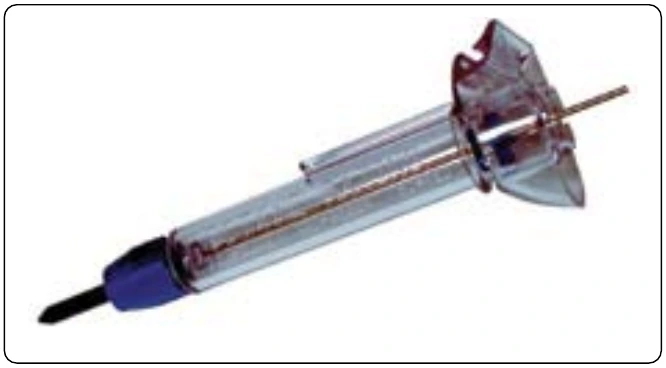
The fuel anti-ice additive level should be monitored so that recommended quantity for the tank capacity is maintained. After repeated fueling, the level can be obscured. A field hand-held test unit can be used to check the amount of anti-ice additive already in a fuel load. [Figure 14-94]
Strainers and filters are designed with upward flow exits to have water collect at the bottom of the fuel bowl to be drained off. This should not be overlooked. Entrained water in small quantities that makes it to the engine usually poses no problem. Large amounts of water can disrupt engine operation. Settled water in tanks can cause corrosion. This can be magnified by microorganisms that live in the fuel/water interface. High quantities of water in the fuel can also cause discrepancies in fuel quantity probe indications.
Solid Particle Contaminants
Solid particles that do not dissolve in the fuel are common contaminants. Dirt, rust, dust, metal particles, and just about anything that can find its way into an open fuel tank is of concern. Filter elements are designed to trap these contaminants and some fall into the sump to be drained off. Pieces of debris from the inside of the fuel system may also accumulate, such as broken-off sealant, or pieces of filter elements, corrosion, etc.
Preventing solid contaminant introduction into the fuel is critical. Whenever the fuel system is open, care must be taken to keep out foreign matter. Lines should be capped immediately. Fuel tank caps should not be left open for any longer than required to refuel the tanks. Clean the area adjacent to wherever the system is opened before it is opened.
Coarse sediments are those visible to the naked eye. Should they pass beyond system filters, they can clog in fuel metering device orifices, sliding valves, and fuel nozzles. Fine sediments cannot actually be seen as individual particles. They may be detected as a haze in the fuel or they may refract light when examining the fuel. Their presence in fuel controls and metering devices is indicated by dark shellac-like marks on sliding surfaces.
The maximum amount of solid particle contamination allowable is much less in turbine engine fuel systems than in reciprocating-engine fuel systems. It is particularly important to regularly replace filter elements and investigate any unusual solid particles that collect therein. The discovery of significant metal particles in a filter could be a sign of a failing component upstream of the filter. A laboratory analysis is possible to determine the nature and possible source of solid contaminants.