Chapter 15
Ice & Rain Protection
Deicing System Components
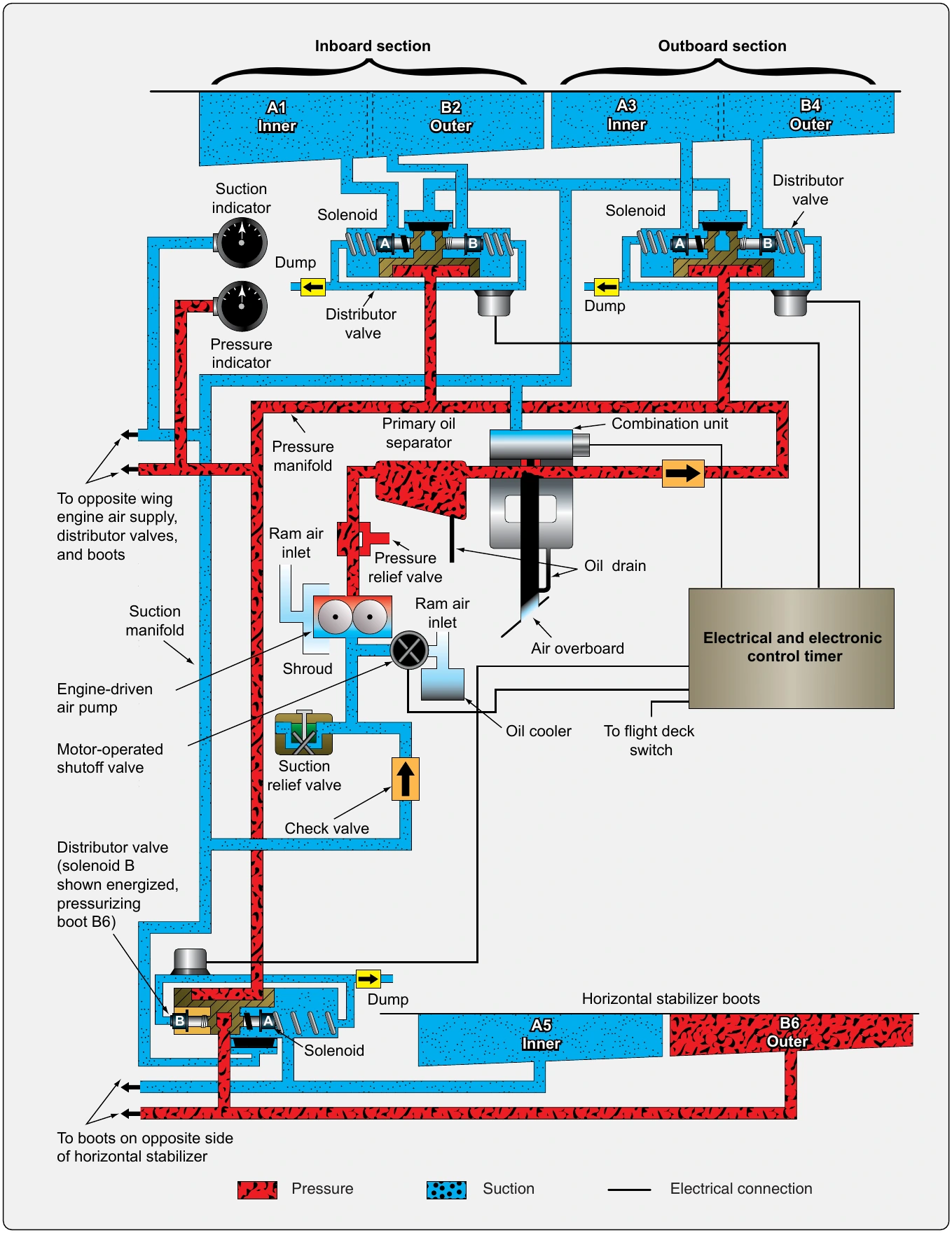
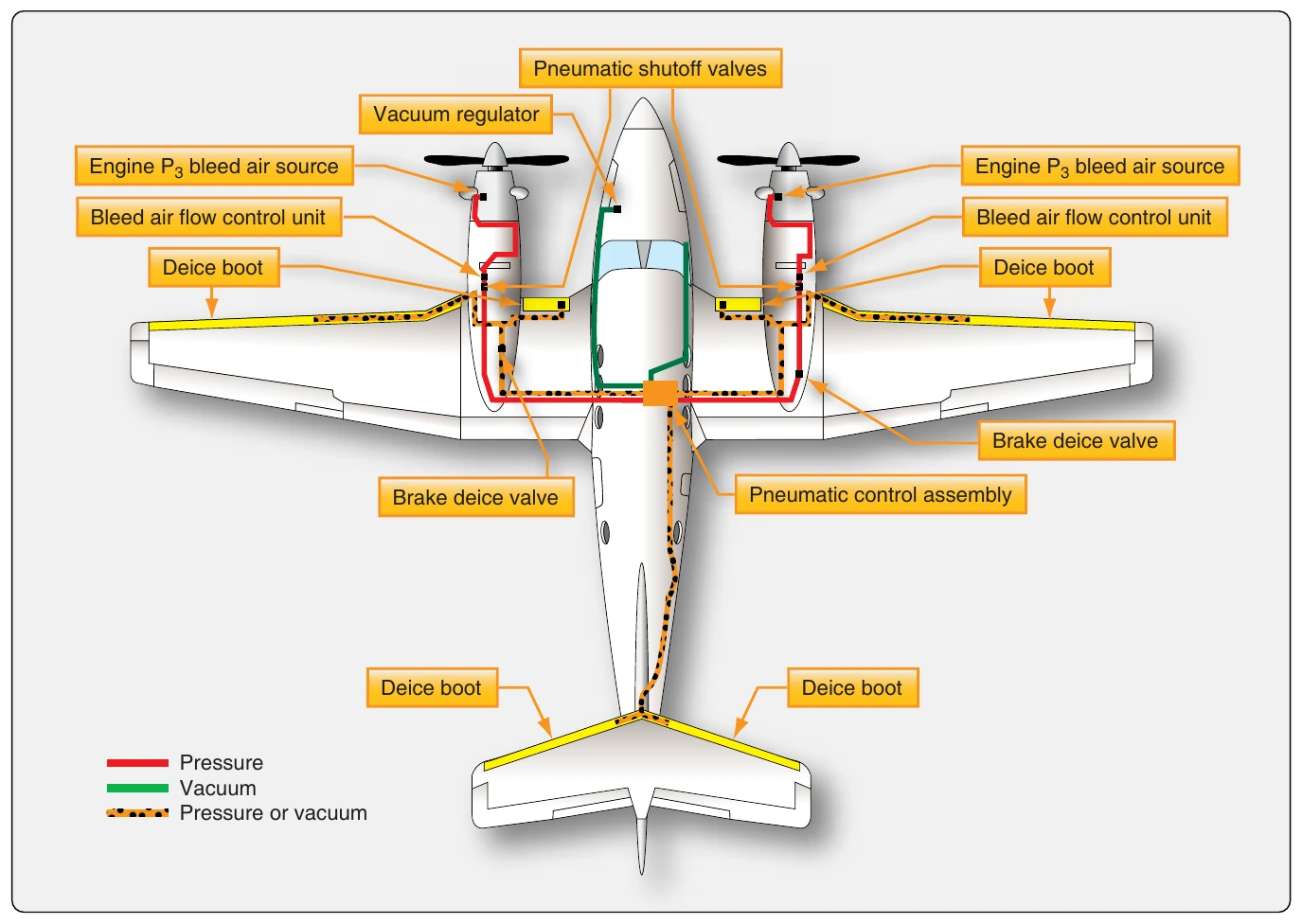
Several components are used to construct all deice boot systems. The components may differ slightly in name and location within the system depending on the aircraft. Components may also combine functions to save space and weight. The basic functions of filtering, pressure regulation, distribution, and attachment to a vacuum when boots are not in use must all be present. Check valves must also be installed to prevent back flow in the system. Manifolds are common on multiengine aircraft to allow sourcing of low pressure air from both engine pumps. Note that air-pump pressure is typically expelled overboard when not needed. Bleed air is shut off by a valve when not needed for deice boot operation on turbine engine aircraft. A timer, or control unit with an automatic mode, exists on many aircraft to repeat the deice cycle periodically.
Wet-Type Engine-Driven Air Pump
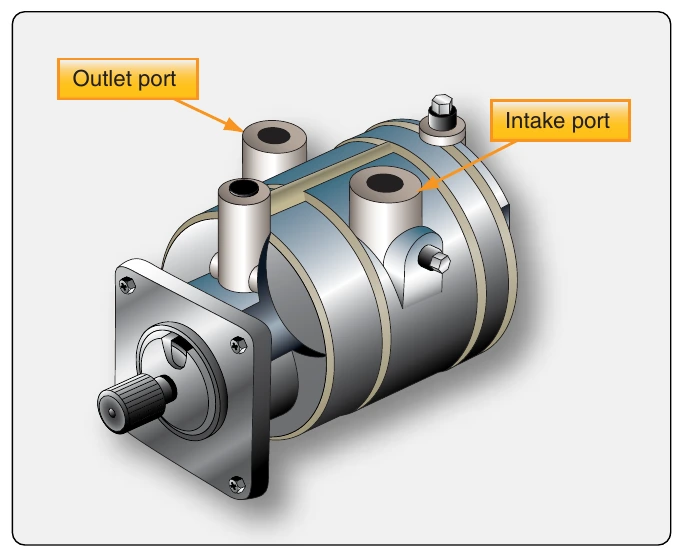
To provide pressure for the deice boots, older aircraft may use a wet-type engine-driven air pump mounted on the accessory drive gear case of the engine. Some modern aircraft may also use a wet-type air pump because of its durability. The pump is typically a four vane, positive displacement pump. Engine oil passes from the accessory case through the pump mounting base flange to lubricate the pump. Some of the oil is entrained in the output air and must be removed by an oil separator before it is sent through other components in the deice system. When installing a wet-type pump, care should be taken to ensure that the oil passage in the gasket, pump, and mounting flange are aligned to ensure lubrication. [Figure 15-23]
Dry-Type Engine-Driven Air Pump
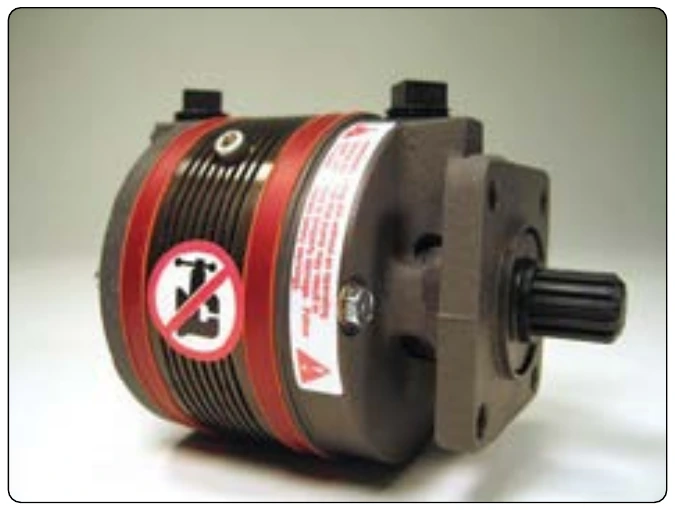
Most modern GA aircraft are equipped with a dry-type engine-driven air pump. It is also mounted on the engine accessory drive case; however, it is not lubricated with engine oil. The pump is constructed with carbon rotor vanes and bearings. The carbon material wears at a controlled rate to provide adequate lubrication without the need for oil. This keeps output air oil-free; thus, the use of an oil separator is not required. Caution should be used to prevent oil, grease, or degreasing fluids from entering the pump or the air system to ensure proper pump and system operation. [Figure 15-24] Dry-type and wet-type pumps are virtually maintenance free. Mounting bolts should be checked for security as should all hose connections. Wet-type pumps have a longer time before requiring overhaul, but dry-type pumps give the assurance that the deice system will not be contaminated with oil.
Oil Separator
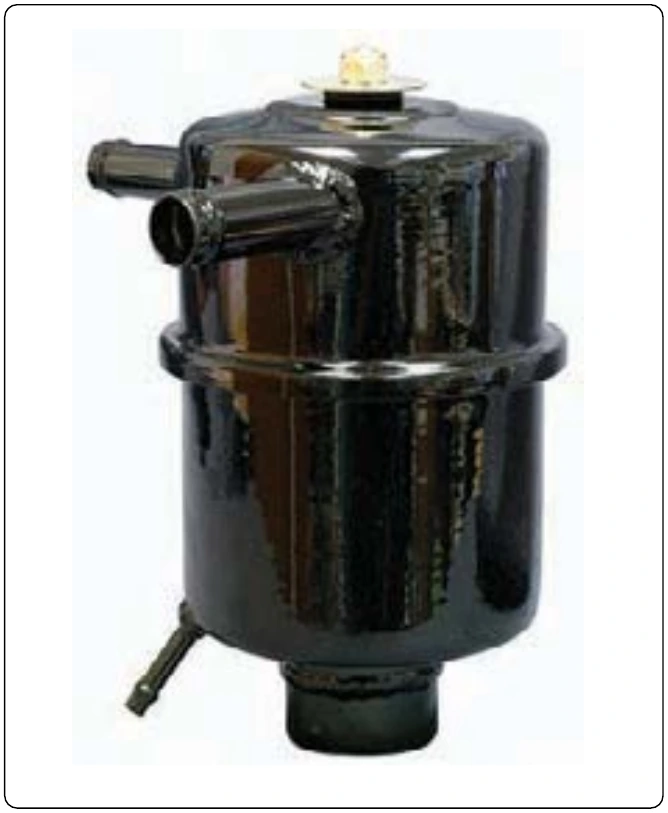
An oil separator is required for each wet-type air pump. Pump output air flows through the separator where most of the oil is removed and sent back to the engine though a drain line. Some systems may include a secondary separator to ensure oil free air is delivered to the deice system. There are no moving parts in an oil separator. A convoluted (coiled or twisted) interior allows the air to pass, while the oil condenses and drains back to the engine. The only maintenance required on the separator is flushing the interior of the unit with a specified solvent. This should be done at intervals prescribed in the applicable maintenance manual. [Figure 15-25]
Control Valve
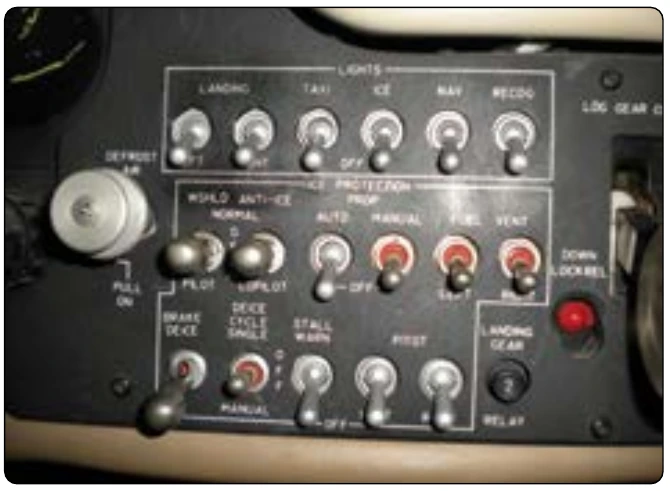
A control valve is a solenoid operated valve that allows air from the pump to enter the deice system. When energized by the deice switch in the flight deck, the valve opens. The control valve dumps pump air overboard when the deice system is not in use. Many control valves are built in combination with pressure relief valves that keeps the deice system safe from over pressure. [Figure 15-26]
Deflate Valve
All deice boot systems require a means for connecting vacuum from the air pump to the boots when the boots are not in use. This ensures the boots are held tightly deflated against the aircraft structure to provide the significant change in size and shape needed to break off accumulated ice when the boots inflate. One single deflate valve is used on simple deice boot systems. The deflate valve is solenoid operated. It is located at a point in the system where when closed, air is delivered to the boots. When open, vacuum is applied. Often, the deflate function is built into another unit, such as a distributor valve discussed next.
Distributor Valve
A distributer valve is a type of control valve used in relatively complex deice boot systems. It is an electrically-operated solenoid valve controlled by the deice boot system timer or control unit. On some systems, a distributor valve is assigned to each set of deice boots it controls. It differs from a control valve in that it has the deflate valve function built into it. Therefore, the distributor valve transfers connection of the boots from the pressure side of the air pump to the vacuum side of the pump once the proper inflation time has elapsed. The valve also dumps the unneeded air from the pump overboard.