
Chapter 16
Cabin Environmental Control Systems
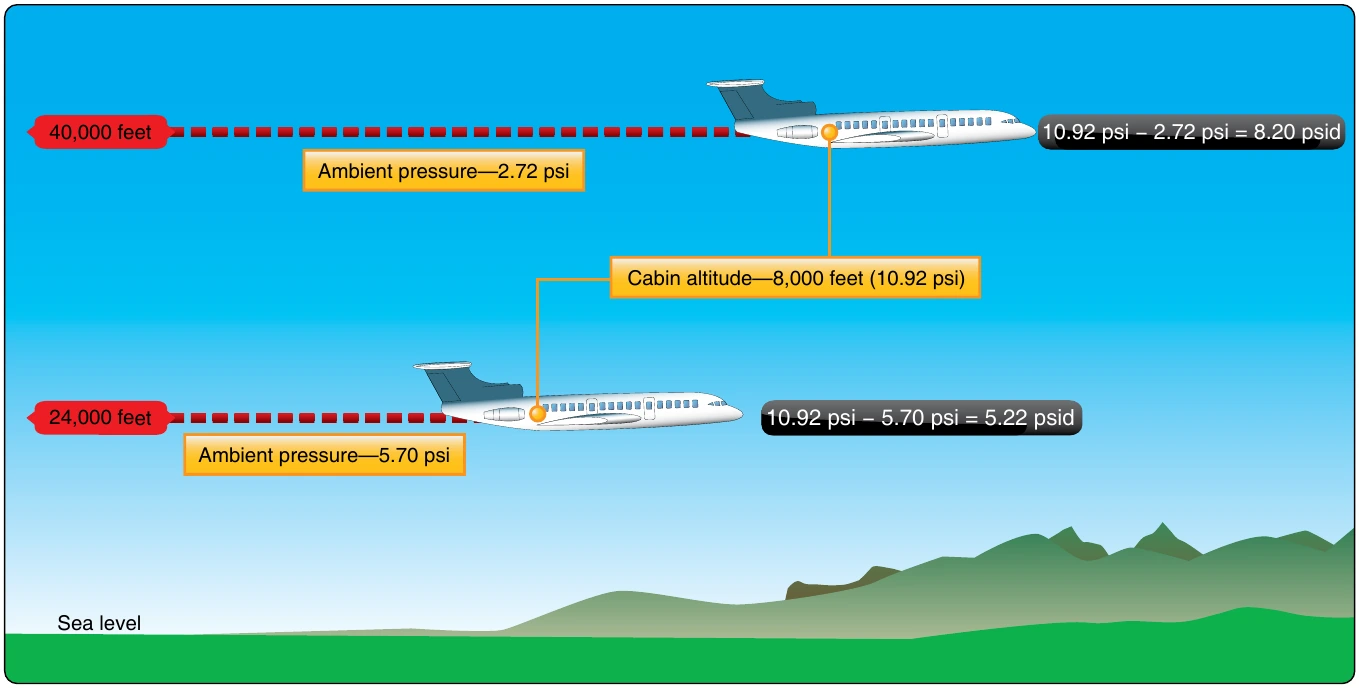
A key factor in pressurization is the ability of the fuselage to withstand the forces associated with the increase in pressure inside the structure versus the ambient pressure outside. This differential pressure can range from 3.5 psi for a single-engine reciprocating aircraft, to approximately 9 psi on high performance jet aircraft. [Figure 16-41] If the weight of the aircraft structure were of no concern, this would not be a problem. Making an aircraft strong for pressurization, yet also light, has been an engineering challenge met over numerous years beginning in the 1930s. The development of jet aircraft and their ability to exploit low drag flight at higher altitude made the problem even more pronounced. Today, the proliferation of composite materials in aircraft structure continues this engineering challenge.
In addition to being strong enough to withstand the pressure differential between the air inside and the air outside the cabin, metal fatigue from repeated pressurization and depressurization weakens the airframe. Some early pressurized aircraft structures failed due to this and resulted in fatal accidents. The FAA’s aging aircraft program was instituted to increase inspection scrutiny of older airframes that may show signs of fatigue due to the pressurization cycle.
Aircraft of any size may be pressurized. Weight considerations when making the fuselage strong enough to endure pressurization usually limit pressurization to high performance light aircraft and larger aircraft. A few pressurized single-engine reciprocating aircraft exist, as well as many pressurized single-engine turboprop aircraft.
Sources of Pressurized Air
The source of air to pressurize an aircraft varies mainly with engine type. Reciprocating aircraft have pressurization sources different from those of turbine-powered aircraft. The compression of air raises its temperature. A means for keeping pressurization air cool enough is built into most pressurization systems. It may be in the form of a heat exchanger, using cold ambient air to modify the temperature of the air from the pressurization source. A full air cycle air conditioning system with expansion turbine may also be used. The latter provides the advantage of temperature control on the ground and at low altitudes where ambient air temperature may be higher than comfortable for the passengers and crew.
Reciprocating Engine Aircraft
There are three typical sources of air used to pressurize reciprocating aircraft: supercharger, turbocharger, and engine-driven compressor. Superchargers and turbochargers are installed on reciprocating engines to permit better performance at high altitude by increasing the quantity and pressure of the air in the induction system. Some of the air produced by each of these can be routed into the cabin to pressurize it.
Asupercharger is mechanically driven by the engine. Despite engine performance increases due to higher induction system pressure, some of the engine output is utilized by the supercharger. Furthermore, superchargers have limited capability to increase engine performance. If supplying both the intake and the cabin with air, the engine performance ceiling is lower than if the aircraft were not pressurized.
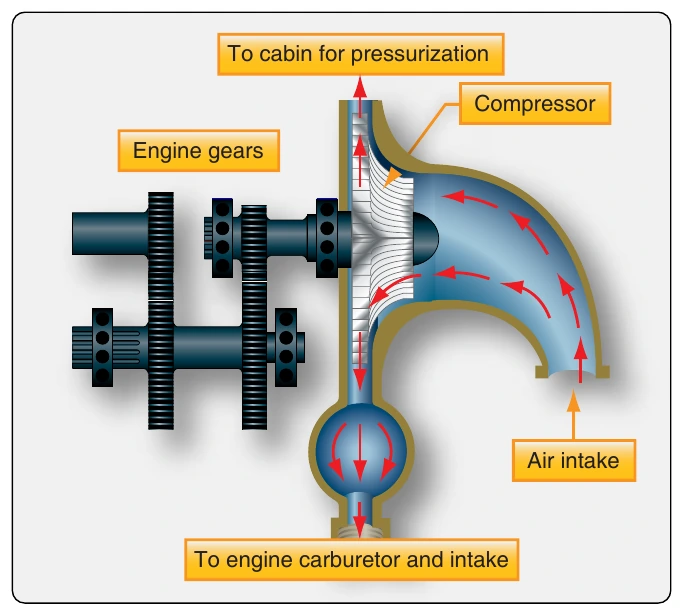
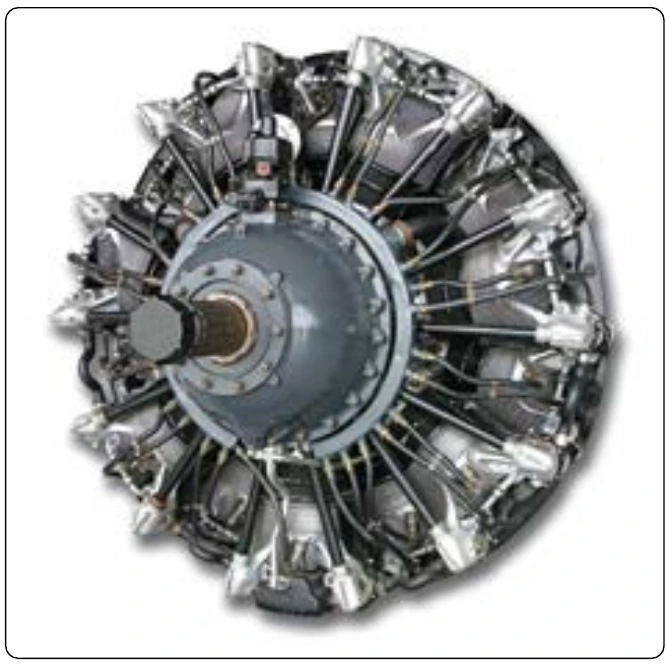
Superchargers must be located upstream of the fuel delivery to be used for pressurization. They are found on older reciprocating engine aircraft, including those with radial engines. [Figures 16-42 and 16-43]
Turbochargers, sometimes known as turbosuperchargers, are driven by engine exhaust gases. They are the most common source of pressurization on modern reciprocating engine aircraft. The turbocharger impeller shaft extends through the bearing housing to support a compression impeller in a separate housing. By using some of the turbocharger compressed air for cabin pressurization, less is available for the intake charge, resulting in lower overall engine performance. Nonetheless, the otherwise wasted exhaust gases are put to work in the turbocharger compressor, enabling high altitude flight with the benefits of low drag and weather avoidance in relative comfort and without the use of supplemental oxygen. [Figures 16-44 and 16-45]
Both superchargers and turbochargers are oil lubricated. The supercharger is part of the fuel intake system and the turbocharger is part of the exhaust system. As such, there is a risk of contamination of cabin air from oil, fuel, or exhaust fumes should a malfunction occur, a shortcoming of these pressurization sources.
A third source of air for pressurizing the cabin in reciprocating aircraft is an engine driven compressor. Either belt driven or gear driven by the accessory drive, an independent, dedicated compressor for pressurization avoids some of the potential contamination issues of superchargers and turbochargers. The compressor device does, however, add significant weight. It also consumes engine output since it is engine driven.
The roots blower is used on older, large reciprocating engine aircraft. [Figure 16-46] The two lobes in this compressor do not touch each other or the compressor housing. As they rotate, air enters the space between the lobes and is compressed and delivered to the cabin for pressurization. Independent engine-driven centrifugal compressors can also be found on reciprocating engine aircraft. [Figure 16-47] A variable ratio gear drive system is used to maintain a constant rate of airflow during changes of engine rpm.
Near maximum operating altitude, the performance of any reciprocating engine and the pressurization compressor suffer. This is due to the reduced pressure of the air at altitude that supplies the intake of each. The result is difficulty in maintaining a sufficient volume of air to the engine intake to produce power, as well as to allow enough air to the fuselage for pressurization. These are the limiting factors for determining the design ceiling of most reciprocating aircraft, which typically does not exceed 25,000 feet. Turbine engine aircraft overcome these shortcomings, permitting them to fly at much higher altitudes.
Turbine Engine Aircraft
The main principle of operation of a turbine engine involves the compression of large amounts of air to be mixed with fuel and burned. Bleed air from the compressor section of the engine is relatively free of contaminants. As such, it is a great source of air for cabin pressurization. However, the volume of air for engine power production is reduced. The amount of air bled off for pressurization compared to the overall amount of air compressed for combustion is relatively small but should be minimized. Modern large-cabin turbofan engine aircraft contain recirculation fans to reuse up to 50 percent of the air in the cabin, maintaining high engine output.