Chapter 16
Cabin Environmental Control Systems
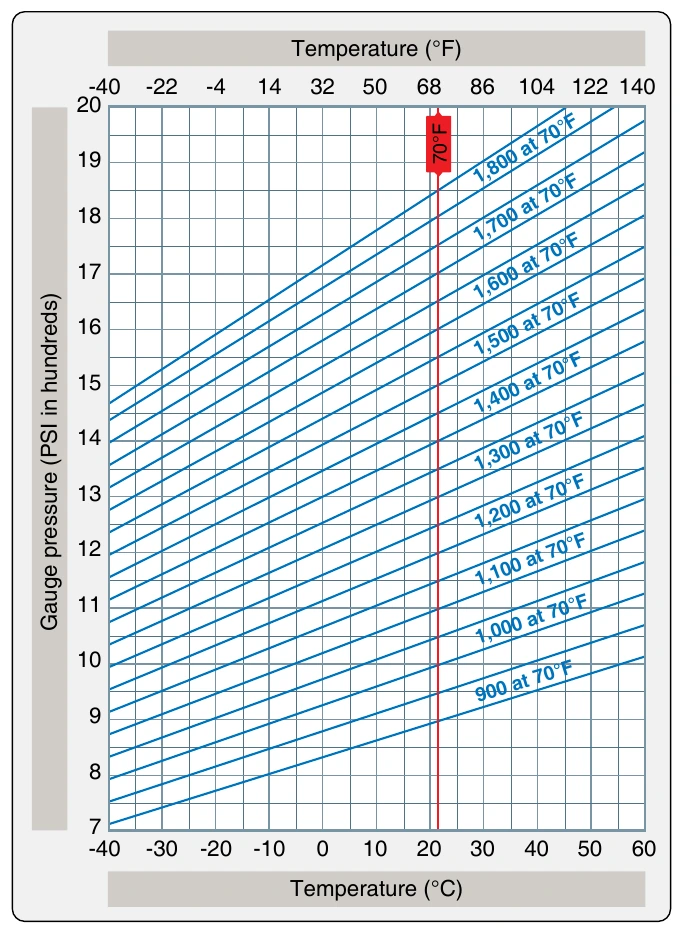
Temperature has a significant effect on the pressure of gaseous oxygen. Manufacturers typically supply a fill chart or a placard at the aircraft oxygen refill station to guide technicians in compensating for temperature/pressure variations. Technicians should consult the chart and fill cylinders to the maximum pressure listed for the prevailing ambient temperature. [Figure 16-32]
When it is hot, oxygen cylinders are filled to a higher pressure than 1,800 psi or 1,850 psi, the standard maximum pressure ratings of most high-pressure aircraft oxygen cylinders. This is allowable because at altitude the temperature and pressure of the oxygen can decrease significantly. Filling cylinders to temperature-compensated pressure values ensures a full supply of oxygen is available when needed. When filling cylinders on a cold day, compensation for temperature and pressure changes dictates that cylinders be filled to less than the maximum rated capacity to allow for pressure increases as temperature rises. Strict adherence to the temperature/pressure compensation chart values is mandatory to ensure safe storage of aircraft oxygen.
Some aircraft have temperature compensation features built into the refill valve. After setting the ambient temperature on the valve dial, the valve closes when the correct amount of oxygen pressure has been established in the aircraft cylinder. A chart can be used to ensure proper servicing.
Purging an Oxygen System
The inside of an oxygen system becomes completely saturated with oxygen during use. This is desirable to deliver clean, odor-free oxygen to the users and to prevent corrosion caused by contamination. An oxygen system needs to be purged if it has been opened or depleted for more than 2 hours, or if it is suspected that the system has been contaminated. Purging is accomplished to evacuate contaminants and to restore oxygen saturation to the inside of the system The main cause of contamination in an oxygen system is moisture. In very cold weather, the small amount of moisture contained in the breathing oxygen can condense. With repeated charging, a significant amount of moisture may collect. Additionally, systems that are opened contain the moisture from the air that has entered. Damp charging equipment, or poor refill procedures, can also introduce water into the system. Always follow manufacturer’s instructions when performing maintenance, refilling, or purging an oxygen system.
Cumulative condensation in an oxygen system cannot be entirely avoided. Purging is needed periodically. The procedure for purging may vary somewhat with each aircraft model. Generally speaking, oxygen is run through a sound oxygen system for a number of minutes at a given pressure to perform the purging. This can be as little as 10 minutes at normal delivery pressure. Other systems may require up to 30 minutes of flow at an elevated pressure. Regardless, the removal of contaminants and the resaturation of the inside of the system with oxygen is the basis for purging. It is acceptable to use nitrogen, or dry air, to blow through lines and components when performing maintenance. However, a final purging with pure oxygen is required before the system is serviceable for use.
It is important to ensure storage cylinders are refilled if they are used during the purging process. Be certain that there are no open lines and all safety caps are installed before returning the aircraft to service.
Filling LOX Systems
The use of LOX in civilian aviation is rare. The most common and safest way to fill a LOX system is to simply exchange the storage unit for one that is full. However, filling LOX on the aircraft is possible.
A portable fill cart is used, and all of the same precautions must be observed as when servicing a high-pressure gaseous oxygen system. Additionally, protection from cold burns is necessary. Due to the amount of gaseous oxygen released during the process, refilling should be accomplished outside. The servicing cart is attached to the aircraft system through a fill valve. The buildup/vent valve on the LOX container assembly is placed in the vent position. The valve on the service cart is then opened. LOX flows into the aircraft system; some vaporizes and cools the entire setup. This gaseous oxygen flows overboard through the vent valve while the system fills. When a steady stream of LOX flows from the vent valve, the system is filled. The valve is then switched to the buildup position. The aircraft refill valve and cart supply valves are closed, and the hose is removed.
Back seated valves can freeze in the open position due to the low temperature involved while LOX is being transferred. Valves should be opened completely and then closed slightly so as to not be back seated.
Inspection of Masks & Hoses
The wide varieties of oxygen masks used in aviation require periodic inspection. Mask and hose integrity ensure effective delivery of oxygen to the user when it is needed. Sometimes this is in an emergency situation. Leaks, holes, and tears are not acceptable. Most discrepancies of this type are remedied by replacement of the damaged unit.
Some continuous-flow masks are designed for disposal after use. Be sure there is a mask for each potential user on board the aircraft. Masks designed to be reused should be clean, as well as functional. This reduces the danger of infection and prolongs the life of the mask. Various mild cleaners and antiseptics that are free of petroleum products can be used. A supply of individually wrapped alcohol swabs are often kept in the flight deck.
Built-in microphones should be operational. Donning straps and fittings should be in good condition and function so that the mask is held firm to the user’s face. The diameter of mask hoses in a continuous-flow system is quite a bit smaller than those used in a demand-flow system. This is because the inside diameter of the hose aids in controlling flow rate. Masks for each kind of system are made to only connect to the proper hose.
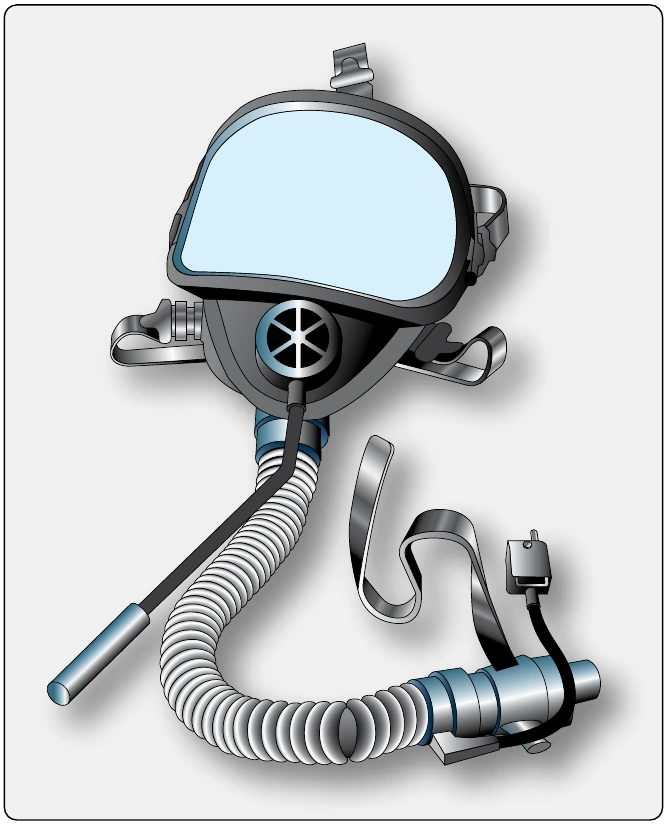
Smoke masks are required on transport aircraft and are used on some other aircraft as well. These cover the eyes, as well as the user’s nose and mouth. Smoke masks are usually available within easy grasp of the crew members. They are used when the situation in the flight deck demands the increased level of protection offered. Smoke mask hoses plug into demand regulators in the same port used for regular demand type masks and operate in the same manner. Most include a built-in microphone. [Figure 16-33] Some portable oxygen systems are also fitted with smoke masks.
Replacing Tubing, Valves, & Fittings
The replacement of aircraft oxygen system tubing, valves, and fittings is similar to the replacement of the same components in other aircraft systems. There is, however, an added emphasis on cleanliness and compatible sealant use.