Chapter 2
Aerodynamics, Aircraft Assembly, & Rigging
Cable tension regulators are used in some flight control systems because there is considerable difference in temperature expansion of the aluminum aircraft structure and the steel control cables. Some large aircraft incorporate tension regulators in the control cable systems to maintain a given cable tension automatically. The unit consists of a compression spring and a locking mechanism that allows the spring to make correction in the system only when the cable system is in neutral.
Turnbuckles
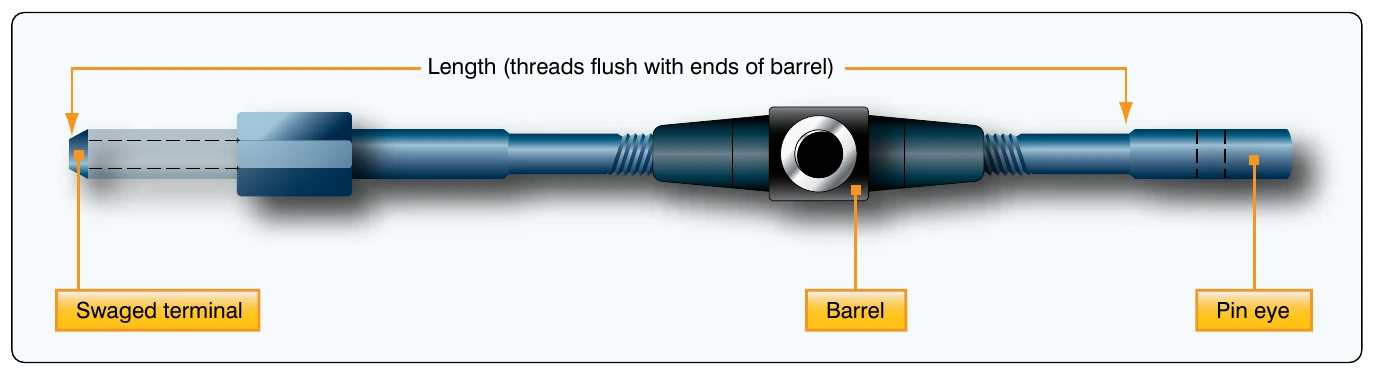
A turnbuckle assembly is a mechanical screw device consisting of two threaded terminals and a threaded barrel. [Figure 2-76] Turnbuckles are fitted in the cable assembly for the purpose of making minor adjustments in cable length and for adjusting cable tension. One of the terminals has right-hand threads, and the other has left-hand threads. The barrel has matching right- and left-hand internal threads. The end of the barrel with the left-hand threads can usually be identified by a groove or knurl around that end of the barrel.
When installing a turnbuckle in a control system, it is necessary to screw both of the terminals an equal number of turns into the barrel. It is also essential that all turnbuckle terminals be screwed into the barrel until not more than three threads are exposed on either side of the turnbuckle barrel. After a turnbuckle is properly adjusted, it must be safetied. There are a number of methods to safety a turnbuckle and/or other types of swaged cable ends that are satisfactory. A double-wrap safety wire method is preferred.
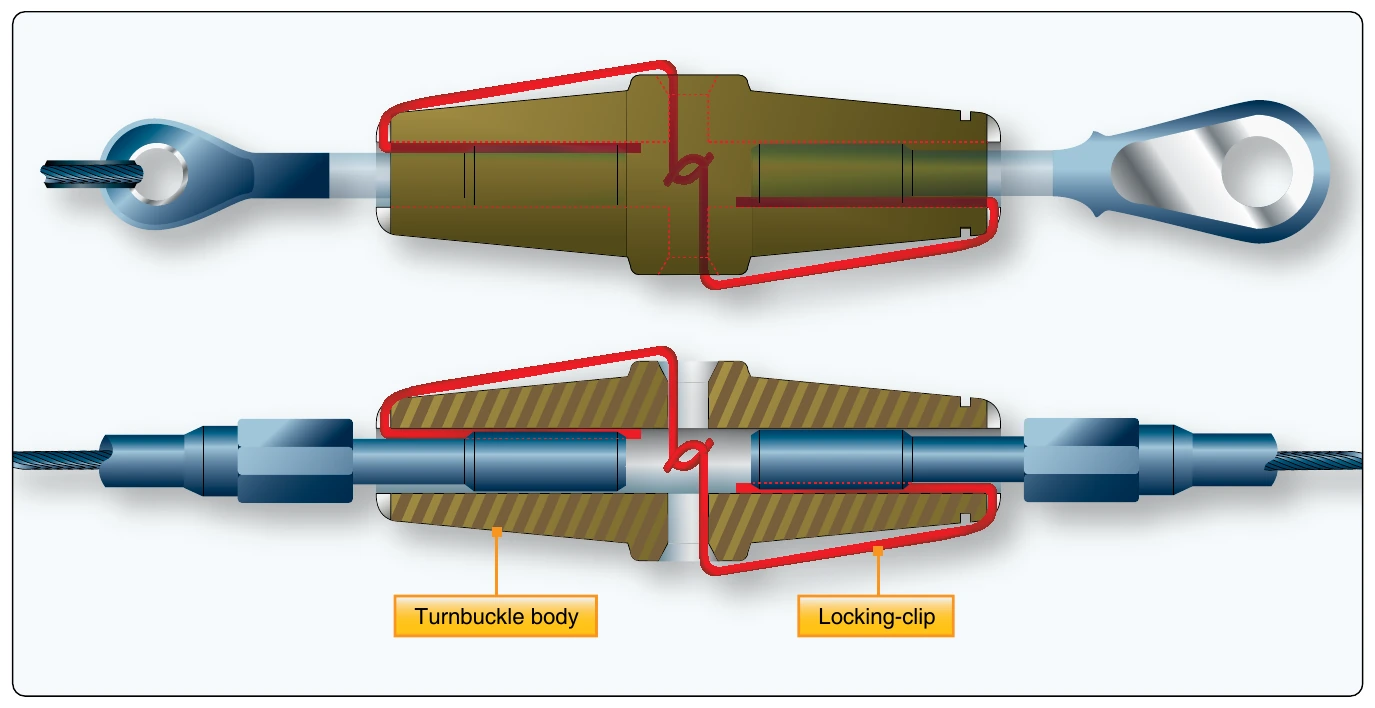
Some turnbuckles are manufactured and designed to accommodate special locking devices. A typical unit is shown in Figure 2-77.
Cable Connectors
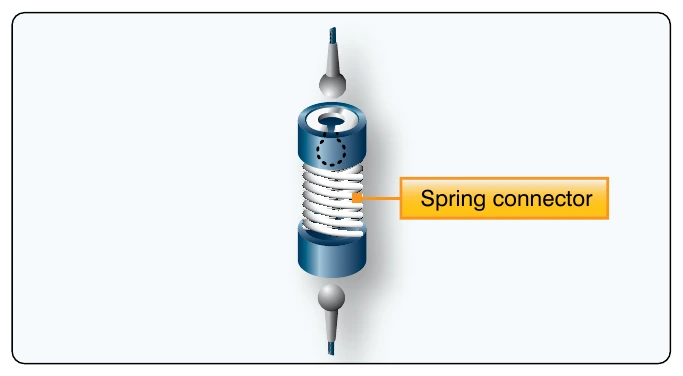
In addition to turnbuckles, cable connectors are used in some systems. These connectors enable a cable length to be quickly connected or disconnected from a system. Figure 2-78 illustrates one type of cable connector in use.
Spring-Back
With a control cable properly rigged, the flight control should hit its stops at both extremes prior to the flight deck control. The spring-back is the small extra push that is needed for the flight deck control to hit its mechanical stop.
Push Rods (Control Rods)
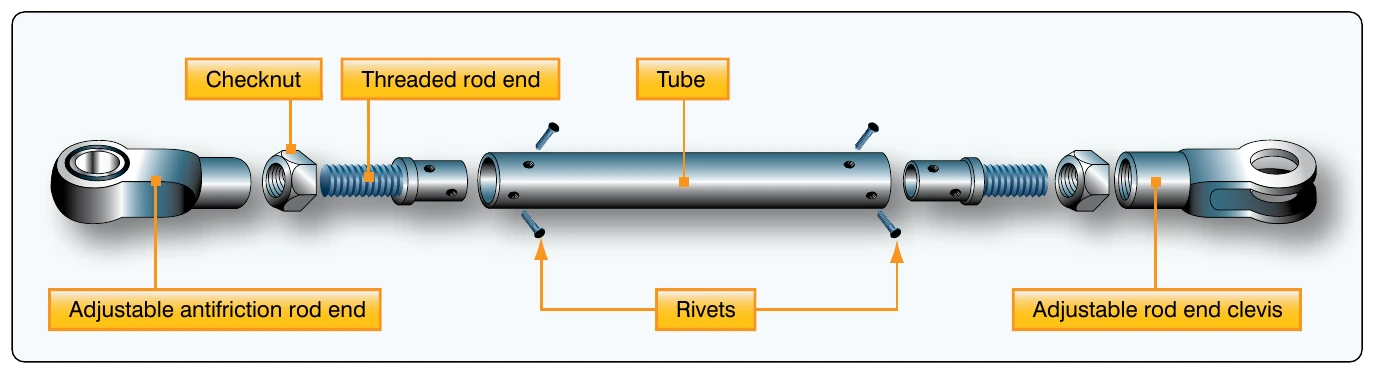
Push rods are used as links in the flight control system to give push-pull motion. They may be adjusted at one or both ends. Figure 2-79 shows the parts of a push rod. Notice that it consists of a tube with threaded rod ends. An adjustable antifriction rod end, or rod end clevis, attaches at each end of the tube. The rod end, or clevis, permits attachment of the tube to flight control system parts. The checknut, when tightened, prevents the rod end or clevis from loosening. They may have adjustments at one or both ends.
The rods should be perfectly straight, unless designed to be otherwise. When installed as part of a control system, the assembly should be checked for correct alignment and free movement.
It is possible for control rods fitted with bearings to become disconnected because of failure of the peening that retains the ball races in the rod end. This can be avoided by installing the control rods so that the flange of the rod end is interposed between the ball race and the anchored end of the attaching pin or bolt as shown in Figure 2-80.
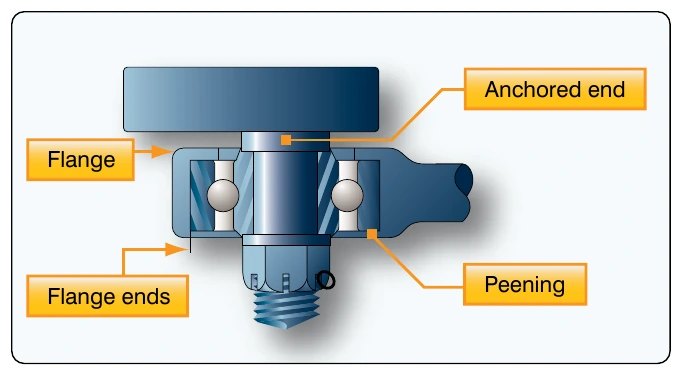
Another alternative is to place a washer, having a larger diameter than the hole in the flange, under the retaining nut on the end of the attaching pin or bolt. This retains the rod on the bolt in the event of a bearing failure.