
Chapter 4
Aircraft Metal Structural Repair
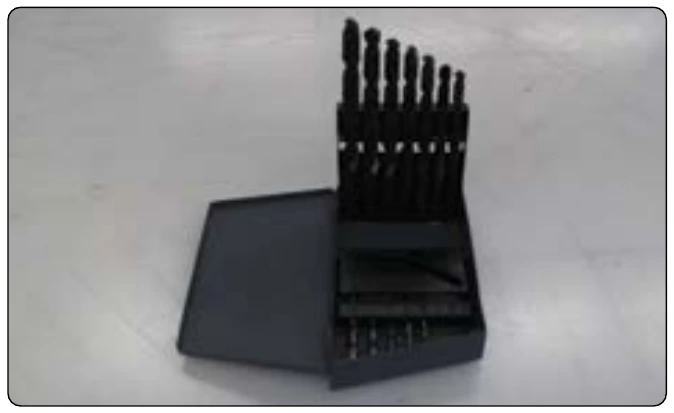
Drill diameters are grouped by three size standards: number, letter, and fractional. The decimal equivalents of standard drill are shown in Figure 4-47.
Drill Lubrication
Normal drilling of sheet material does not require lubrication, but lubrication should be provided for all deeper drilling Lubricants serve to assist in chip removal, which prolongs drill life and ensures a good finish and dimensional accuracy of the hole. It does not prevent overheating. The use of a lubricant is always a good practice when drilling castings, forgings, or heavy gauge stock. A good lubricant should be thin enough to help in chip removal but thick enough to stick to the drill. For aluminum, titanium, and corrosion-resistant steel, a cetyl alcohol based lubricant is the most satisfactory. Cetyl alcohol is a nontoxic fatty alcohol chemical produced in liquid, paste, and solid forms. The solid stick and block forms quickly liquefy at drilling temperatures. For steel, sulfurized mineral cutting oil is superior. Sulfur has an affinity for steel, which aids in holding the cutting oil in place. In the case of deep drilling, the drill should be withdrawn at intervals to relieve chip packing and to ensure the lubricant reaches the point. As a general rule, if the drill is large or the material hard, use a lubricant.
Reamers
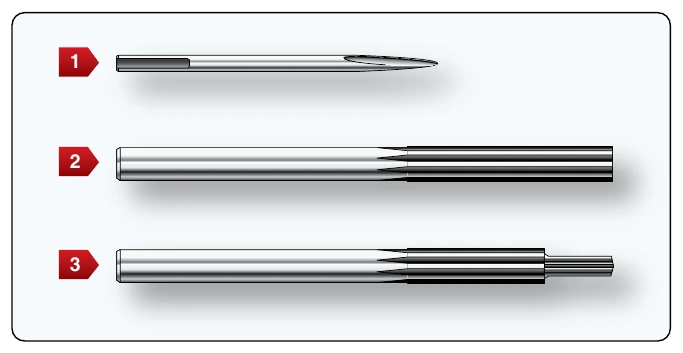
Reamers, used for enlarging holes and finishing them smooth to a required size, are made in many styles. They can be straight or tapered, solid or expansive, and come with straight or helical flutes. Figure 4-48 illustrates three types of reamers:
- Three or four fluted production bullet reamers are customarily used where a finer finish and/or size is needed than can be achieved with a standard drill bit.
- Standard or straight reamer.
- Piloted reamer, with the end reduced to provide accurate alignment.
The cylindrical parts of most straight reamers are not cutting edges, but merely grooves cut for the full length of the reamer body. These grooves provide a way for chips to escape and a channel for lubricant to reach the cutting edge. Actual cutting is done on the end of the reamer. The cutting edges
Reamer flutes are not designed to remove chips like a drill. Do not attempt to withdraw a reamer by turning it in the reverse direction because chips can be forced into the surface, scarring the hole.
Drill Stops
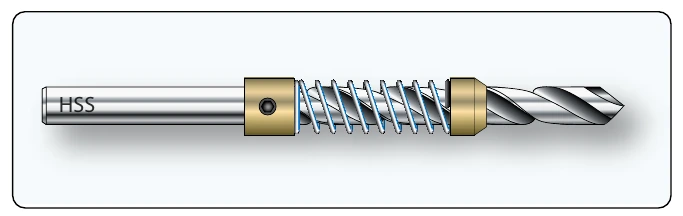
A spring drill stop is a wise investment. [Figure 4-49] Properly adjusted, it can prevent excessive drill penetration that might damage underlying structure or injure personnel and prevent the drill chuck from marring the surface. Drill stops can be made from tubing, fiber rod, or hard rubber.
Drill Bushings & Guides
There are several types of tools available that aid in holding the drill perpendicular to the part. They consist of a hardened bushing anchored in a holder. [Figure 4-50] Drill bushing types:

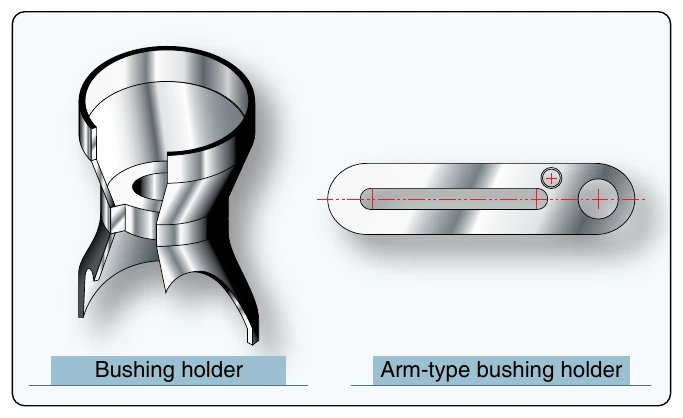
- Tube—hand-held in an existing hole
- Commercial—twist lock
- Commercial—threaded