
Chapter 4
Aircraft Metal Structural Repair
Straight Extension
A straight extension for a drill can be made from an ordinary piece of drill rod. The drill bit is attached to the drill rod by shrink fitting, brazing, or silver soldering.
Angle Adapters
Angle adapters can be attached to an electric or pneumatic drill when the location of the hole is inaccessible to a straight drill. Angle adapters have an extended shank fastened to the chuck of the drill. The drill is held in one hand and the adapter in the other to prevent the adapter from spinning around the drill chuck.
Snake Attachment
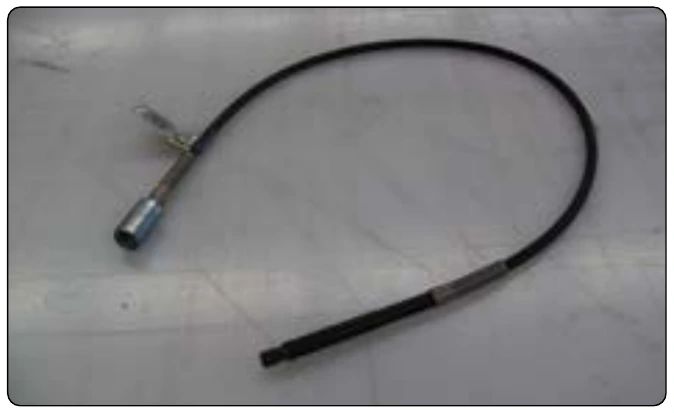
The snake attachment is a flexible extension used for drilling in places inaccessible to ordinary drills. Available for electric and pneumatic drill motors, its flexibility permits drilling around obstructions with minimum effort. [Figure 4-43]
Types of Drill Bits
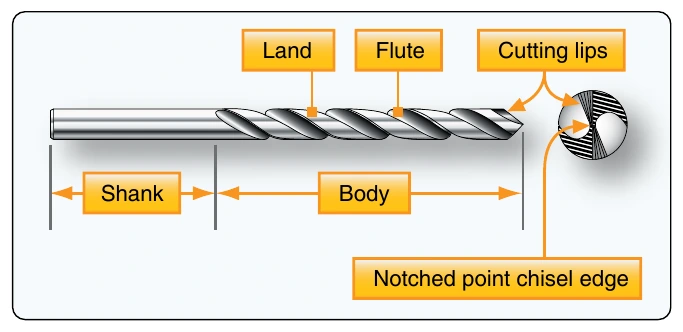
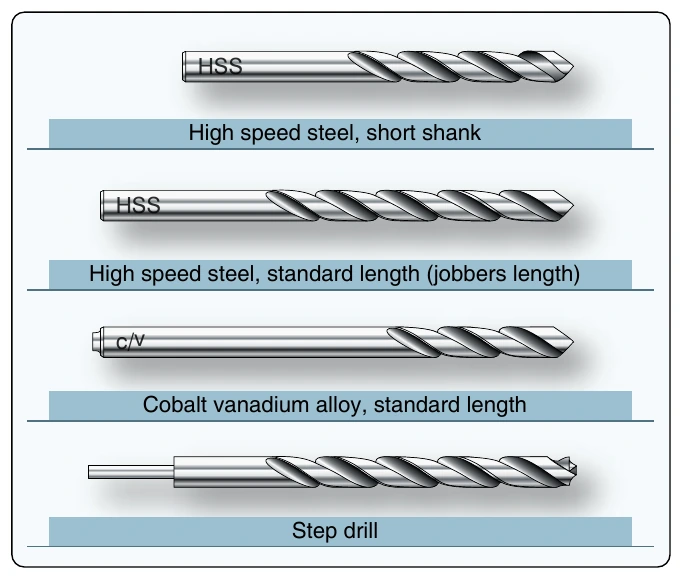
A wide variety of drill bits including specialty bits for specific jobs are available. Figure 4-44 illustrates the parts of the drill bit and Figure 4-45 shows some commonly used drill bits. High speed steel (HSS) drill bits come in short shank or standard length, sometimes called jobbers length. HSS drill bits can withstand temperatures nearing the critical range of 1,400 °F (dark cherry red) without losing their hardness. The industry standard for drilling metal (aluminum, steel, etc.), these drill bits stay sharper longer.
Step Drill Bits
Typically, the procedure for drilling holes larger than 3⁄16 inch in sheet metal is to drill a pilot hole with a No. 40 or No. 30 drill bit and then to oversize with a larger drill bit to the correct size. The step drill combines these two functions into one step. The step drill bit consists of a smaller pilot drill point that drills the initial small hole. When the drill bit is advanced further into the material, the second step of the drill bit enlarges the hole to the desired size.
Step drill bits are designed to drill round holes in most metals, plastic, and wood. Commonly used in general construction and plumbing, they work best on softer materials, such as plywood, but can be used on very thin sheet metal. Step drill bits can also be used to deburr holes left by other bits.
Cobalt Alloy Drill Bits
Cobalt alloy drill bits are designed for hard, tough metals like corrosion-resistant steel and titanium. It is important for the aircraft technician to note the difference between HSS and cobalt, because HSS drill bits wear out quickly when drilling titanium or stainless. Cobalt drill bits are excellent for drilling titanium or stainless steel, but do not produce a quality hole in aluminum alloys. Cobalt drill bits can be recognized by thicker webs and a taper at the end of the drill shank.
Twist Drill Bits
Easily the most popular drill bit type, the twist drill bit has spiral grooves or flutes running along its working length. [Figure 4-46] This drill bit comes in a single-fluted, two-fluted, three-fluted, and four-fluted styles. Single-fluted and two-fluted drill bits (most commonly available) are used for originating holes. Three-fluted and four-fluted drill bits are used interchangeably to enlarge existing holes. Twist drill bits are available in a wide choice of tooling materials and lengths with the variations targeting specific projects.
The standard twist drill bits used for drilling aluminum are made from HSS and have a 135° split point. Drill bits for titanium are made from cobalt vanadium for increased wear resistance.