
Chapter 4
Aircraft Metal Structural Repair
Rivet nuts are used for the installation of fairings, trim, and lightly loaded fittings that must be installed after an assembly is completed. [Figure 4-113] Often used for parts that are removed frequently, the rivet nut is available in two types: countersunk or flat head. Installed by crimping from one side, the rivet nut provides a threaded hole into which machine screws can be installed. Where a flush fit is required, the countersink style can be used. Rivet nuts made of alloy steel are used when increased tensile and shear strength is required.
Hole Preparation
Flat head rivet nuts require only the proper size of hole while flush installation can be made into either countersunk or dimpled skin. Metal thinner than the rivet nut head requires a dimple. The rivet nut size is selected according to the thickness of the parent material and the size of screw to be used. The part number identifies the type of rivet nut and the maximum grip length. Recommended hole sizes are shown in Figure 4-114.
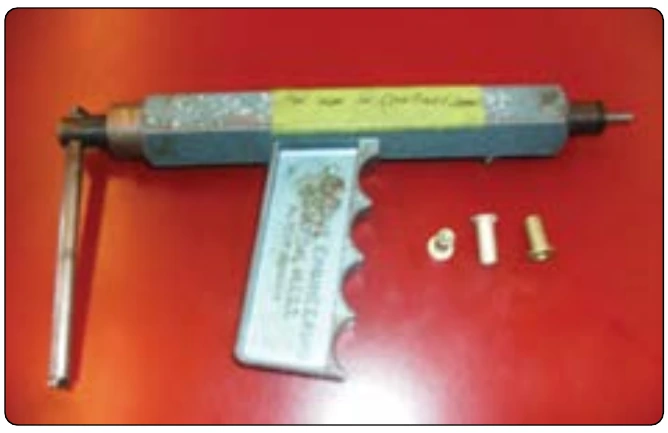
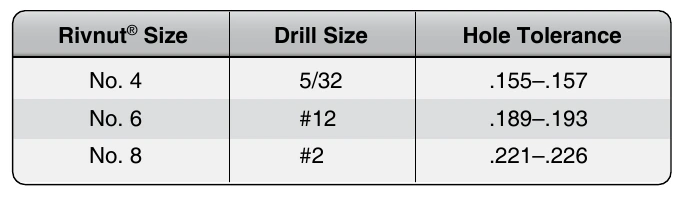
Correct installation requires good hole preparation, removal of burrs, and holding the sheets in contact while heading. Like any sheet metal fastener, a rivet nut should fit snugly into its hole.
Blind Fasteners (Nonstructural)
Pop Rivets
Common pull-type pop rivets, produced for non-aircraft-related applications, are not approved for use on certificated aircraft structures or components. However, some homebuilt noncertificated aircraft use pull-type rivets for their structure. These types of rivets are typically made of aluminum and can be installed with hand tools.
Pull-Through Nutplate Blind Rivet
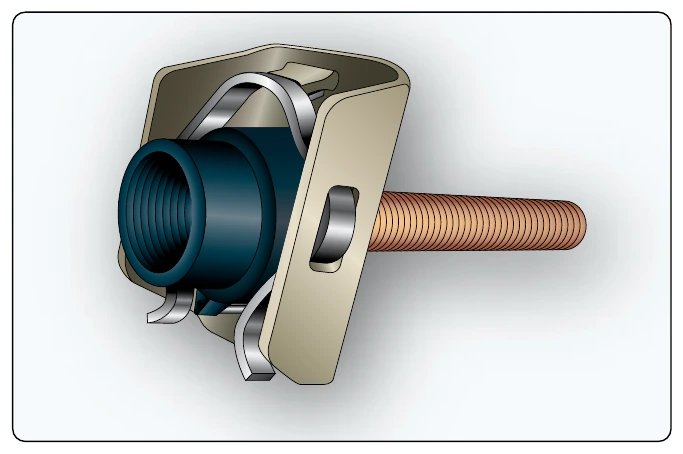
Nutplate blind rivets are used where the high shear strength of solid rivets is not required or if there is no access to install a solid rivet. The 3⁄32-inch diameter blind rivet is most often used. The nut plate blind rivet is available with the pull-through and self-plugging locked spindle. [Figure 4-115]
The new Cherry® Rivetless Nut Plate, which replaces standard riveted nutplates, features a retainer that does not require flaring. This proprietary design eliminates the need for two additional rivet holes, as well as reaming, counterboring, and countersinking steps.
Forming Process
Before a part is attached to the aircraft during either manufacture or repair, it has to be shaped to fit into place.
This shaping process is called forming and may be a simple process, such as making one or two holes for attaching; it may be a complex process, such as making shapes with complex curvatures. Forming, which tends to change the shape or contour of a flat sheet or extruded shape, is accomplished by either stretching or shrinking the material in a certain area to produce curves, flanges, and various irregular shapes. Since the operation involves altering the shape of the stock material, the amount of shrinking and stretching almost entirely depends on the type of material used. Fully annealed (heated and cooled) material can withstand considerably more stretching and shrinking and can be formed at a much smaller bend radius than when it is in any of the tempered conditions.
When aircraft parts are formed at the factory, they are made on large presses or by drop hammers equipped with dies of the correct shape. Factory engineers, who designate specifications for the materials to be used to ensure the finished part has the correct temper when it leaves the machines, plan every part. Factory draftsmen prepare a layout for each part. [Figure 4-116]
Forming processes used on the flight line and those practiced in the maintenance or repair shop cannot duplicate a manufacturer’s resources, but similar techniques of factory metal working can be applied in the handcrafting of repair parts.
Forming usually involves the use of extremely light-gauge alloys of a delicate nature that can be readily made useless by coarse and careless workmanship. A formed part may seem outwardly perfect, yet a wrong step in the forming procedure may leave the part in a strained condition. Such a defect may hasten fatigue or may cause sudden structural failure.
Of all the aircraft metals, pure aluminum is the most easily formed. In aluminum alloys, ease of forming varies with the temper condition. Since modern aircraft are constructed chiefly of aluminum and aluminum alloys, this section deals with the procedures for forming aluminum or aluminum alloy parts with a brief discussion of working with stainless steel, magnesium, and titanium.