
Chapter 6
Aircraft Weight & Balance
Weight and Balance Equipment
Scales
Weighing GA aircraft, helicopters, turboprops, corporate jets, UAV/UAS, or transport category airliners can be accomplished in two ways: top of jack load cells and platform scales. Equipment selection is dependent on the operator's needs and or equipment currently on hand, as well as the airframe manufacturer's recommendations. Top of jack load cells, as the name implies, can be used on top of the current wing jacks or can be used under axle for larger jets. Platforms are very useful for small shops that do not have jacks for every type of aircraft.
Both types of scales feature new technologies using wireless or digital indicators. These systems and indicators are very accurate and easy to use, making the weighing job faster to accomplish and providing higher quality in readings.
Platforms are available in many weight ranges and sizes. These systems either use ramps or the aircraft can be jacked and lowered onto the platforms during regular maintenance. Platforms are easy to use and are a choice for many shops that do not have jacks for the many types of aircraft to be serviced. The limiting factors for platforms are the weight range and the tire size, some aircraft have large tires and the platform may be too small for the specific aircraft tire. It is important to always use the right size scale and platform for the aircraft type and weighing job required.
The platform scale sits on the hangar floor in a level condition. Ramps and a tug are used to position the airplane tire on top of the platform and centered. Built into the platform is an electronic load cell(s) that sense the weight being applied to it, which generates a corresponding electrical signal. Inside the load cell is an electronic strain gauge that measures a proportional change in electrical resistance as the weight being applied to it increases. An electrical cable or wireless signal runs from the platform scale to a display unit, computer, or tablet, which interprets the resistance change of the load cell and equates it to a specific number of pounds. A digital readout on the display shows the weight. In Figure 6-17, a small Piper is being weighed using wireless platform scales that incorporate electronic load cells.
In Figure 6-18, a Cessna 182 airplane is being weighed with portable electronic platform scales. If an aircraft is weighed plane.
on platform scales, the only way to level the aircraft is to deflate tires and landing gear struts accordingly. This type of scale is easy to transport and can be powered by household current or by a battery contained in the display unit.
The display unit for the standard wired platform scales is very easy to use. [Figure 6-19] Turn on the power and the unit runs through the software and displays the scales in a total mode. Pressing on the ZERO KEY (blue key not the number key) will ZERO the channels. Once completed, the unit will read -0- and the scale is ready to use. Select the channels by number and pressing the PRINT/SELECT KEY. All channels can be returned to TOTAL MODE by entering the number 4 TOTAL followed by the PRINT/SELECT KEY. If all three scale switches are turned on at the same time, the total weight of the airplane is displayed.
The second type of aircraft scale is a top of jack, cell-based scale, where each jack point receives a cell-based transducer on the top of the jack. It is very easy to use and level the aircraft during the weighing operation. The system is easy to transport, light weight, and simple to set up. The operator must have a jack capable of receiving and mounting the cell. Cells come in many weight ranges and are dependent on the weight required per point to accomplish the weighing and receiving the actual jack point type.
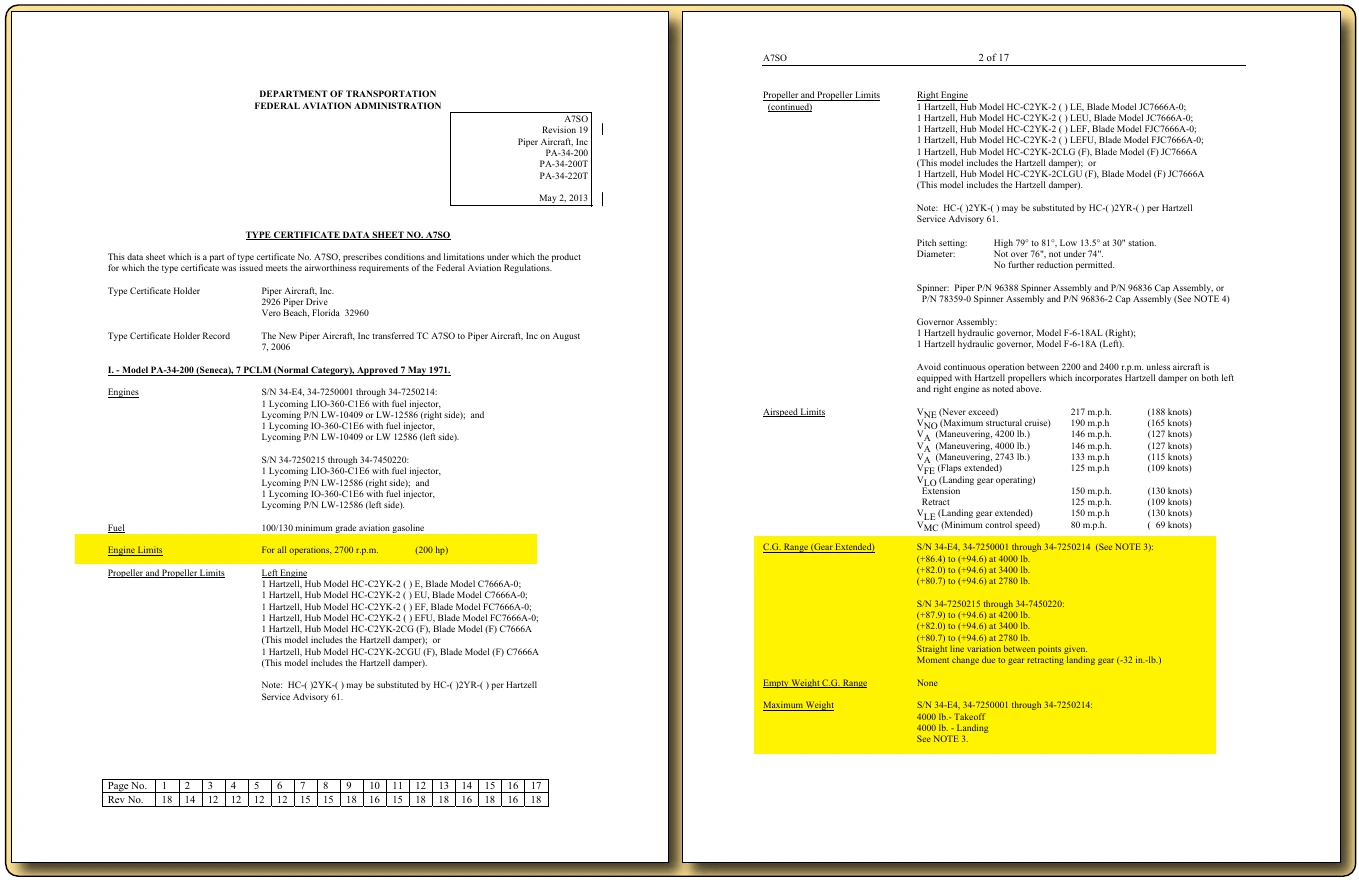
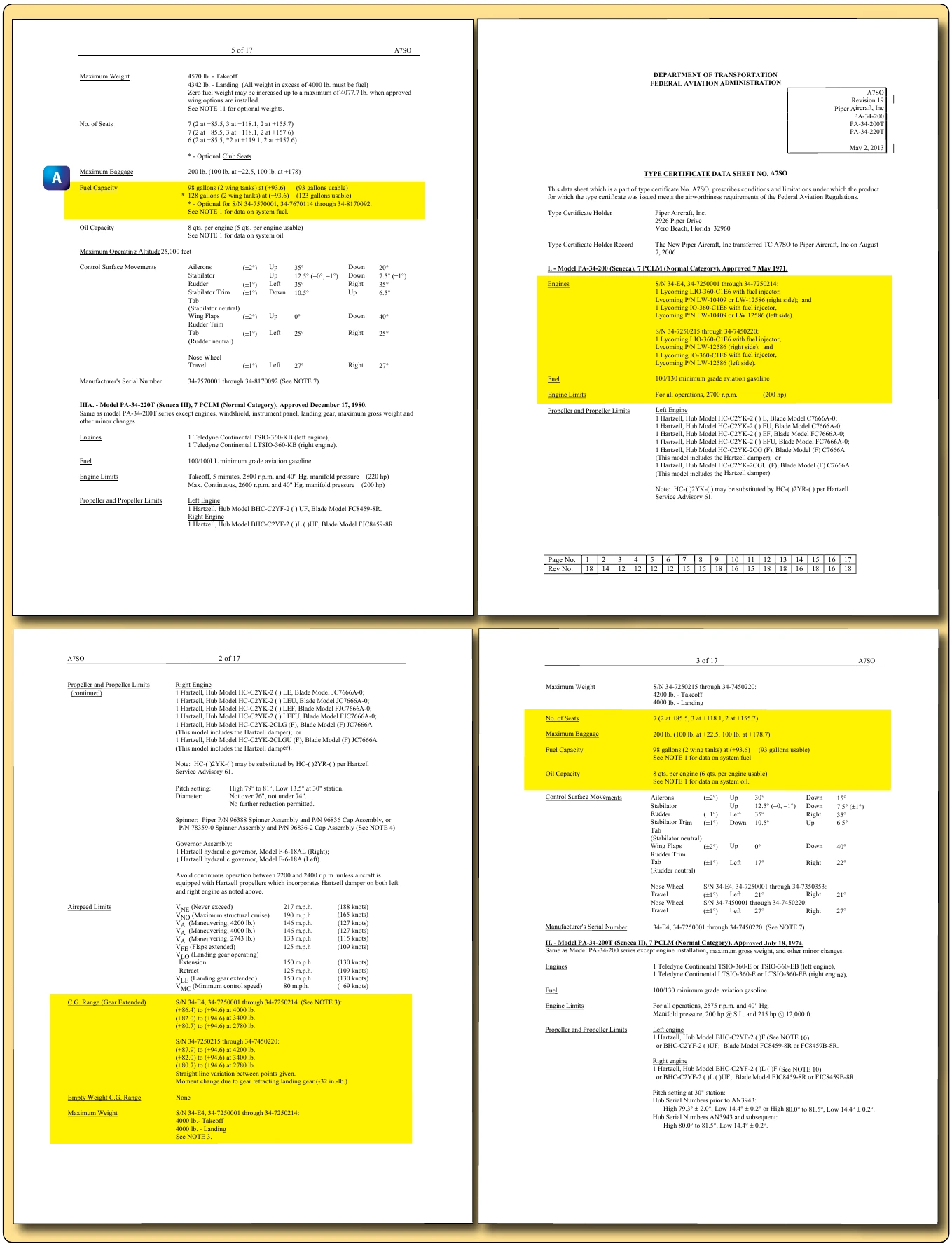
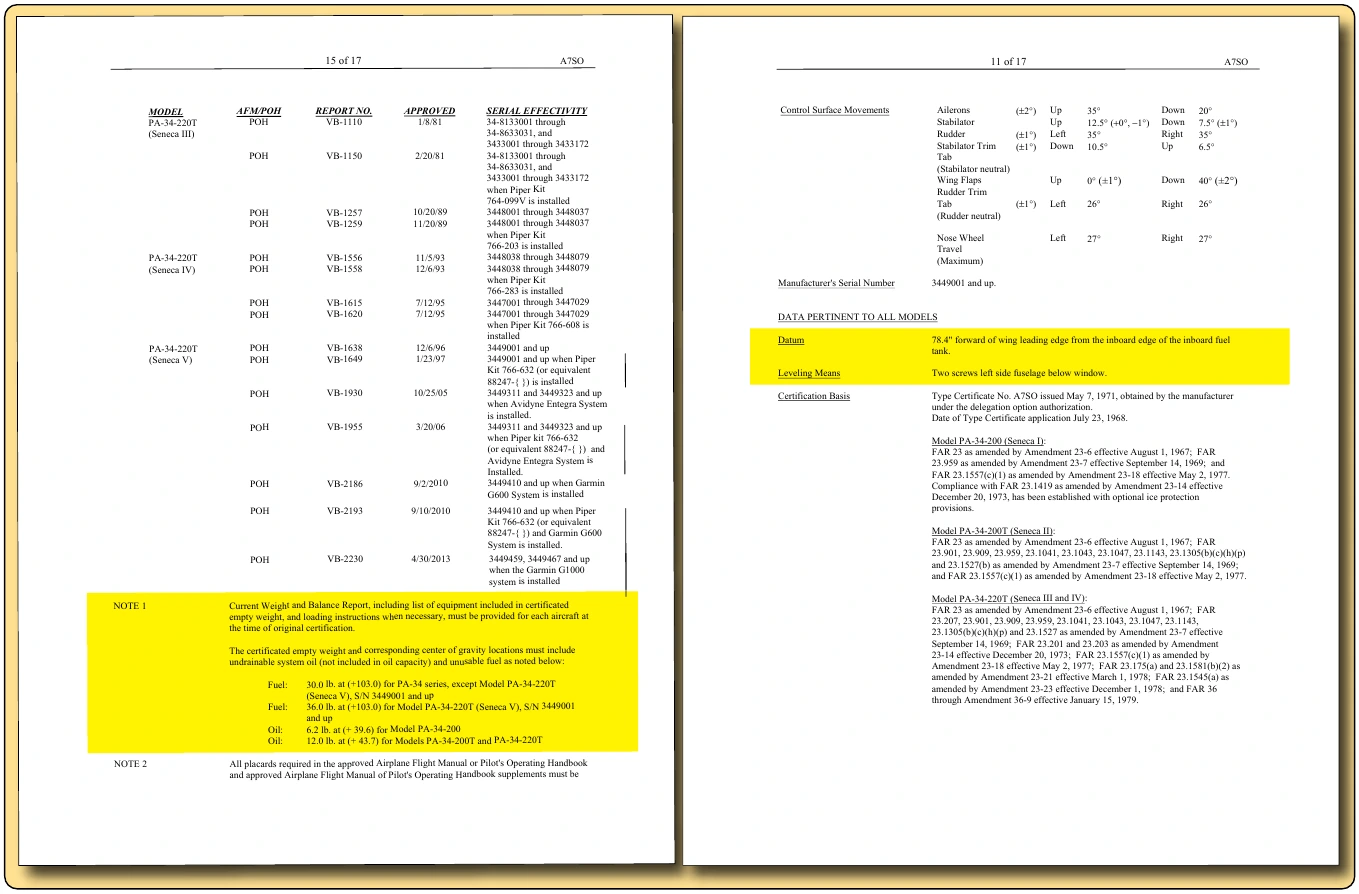
The top of the load cell has a concave shape that matches up with the jack pad on the aircraft, with the load cell absorbing all the weight of the aircraft at each jacking point. Each load cell either has an electrical cable attached to it or is wireless, which connects to the display unit or computer read out that shows the weight transmitted to each load cell. An important advantage of weighing an aircraft this way is that it allows the technician to level the aircraft easily. When an aircraft us information about an aircraft to include weight and balance within a TCDS. Note the fuel capacity of 98 gallons and its reference on jacks with the load cells in place.
Always follow the aircraft manufacturer’s weighing and leveling procedures and processes. All aircraft need to be in a flight level attitude when they are weighed unless the manufacturer’s manual specifically allows it or has a formula in the manual to use accordingly.