
Chapter 8
Cleaning & Corrosion Control
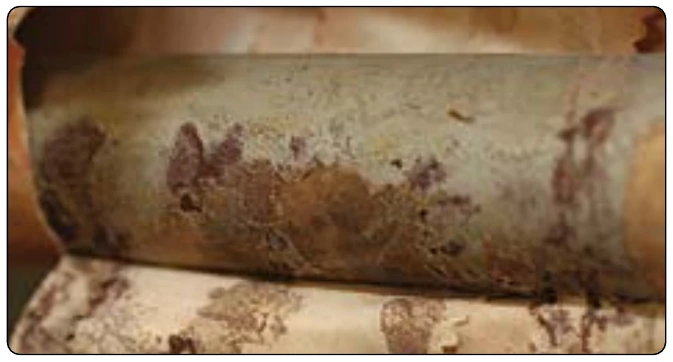
Corrosion on aluminum surfaces is usually quite obvious, since the products of corrosion are white and generally more voluminous than the original base metal. Even in its early stages, aluminum corrosion is evident as general etching, pitting, or roughness of the aluminum surfaces.
General surface attack of aluminum penetrates relatively slowly, but speeds up in the presence of dissolved salts. Considerable attack can usually take place before serious loss of structural strength develops.
At least three forms of attack on aluminum alloys are particularly serious: the penetrating pit-type corrosion through the walls of aluminum tubing, stress-corrosion cracking of materials under sustained stress, and intergranular corrosion, which is characteristic of certain improperly heat-treated aluminum alloys.
In general, corrosion of aluminum can be more effectively as practicable and the inhibition of residual materials by chemical means, followed by the restoration of permanent surface coatings.
Treatment of Unpainted Aluminum Surfaces
Relatively pure aluminum has considerably more corrosion resistance when compared with the stronger aluminum alloys. To take advantage of this characteristic, a thin coating of relatively pure aluminum is applied over the base aluminum alloy. The protection obtained is good and the pure-aluminum clad surface, commonly called “Alclad,” can be maintained in a polished condition. In cleaning such surfaces, however, care must be taken to prevent staining and marring of the exposed aluminum. More important from a protection standpoint, avoid unnecessary mechanical removal of the protective Alclad layer and the exposure of the more susceptible aluminum alloy base material. A typical aluminum corrosion treatment sequence follows:
- Remove oil and surface dirt from the aluminum surface using any suitable mild cleaner. Use caution when choosing a cleaner. Many commercial consumer products are actually caustic enough to induce corrosion if trapped between aluminum lap joints. Choose a neutral pH product.
- Hand polish the corroded areas with fine abrasives or with metal polish. Metal polish intended for use on clad aluminum aircraft surfaces must not be used on anodized aluminum, since it is abrasive enough to actually remove the protective anodized film. It effectively removes stains and produces a highly polished, lasting surface on unpainted Alclad. If a surface is particularly difficult to clean, a cleaner and brightener compound for aluminum can be used before polishing to shorten the time and lessen the effort necessary to get a clean surface.
- Treat any superficial corrosion present using an inhibitive wipe down material. An alternate treatment is processing with a solution of sodium dichromate and chromium trioxide. Allow these solutions to remain on the corroded area for 5 to 20 minutes, and then remove the excess by rinsing and wiping the surface dry with a clean cloth.
- Overcoat the polished surfaces with waterproof wax.
Aluminum surfaces that are to be subsequently painted can be exposed to more severe cleaning procedures and can also be given more thorough corrective treatment prior to painting. The following sequence is generally used:
- Thoroughly clean the affected surfaces of all soil and grease residues prior to processing. Any general aircraft cleaning procedure may be used.
- If residual paint film remains, strip the area to be treated. Procedures for the use of paint removers and the precautions to observe were previously mentioned in this chapter under “Surface Cleaning and Paint Removal.”
- Treat superficially corroded areas with a 10 percent solution of chromic acid and sulfuric acid. Apply the solution by swab or brush. Scrub the corroded area with the brush while it is still damp. While chromic acid is a good inhibitor for aluminum alloys, even when corrosion products have not been completely removed, it is important that the solution penetrate to the bottom of all pits and underneath any corrosion that may be present. Thorough brushing with a stiff fiber brush loosens or removes most existing corrosion and assures complete penetration of the inhibitor into crevices and pits. Allow the chromic acid to remain in place for at least 5 minutes, and then remove the excess by flushing with water or wiping with a wet cloth. There are several commercial chemical surface treatment compounds similar to the type described above that may also be used.
- Dry the treated surface and restore recommended permanent protective coatings, as required in accordance with the aircraft manufacturer’s procedures. Restoration of paint coatings must immediately follow any surface treatment performed. In any case, make sure that corrosion treatment is accomplished or is reapplied on the same day that paint refinishing is scheduled.
Treatment of Anodized Surfaces
As previously stated, anodizing is a common surface treatment of aluminum alloys. When this coating is damaged in service, it can only be partially restored by chemical surface treatment. Therefore, avoid destruction of the oxide film in the unaffected area when performing any corrosion correction of anodized surfaces. Do not use steel wool or steel wire brushes. Do not use severe abrasive materials.
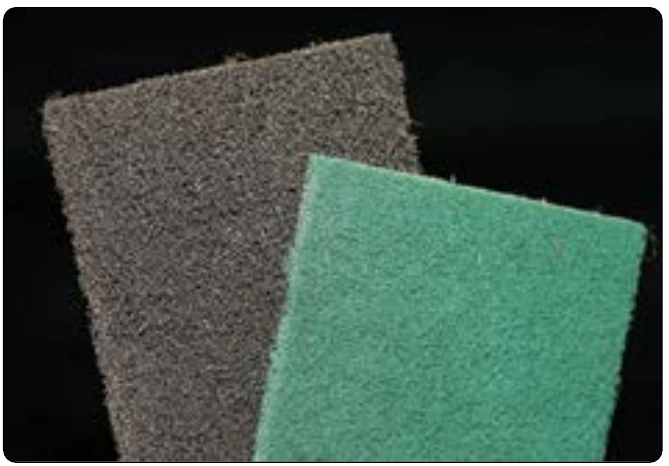
Nonwoven abrasive pads have generally replaced aluminum wool, aluminum wire brushes, or fiber bristle brushes as the tools used for cleaning corroded anodized surfaces. Care must be exercised in any cleaning process to avoid unnecessary breaking of the adjacent protective film. Take every precaution to maintain as much of the protective coating as practicable. Otherwise, treat anodized surfaces in the same manner as other aluminum finishes. Chromic acid and other inhibitive treatments can be used to restore the oxide film.
Treatment of Intergranular Corrosion in Heat‑Treated Aluminum Alloy Surfaces
As previously described, intergranular corrosion is an attack along grain boundaries of improperly or inadequately heat-treated alloys, resulting from precipitation of dissimilar constituents following heat-treatment. In its most severe form, actual lifting of metal layers (exfoliation) occurs. [Figure 8-15]
More severe cleaning is a must when intergranular corrosion is present. The mechanical removal of all corrosion products and visible delaminated metal layers must be accomplished to determine the extent of the destruction and to evaluate the remaining structural strength of the component. Corrosion depth and removal limits have been established for some aircraft. Any loss of structural strength must be evaluated prior to repair or replacement of the part. If the manufacturer’s limits do not adequately address the damage, a designated engineering representative (DER) can be brought in to assess the damage.
Corrosion of Magnesium Alloys
Magnesium is the most chemically active of the metals used in aircraft construction and is the most difficult to protect. When a failure in the protective coating does occur, the prompt and complete correction of the coating failure is imperative if serious structural damage is to be avoided. Magnesium attack is probably the easiest type of corrosion to detect in its early stages, since magnesium corrosion products occupy several times the volume of the original magnesium metal destroyed. The beginning of attack shows as a lifting of the paint film and white spots on the magnesium surface. These rapidly develop into snow-like mounds or even “white whiskers.” [Figure 8-29] Reprotection involves the removal of corrosion products, the partial restoration of surface coatings by chemical treatment, and a reapplication of protective coatings.