
Chapter 8
Cleaning & Corrosion Control
Instead of using chemical treatments for the bilge water, current float manufacturers recommend the diligent maintenance of the internal coatings applied to the float’s interior during manufacture. In addition to chemical conversion coatings applied to the surface of the sheet metal and other structural components and to sealants installed in lap joints during construction, the interior compartments are painted to protect the bilge areas. When seaplane structures are repaired or restored, this level of corrosion protection must be maintained.
Lavatories, Buffets, & Galleys
These areas, particularly deck areas behind lavatories, sinks, and ranges, where spilled food and waste products may collect if not kept clean, are potential trouble spots. Even if some contaminants are not corrosive in themselves, they attract and retain moisture and, in turn, cause corrosive attack. Pay attention to bilge areas located under galleys and lavatories. Clean these areas frequently and maintain the protective sealant and paint finishes.
Wheel Well and Landing Gear
More than any other area on the aircraft, this area probably receives more punishment due to mud, water, salt, gravel, and other flying debris. [Figure 8-20] Because of the many complicated shapes, assemblies, and fittings, complete area paint film coverage is difficult to attain and maintain. A partially applied preservative tends to mask corrosion rather than prevent it. Due to heat generated by braking action, preservatives cannot be used on some main landing gear wheels.
During inspection of this area, pay particular attention to the following trouble spots:
- Magnesium wheels, especially around bolt heads, lugs, and wheel web areas, for the presence of entrapped water or its effects
- Exposed rigid tubing, especially at B-nuts and ferrules, under clamps and tubing identification tapes
- Exposed position indicator switches and other electrical equipment
- Crevices between stiffeners, ribs, and lower skin surfaces that are typical water and debris traps
- Axle interiors
- Exposed surfaces of struts, oleos, arms, links, and attaching hardware (bolts, pins, etc.)
Water Entrapment Areas
Design specifications require that aircraft have drains installed in all areas where water may collect. Daily inspection of low point drains is a standard requirement. If this inspection is neglected, the drains may become ineffective because of accumulated debris, grease, or sealants.
Engine Frontal Areas & Cooling Air Vents
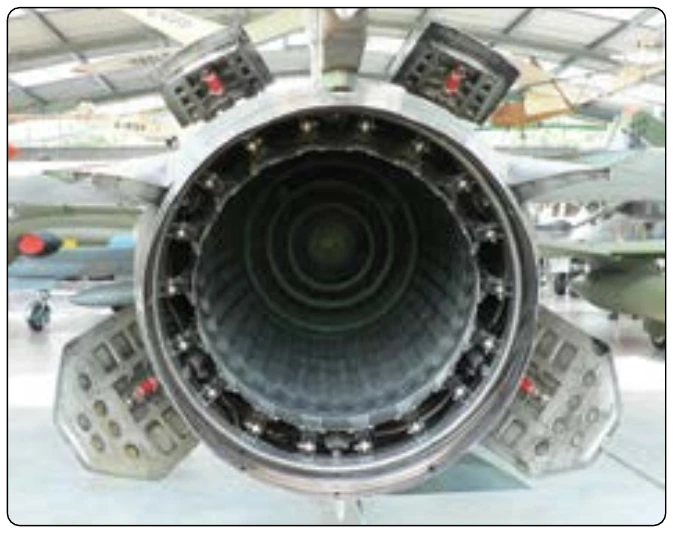
These areas are being constantly abraded with airborne dirt and dust, bits of gravel from runways, and rain erosion, leading to removal of the protective finish. Furthermore, cores of radiator coolers, reciprocating engine cylinder fins, etc., may not be painted due to the requirement for heat dissipation. Engine accessory mounting bases usually have small area of unpainted magnesium or aluminum on the machined-mounted surfaces. Inspection of these areas must include all sections in the cooling air path, with special attention to places where salt deposits may be built up during marine operations. It is imperative that incipient corrosion be inhibited and that paint touchup and hard film preservative coatings are maintained on seaplane and amphibian engine surfaces at all times.
Wing Flap & Spoiler Recesses
Dirt and water may collect in flap and spoiler recesses unnoticed, because they are normally retracted. For this reason, these recesses are potential corrosion problem areas. Inspect these areas with the spoilers and flaps in the fully deployed position.
External Skin Areas
External aircraft surfaces are readily visible and accessible for inspection and maintenance. Even here, certain types of configurations or combinations of materials become troublesome under certain operating conditions and require special attention.
Relatively little corrosion trouble is experienced with magnesium skins if the original surface finish and insulation are adequately maintained. Trimming, drilling, and riveting destroy some of the original surface treatment and can never be completely restored by touchup procedures. Any inspection for corrosion must include all magnesium skin surfaces with special attention to edges, areas around fasteners, and cracked, chipped, or missing paint.
Piano-type hinges are prime spots for corrosion due to the dissimilar metal contact between the steel pin and aluminum hinge. They are also natural traps for dirt, salt, and moisture. Inspection of hinges must include lubrication and actuation through several cycles to ensure complete lubricant penetration. Use water-displacing lubricants when servicing piano hinges. [Figures 8-21 and 8-22]
Corrosion of metal skins joined by spot welding is the result of the entrance and entrapment of corrosive agents between the layers of metal. This type of corrosion is evidenced by corrosion products appearing at the crevices where the corrosive agents enter. More advanced corrosive attack causes skin buckling and eventual spot weld fracture. Skin buckling in its early stages may be detected by sighting along spot welded seams or by using a straightedge. The only technique for preventing this condition is to keep potential moisture entry points, including seams and holes created by broken spot welds, filled with a sealant or a suitable preservative compound.