
Chapter 8
Cleaning & Corrosion Control
Electronic and electrical compartments cooled by ram air or compressor bleed air are subjected to the same conditions common to engine and accessory cooling vents and engine frontal areas. While the degree of exposure is less, because a lower volume of air passing through and special design features incorporated to prevent water formation in enclosed spaces, this is still a trouble area that requires special attention.
Circuit breakers, contact points, and switches are extremely sensitive to moisture and corrosive attack, thus inspection is required for these conditions as thoroughly as design permits. If design features hinder examination of these items while in the installed condition, inspection is accomplished after component removal for other reasons.
Miscellaneous Trouble Areas
Helicopter rotor heads and gearboxes, in addition to being constantly exposed to the elements, contain bare steel surfaces, many external working parts, and dissimilar metal contacts. Inspect these areas frequently for evidence of corrosion. The proper maintenance, lubrication, and the use of preservative coatings can prevent corrosion in these areas.
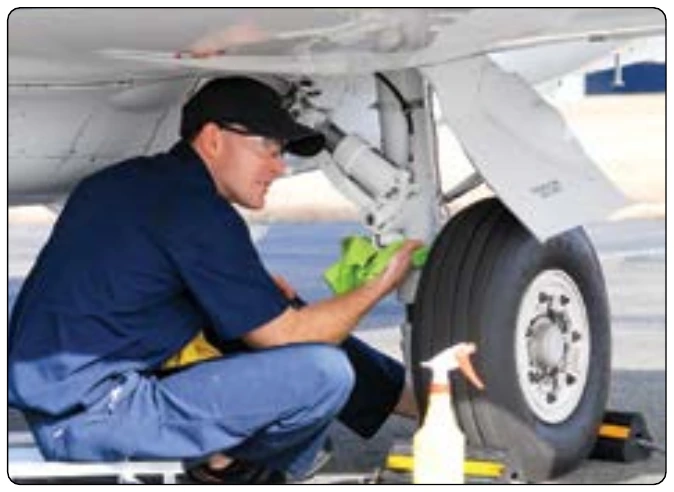
All control cables, whether plain carbon steel or corrosion-resistant steel, are to be inspected to determine their condition at each inspection period. In this process, inspect cables for corrosion by random cleaning of short sections with solvent soaked cloths. If external corrosion is evident, relieve tension and check the cable for internal corrosion. Replace cables that have internal corrosion. Remove light external corrosion with a nonwoven abrasive pad lightly soaked in oil or, alternatively, a steel wire brush. When corrosion products have been removed, recoat the cable with preservative.
Corrosion Removal
In general, any complete corrosion treatment involves cleaning and stripping of the corroded area, removing as much of the corrosion products as practicable, neutralizing any residual materials remaining in pits and crevices, restoring protective surface films, and applying temporary or permanent coatings or paint finishes.
Repair of corrosion damage includes removal of all corrosion and corrosion products. When the corrosion damage is severe and exceeds the damage limits set by the aircraft or parts manufacturer, the part must be replaced. The following paragraphs deal with the correction of corrosive attack on aircraft surface and components where deterioration has not progressed to the point requiring rework or structural repair of the part involved.
Several standard methods are available for corrosion removal. The methods normally used to remove corrosion are mechanical and chemical. Mechanical methods include hand sanding using abrasive mat, abrasive paper, or metal wool, and powered mechanical sanding, grinding, and buffing, using abrasive mat, grinding wheels, sanding discs, and abrasive rubber mats. However, the method used depends upon the metal and the degree of corrosion.
Surface Cleaning and Paint Removal
The removal of corrosion includes removal of surface finishes covering the attacked or suspected area. To assure maximum efficiency of the stripping compound, the area must be is held to the minimum consistent with full exposure of the corrosion damage. Extensive corrosion spread on any panel is to be corrected by fully treating the entire section.
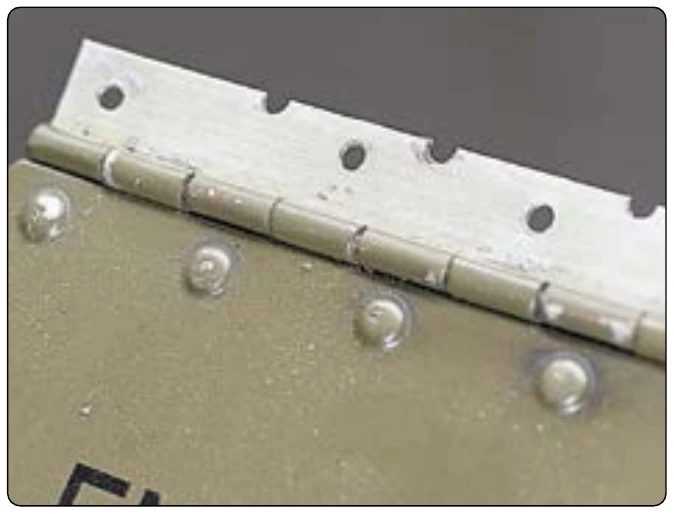
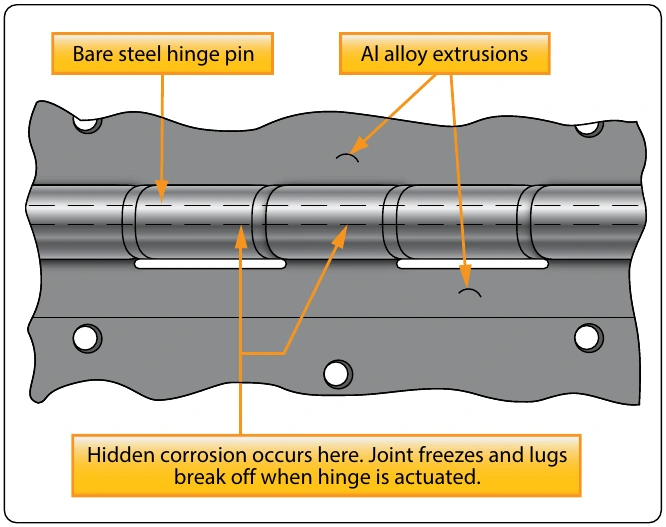
The selection of the type of materials to be used in cleaning depends on the nature of the matter to be removed. Modern environmental standards encourage the use of water-based, non-toxic cleaning compounds whenever possible. In some locations, local or state laws may require the use of such products, and prohibit the use of solvents that contain volatile organic compounds (VOCs). Where permitted, dry cleaning solvent (P-D-680) may be used for removing oil, grease, or soft preservative compounds. For heavy-duty removal of thick or dried preservatives, other compounds of the solvent emulsion type are available.
The use of a general purpose, water soluble stripper can be used for most applications. There are other methods for paint removal that have minimal impact upon the aircraft structure, and are considered “environmentally friendly.”
Wherever practicable, chemical paint removal from any large area is to be accomplished outside (in open air) and preferably in shaded areas. If inside removal is necessary, adequate ventilation must be assured. Synthetic rubber surfaces, including aircraft tires, fabric, and acrylics, must be thoroughly protected against possible contact with paint remover. Care must be exercised in using paint remover, especially around gas or watertight seam sealants, since the stripper tends to soften and destroy the integrity of these sealants.
Mask off any opening that would permit the stripping compound to get into aircraft interiors or critical cavities. Paint stripper is toxic and contains ingredients harmful to both skin and eyes. Therefore, wear rubber gloves, aprons of acid repellent material, and goggle type eyeglasses. The following is a general stripping procedure:
- Brush the entire area to be stripped with a cover of stripper to a depth of 1⁄32" to 1⁄16". Any paintbrush makes a satisfactory applicator, except that the bristles will be loosened by the effect of paint remover on the binder, and the brush must not be used for other purposes after being exposed to paint remover.
- Allow the stripper to remain on the surface for a sufficient length of time to wrinkle and lift the paint. This may be from 10 minutes to several hours, depending on temperature, humidity, and the condition of the paint coat being removed. Scrub the surface with a bristle brush saturated with paint remover to further loosen finish that may still be adhering to the metal.
- Reapply the stripper as necessary in areas where the paint remains tightly adhered or where the stripper has dried, and repeat the above process. Only nonmetallic scrapers are to be used to assist in removing persistent paint finishes. Nonwoven abrasive pads intended for paint stripping may also prove to be useful in removing the loosened paint.
- Remove the loosened paint and residual stripper by washing and scrubbing the surface with water and a broom, brush, or fresh nonwoven abrasive pad. If water spray is available, use a low to medium pressure stream of water directly on the area being scrubbed. If steam-cleaning equipment is available and the area is sufficiently large, cleaning may be accomplished using this equipment together with a solution of steam-cleaning compound. On small areas, any method may be used that assures complete rinsing of the cleaned area. Use care to dispose of the stripped residue in accordance with environmental laws.