
Chapter 4
Engine Ignition & Electrical Systems
The insulator provides a protective core around the electrode. In addition to affording electrical insulation, the ceramic insulator core also transfers heat from the ceramic tip, or nose, to the cylinder. The insulator is made from aluminum oxide ceramic having excellent dielectric strength, high mechanical strength, and thermal conductivity. The types of spark plugs used in different engines vary in respect to heat range, reach, massive electrode, fine wire electrode (Iridium/platinum), or other characteristics of the installation requirements for different engines.
The electrodes can be of several designs from massive electrodes or Nickel-base alloy to fine wire electrodes. [Figure 4-39 and 4-40] The massive electrode material has a lower melting point and is more susceptible to corrosion. The main differences include cost and length of service. Fine wire iridium and platinum electrodes have a very high melting point and are considered precious metals. Therefore, the cost of this type of spark plug is higher, but they have

a longer service life with increased performance. Fine wire spark plugs are more effective than massive electrode plugs because the size shields its own spark from some of the fuel air mixture. Less than efficient combustion occurs due to uneven ignition. The iridium electrode allows for a larger spark gap, which creates a more intense spark that increases performance. The spark gap of any electrode is vulnerable to erosion and the melting point of the electrode material.
The heat range of a spark plug is a measure of its ability to transfer the heat of combustion to the cylinder head. The plug must operate hot enough to burn off carbon deposits, which can cause fouling, a condition where the plug no longer produces a spark across the electrodes, yet remain cool enough to prevent a pre-ignition condition. Spark plug pre-ignition is caused by plug electrodes glowing red hot as a glow plug, setting off the air-fuel mixture before the normal firing position. The length of the nose core is the principal factor in establishing the plug’s heat range. [Figure 4-41] Hot plugs have a long insulator nose that creates a long heat transfer path; cold plugs have a relatively short insulator to provide a rapid transfer of heat to the cylinder head. [Figure 4-41]
If an engine were operated at only one speed, spark plug design would be greatly simplified. Because flight demands impose different loads on the engine, spark plugs must be designed to operate as hot as possible at slow speeds and light loads, and as cool as possible at cruise and takeoff power.
The choice of spark plugs to be used in a specific aircraft engine is determined by the engine manufacturer after extensive tests. When an engine is certificated to use hot
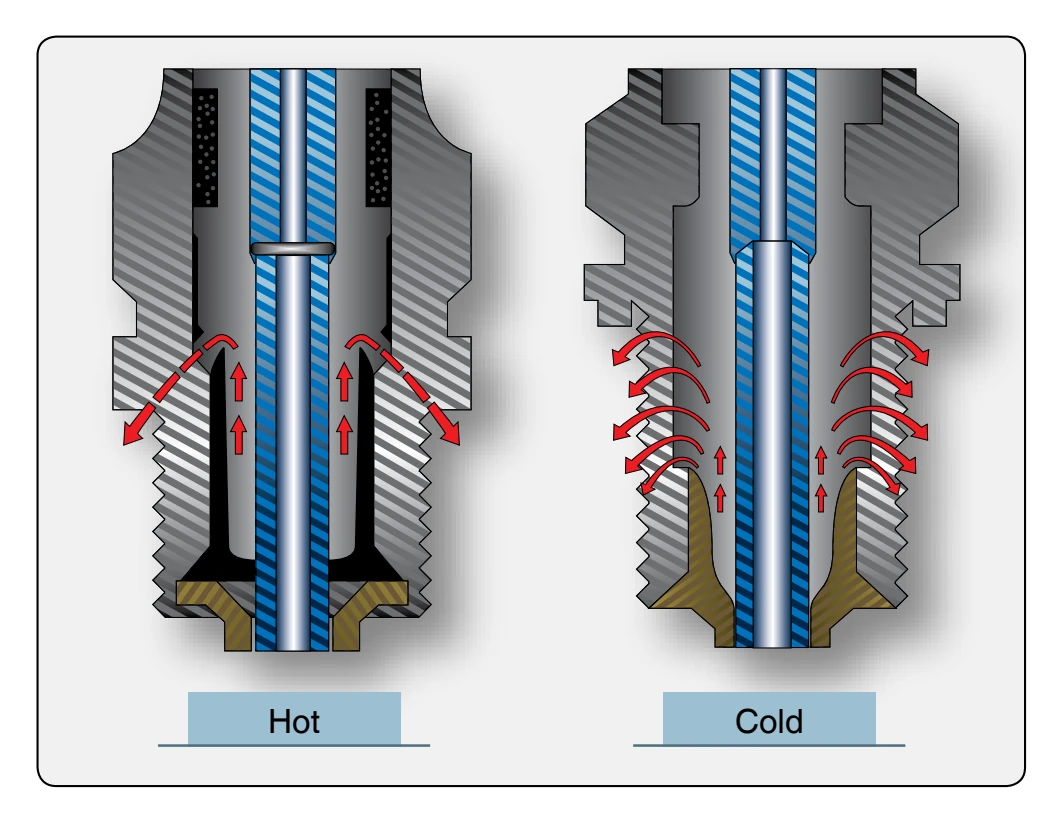
or cold spark plugs, the plug used is determined by the compression ratio, the degree of supercharging, and how the engine is to be operated. High-compression engines tend to use colder range plugs while low-compression engines tend to use hot range plugs.
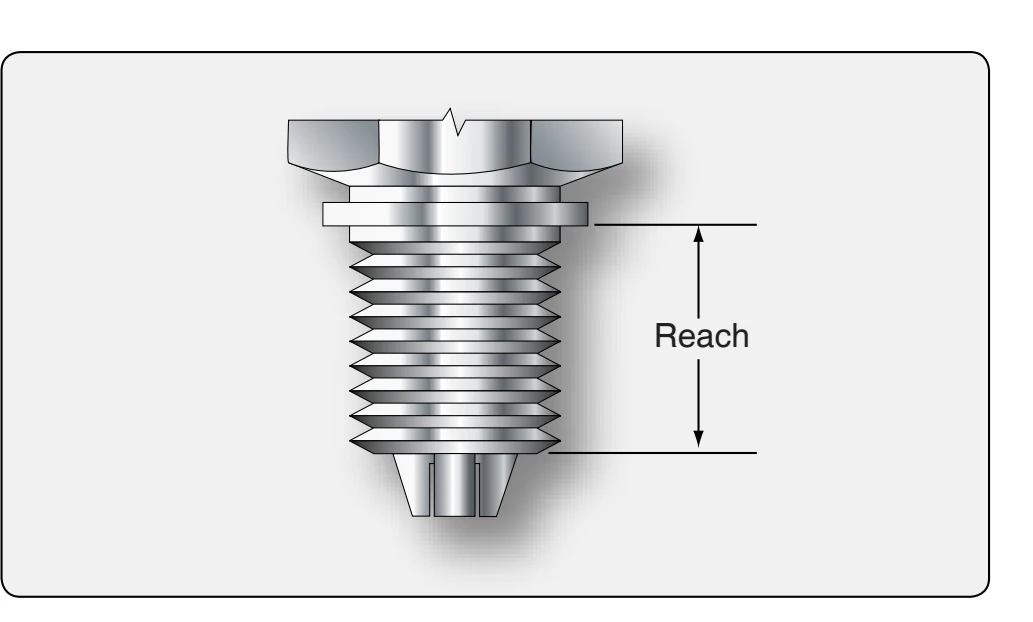
A spark plug with the proper reach ensures that the electrode end inside the cylinder is in the best position to achieve ignition. The spark plug reach is the length of the threaded portion that is inserted in the spark plug bushing of the cylinder. [Figure 4-42] Spark plug seizure and/or improper combustion within the cylinder can occur if a plug with the wrong reach is used. In extreme cases, if the reach is too long, the plug may contact a piston or valve and damage the engine. If the plug threads are too long, they extend into the combustion chamber and carbon adheres to the threads making it almost impossible to remove the plug. This can also be a source of pre-ignition. Heat of combustion can make some of the carbon a source for ignition, which can ignite the air-fuel mixture prematurely. It is very important to select the approved spark plugs for the engine.
Reciprocating Engine Ignition System Maintenance & Inspection
An aircraft’s ignition system is the result of careful design and thorough testing. The ignition system usually provides good, dependable service, provided it is maintained and inspected properly. However, difficulties can occur with normal wear, which affects ignition system performance, especially with magneto systems. Breakdown and deterioration of insulating materials, breaker point wear, corrosion, bearing and oil seal wear, and electrical connection problems are all possible defects that can be associated with magneto-ignition systems. The ignition timing requires precise adjustment and painstaking care so that the following four conditions occur at the same instant:
- The piston in the No. 1 cylinder must be in a position a prescribed number of degrees before top dead center on the compression stroke.
- The rotating magnet of the magneto must be in the E-gap position.
- The breaker points must be just opening on the No. 1 cam lobe.
- The distributor finger must be aligned with the electrode serving the No. 1 cylinder.
If one of these conditions is out of synchronization with any of the others, the ignition system is out of time. If the spark is out of time, it is not delivered to the cylinder at the correct time and engine performance decreases.
When ignition in the cylinder occurs before the optimum crankshaft position is reached, the timing is said to be early. If ignition occurs too early, the piston rising in the cylinder is opposed by the full force of combustion. This condition results in a loss of engine power, overheating, and possible detonation and pre-ignition.
If ignition occurs at a time after the optimum crankshaft position is reached, the ignition timing is said to be late. If it occurs too late, not enough time is allowed to consume the air-fuel charge, and combustion is incomplete. As a result, the engine loses power and requires a greater throttle opening to carry a given propeller load.
Moisture forming on different parts of the ignition system causes more common irregularities. Moisture can enter ignition system units through cracks or loose covers, or it can result from condensation. Breathing, a situation that occurs during the readjustment of the system from low to high atmospheric pressure, can result in drawing in moistureladen air. Ordinarily, the heat of the engine is sufficient to evaporate this moisture, but occasionally the moist air condenses as the engine cools. The result is an appreciable moisture accumulation which causes the insulation materials to lose electrical resistance. A slight amount of moisture contamination may cause reduction in magneto output by short-circuiting to ground a part of the high-voltage current intended for the spark plug. If the moisture accumulation is appreciable, the entire magneto output may be dissipated to ground by way of flashover and carbon tracking. Moisture accumulation during flight is extremely rare because the high operating temperature of the system is effective in preventing condensation. Difficulties from moisture accumulation are probably more evident during starting and ground operation.
Spark plugs are often diagnosed as being faulty when the real malfunction exists in a different system. Malfunctioning of the carburetor, poor fuel distribution, too much valve overlap, leaking primer system, or poor idle speed and mixture settings show symptoms that are the same as those for faulty ignition. Unfortunately, many of these conditions can be temporarily improved by a spark plug change, but the trouble recurs in a short time because the real cause of the malfunction has not been eliminated. A thorough understanding of the various engine systems, along with meticulous inspection and good maintenance methods, can substantially reduce such errors.