
Chapter 10
IFR Flight
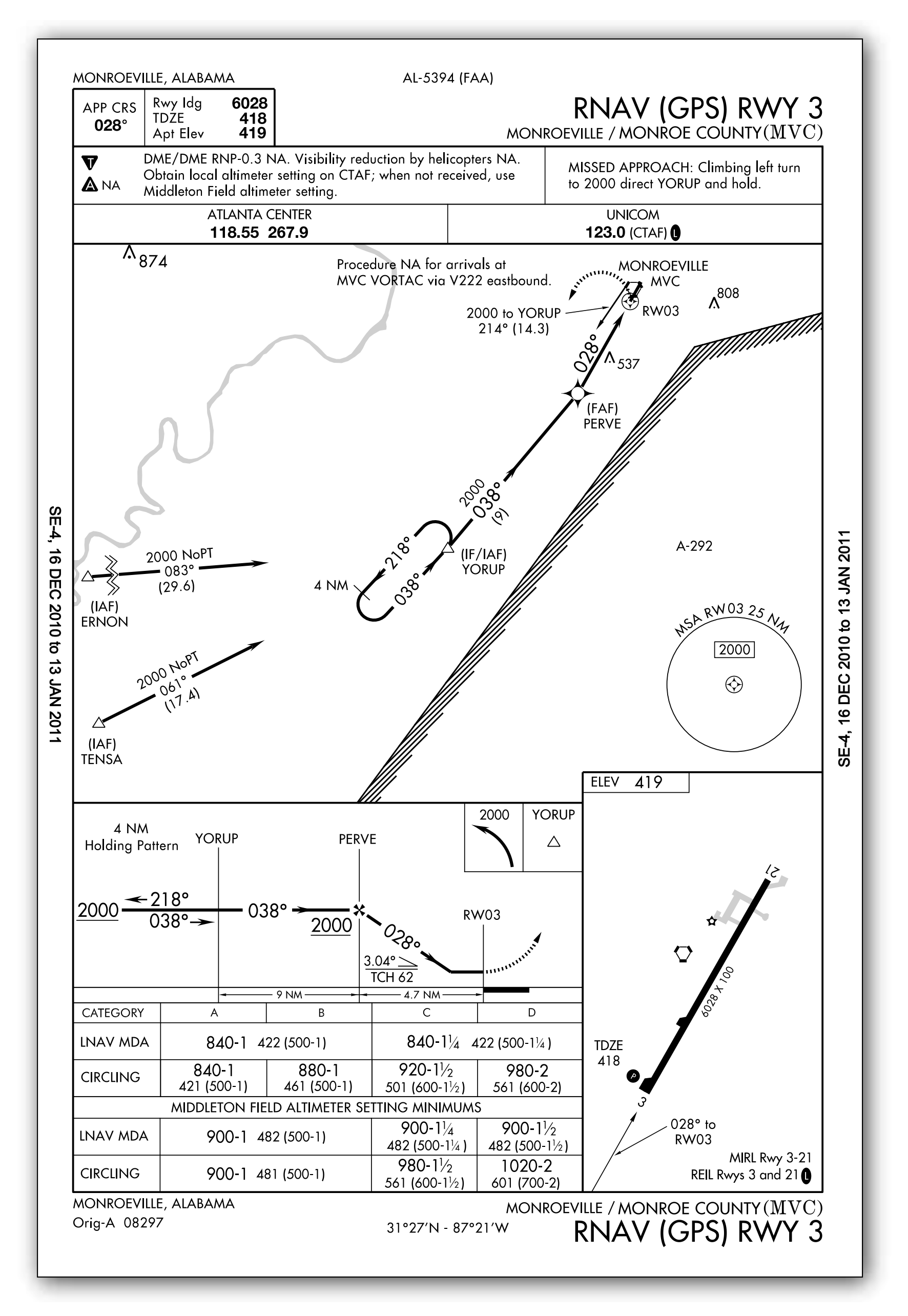
Unless otherwise authorized by ATC, a pilot is expected to execute the complete IAP shown on the chart.
Approach to Airport With an Operating Tower, With No Approach Control
When an aircraft approaches an airport with an operating control tower, but no approach control, ATC issues a clearance to an approach/outer fix with the appropriate information and instructions as follows:
- Name of the fix
- Altitude to be maintained
- Holding information and expected approach clearance time, if appropriate
- Instructions regarding further communications, including:
- facility to be contacted
- time and place of contact
- frequency/ies to be used
If ATIS is available, a pilot should monitor that frequency for information such as ceiling, visibility, wind direction and velocity, altimeter setting, instrument approach, and runways in use prior to initial radio contact with the tower. If ATIS is not available, ATC provides weather information from the nearest reporting station.
Approach to an Airport With an Operating Tower, With an Approach Control
Where radar is approved for approach control service, it is used to provide vectors in conjunction with published IAPs. Radar vectors can provide course guidance and expedite traffic to the final approach course of any established IAP. Figure 10-9 shows an IAP chart with maximum ATC facilities available.
Approach control facilities that provide this radar service operate in the following manner:
- Arriving aircraft are either cleared to an outer fix most appropriate to the route being flown with vertical separation and, if required, given holding information; or,
- When radar hand-offs are effected between ARTCC and approach control, or between two approach control facilities, aircraft are cleared to the airport or to a fix so located that the hand-off is completed prior to the time the aircraft reaches the fix.
- When the radar hand-offs are utilized, successive arriving flights may be handed off to approach control with radar separation in lieu of vertical separation.
- After hand-off to approach control, an aircraft is vectored to the appropriate final approach course.
- Radar vectors and altitude/flight levels are issued as required for spacing and separating aircraft; do not deviate from the headings issued by approach control.
- Aircraft are normally informed when it becomes necessary to be vectored across the final approach course for spacing or other reasons. If approach course crossing is imminent and the pilot has not been informed that the aircraft will be vectored across the final approach course, the pilot should query the controller. The pilot is not expected to turn inbound on the final approach course unless an approach clearance has been issued. This clearance is normally issued with the final vector for interception of the final approach course, and the vector enables the pilot to establish the aircraft on the final approach course prior to reaching the final approach fix.
- Once the aircraft is established inbound on the final approach course, radar separation is maintained with other aircraft, and the pilot is expected to complete the approach using the NAVAID designated in the clearance (ILS, VOR, NDB, GPS, etc.) as the primary means of navigation.
- After passing the final approach fix inbound, the pilot is expected to proceed direct to the airport and complete the approach or to execute the published missed approach procedure.
- Radar service is automatically terminated when the landing is completed or when the pilot is instructed to change to advisory frequency at uncontrolled airports, whichever occurs first.
Radar Approaches
With a radar approach, the pilot receives course and altitude guidance from a controller who monitors the progress of the flight with radar. This is an option should the pilot experience an emergency or distress situation.
The only airborne radio equipment required for radar approaches is a functioning radio transmitter and receiver.
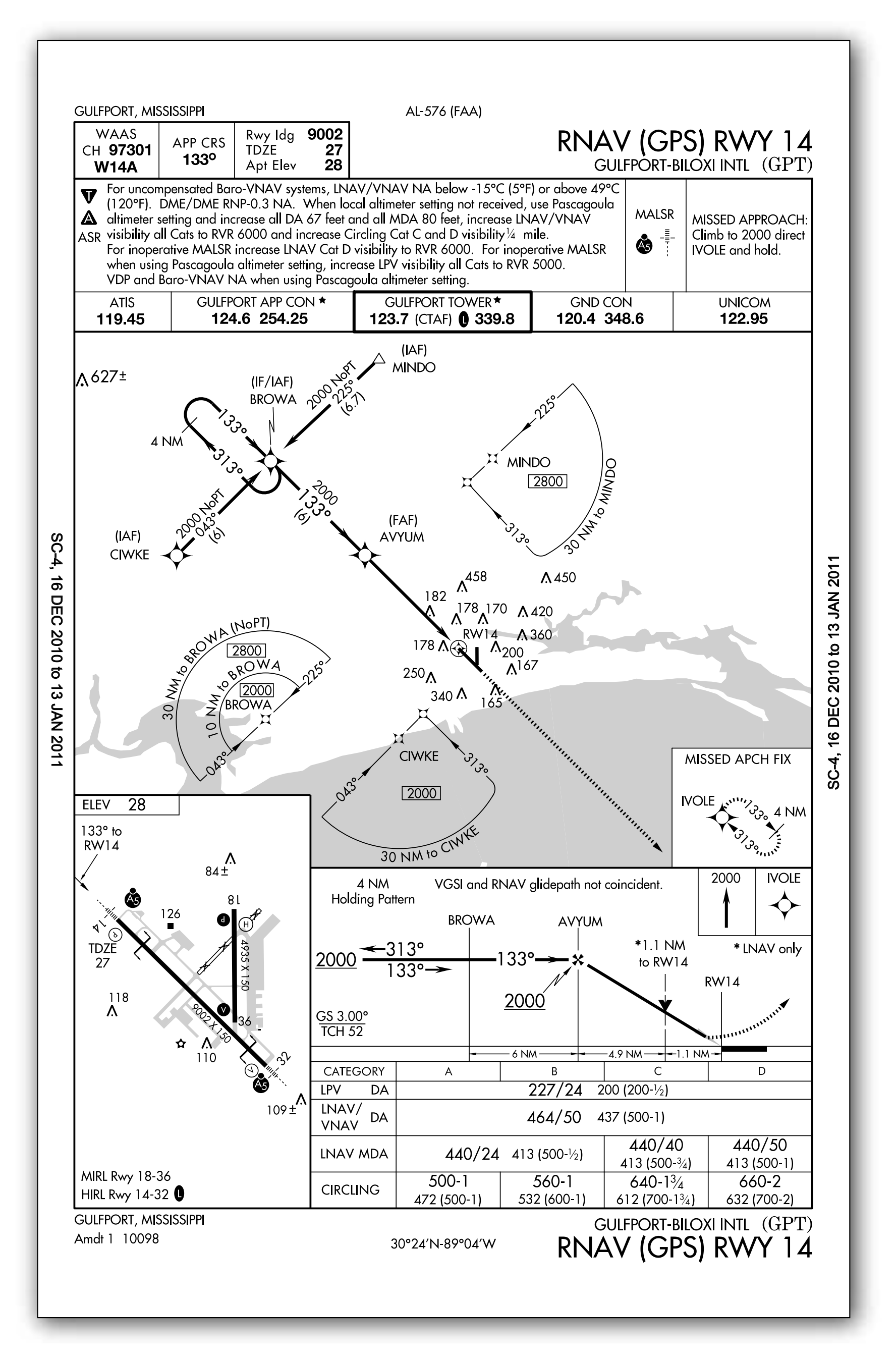
The radar controller vectors the aircraft to align it with the runway centerline. The controller continues the vectors to keep the aircraft on course until the pilot can complete the approach and landing by visual reference to the surface. There are two types of radar approaches: Precision (PAR) and Surveillance (ASR).
A radar approach may be given to any aircraft upon request and may be offered to pilots of aircraft in distress or to expedite traffic; however, an ASR might not be approved unless there is an ATC operational requirement or in an unusual or emergency situation. Acceptance of a PAR or ASR by a pilot does not waive the prescribed weather minimums for the airport or for the particular aircraft operator concerned. The decision to make a radar approach when the reported weather is below the established minimums rests with the pilot.
PAR and ASR minimums are published on separate pages in the FAA TPP. Figure 10-10.