
Chapter 7
Repairs, Alterations, and Manufacture
- Verify the colored eye location of the centerline is marked green.
Main Deployment Bag Repair—Closing Flap Grommet Pullout
- Applicable products: All main deployment bags
- Description: Repair of main deployment bag
- Authorized repairmen: FAA Senior or Master Parachute Rigger
- Materials: E thread, Type-4 tape or equivalent and grommets to match original
- Machines: 301 straight stitch—medium duty 7–11 SPI and 308 zigzag—medium duty 7–11 SPI
- Equipment: Scissors, seam ripper or scalpel, marking pencil, 6-inch ruler, grommet set, and hole punch
Procedure
The most common repair needed to a main deployment is the repair of the closing flap in the area of the grommets. The grommets work loose and pull out, damaging the material.
The tongue will need reinforcing and new grommets.
Disassembly
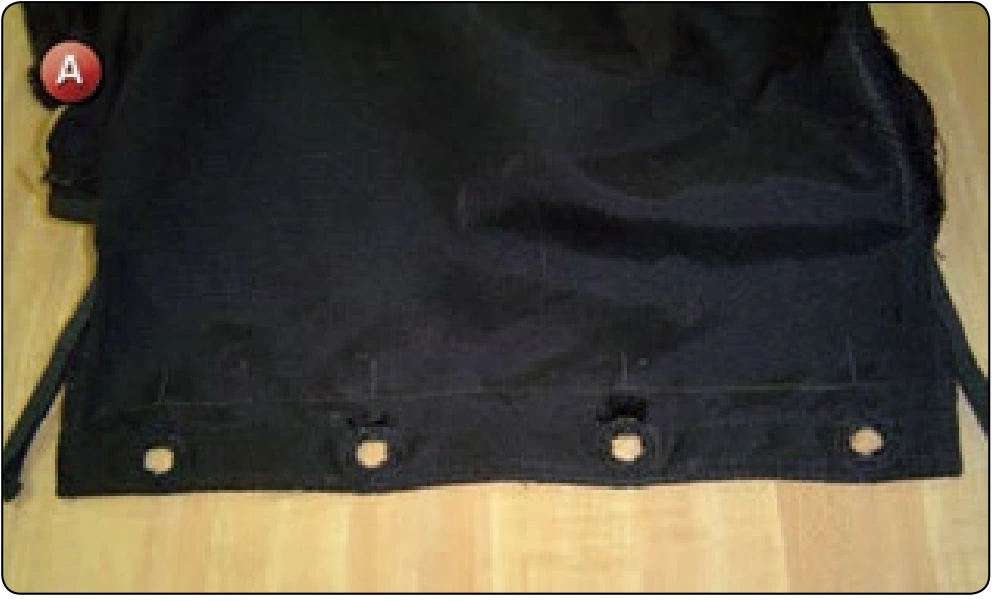
- Remove grommets from the tongue of the bag.
- Unpick the binding along the edge of the grommet reinforcing tape. [Figure A]
Reassembly
- Overlay a piece of 1.5 inch Type-4 tape on the top of the bag tongue and sew down. [Figure B]
- Punch new holes through the Type-4 from the back side in the same location as the original location.
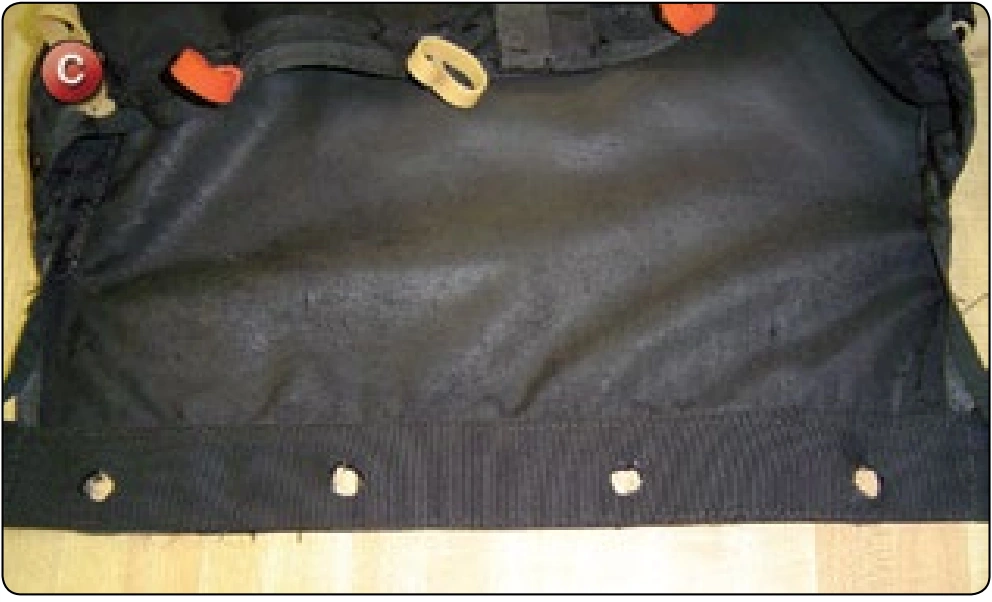
- Overlay the back side of the tongue with a piece of 1.5 inch Type-3 tape and sew down. [Figure C] Punch new holes through the tape.
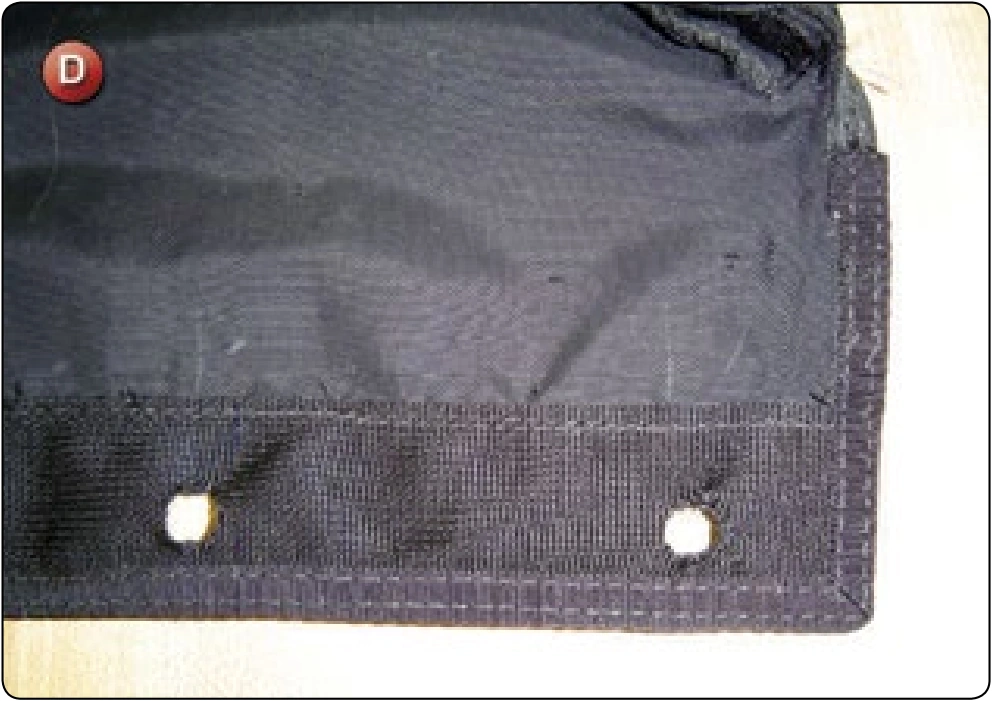
- Sew down the binding tape and rebind as needed. [Figure D]
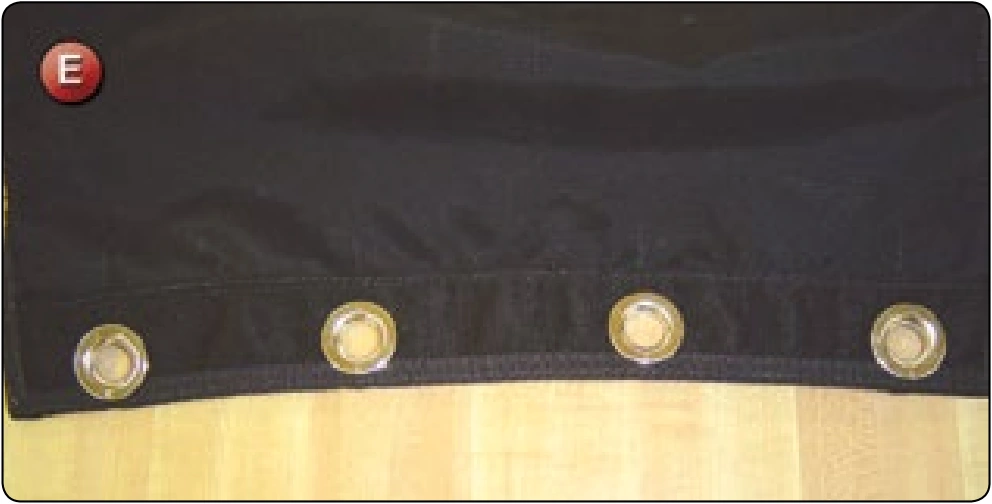
- Set new grommets in the original locations. [Figure E]
Inspection
- Verify stitching is secure.
- Verify new grommets are secure.
Section 5, Alterations
In the “old days” when military surplus equipment was common, there were a number of alterations available to make the surplus equipment suitable for sport use. Since then, however, the sport has progressed and purpose-built sport equipment is now the rule, so most equipment does not need any specialized alterations for use. Most alterations now deal primarily with harness size adjustments for individuals, or they are designed to enhance the performance of the parachute.
In the past, alterations were often done by well-intentioned individuals who knew how to do them but in most cases did not have the authority to perform them. The common attitude was, “I’m a master rigger; I can do anything.” As long as the work was done reasonably well and no one got hurt, this was an accepted practice. While there may be a few individuals who still adhere to that philosophy, as a whole, the rigging profession is much more aware of limitations in regard to alterations. Under 14 CFR part 65, section 65.129(d), “No certificated parachute rigger may – (d) Alter a parachute in a manner that is not specifically authorized by the Administrator or the manufacturer.” In today’s world, manufacturers are much more concerned with the alterations being performed on their products. With the advent of the Internet and other means of high-speed communications, riggers have much more access to the manufacturer and are more likely to communicate with them as to what can be done. Also, due to liability issues, many riggers are reluctant to undertake alterations without the manufacturer’s approval.