Chapter 7
Repairs, Alterations, and Manufacture
What constitutes the manufacturer’s approval for an alteration? To be safe, the rigger should always have something in writing that specifically addresses the alteration the rigger wishes to perform. There should be a two way line of communication for this. One, the rigger should specifically request from the manufacturer the authority to perform the alteration. This should include serial number, make, model of the product involved, and a description of the alteration. Two, in return, the rigger should receive written authorization to perform the alteration. The manufacturer specifies the form of this authorization, but it should have the date, the rigger’s name and certificate number, and a reference to the rigger’s original request. This fulfills the requirements of the regulations and protects both parties involved.
In certain cases, a rigger might want to perform an alteration on a product for which the manufacturer is no longer in business. This is commonly known as an orphaned product.
If this occurs, the rigger should obtain approval from the FAA. Refer to AC 105-2, Sport Parachute Jumping. Alterations to approved parachutes must be performed only by a certificated and appropriately rated Master Parachute Rigger, a parachute manufacturer, or any other manufacturer that the FAA considers competent. To receive approval from the FAA, a person qualified to alter a parachute would first contact the FAA Flight Standards District Office (FSDO) to discuss the proposed alteration with an FAA inspector. The inspector requires a description of the proposed alteration along with a sample, technical data and proposed test data to ensure that the altered parachute meets all applicable requirements. After discussing the proposed alteration, the two parties agree on a suitable plan of action. The individual then drafts an application, in letter form, addressed to the local FSDO. Along with the letter, the following information needs to be attached:
- A clear description of the alteration
- Technical information that includes drawings and photographs, materials used, stitch patterns, and location of altered components
- A means of identifying the altered parachute, such as model and serial number, and identification of the person having performed the alteration
After the inspector reviews the application, if he or she is satisfied, he or she indicates approval by date stamping, signing, and placing the FSDO identification stamp on the letter of application. Upon receiving this approval, the master rigger can then perform the alteration.
The following are alterations found in Section 5, Alterations, of this chapter:
- *Articulated harness main lift web resizing
- Leg pad resizing
- *Automatic Activation Device (AAD) installation
Articulated Harness Main Lift Web (MLW) Resizing
- Applicable products: Most articulated harness configurations
- Description: Resizing of an articulated harness
- Authorized repairmen: FAA Master Parachute Rigger
- Materials: E thread, 5-cord nylon thread, Type-7 webbing, or as original and Type-4 1 inch tape
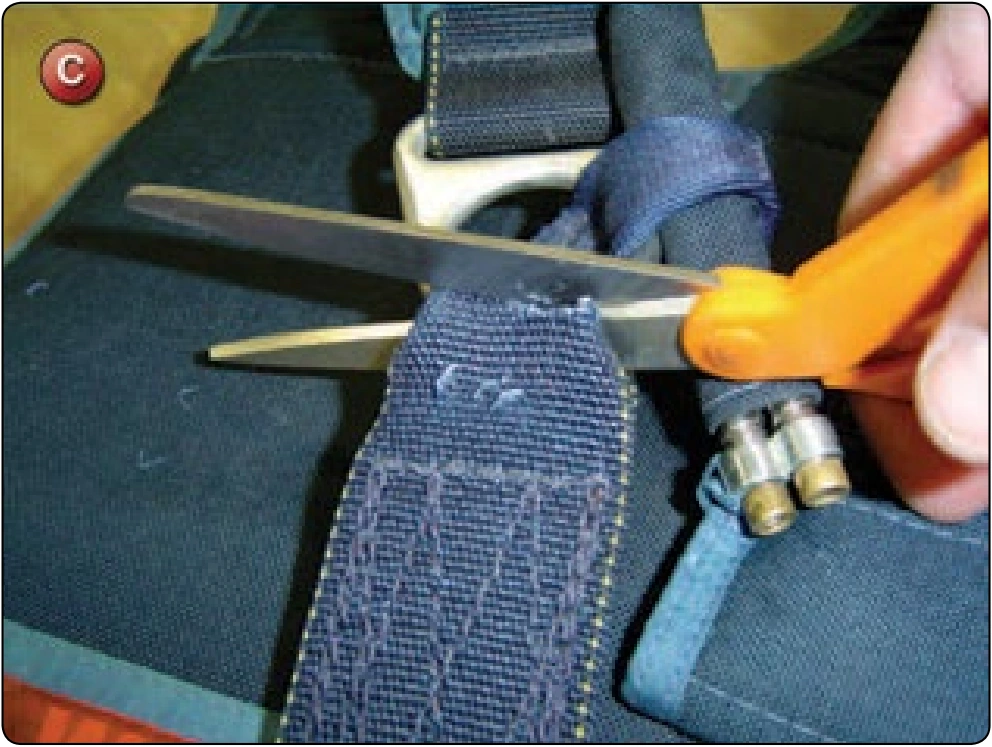
- Machines: 308 zigzag—medium duty 7–11 SPI, heavy-duty harness machine, Singer 7–33 or equivalent 4-6 SPI
- Equipment: Scissors, seam ripper or scalpel, marking pencil, 18-inch ruler, and hot glue gun
Procedure
Resizing of a harness is usually considered an alteration.
However, because of the simplicity of the procedure, most manufacturers do not object to a qualified master rigger performing the procedure. It would be wise, however, for the rigger to contact the manufacturer for permission before undertaking the procedure. The following procedure is shown on a VoodooTM system.
Disassembly
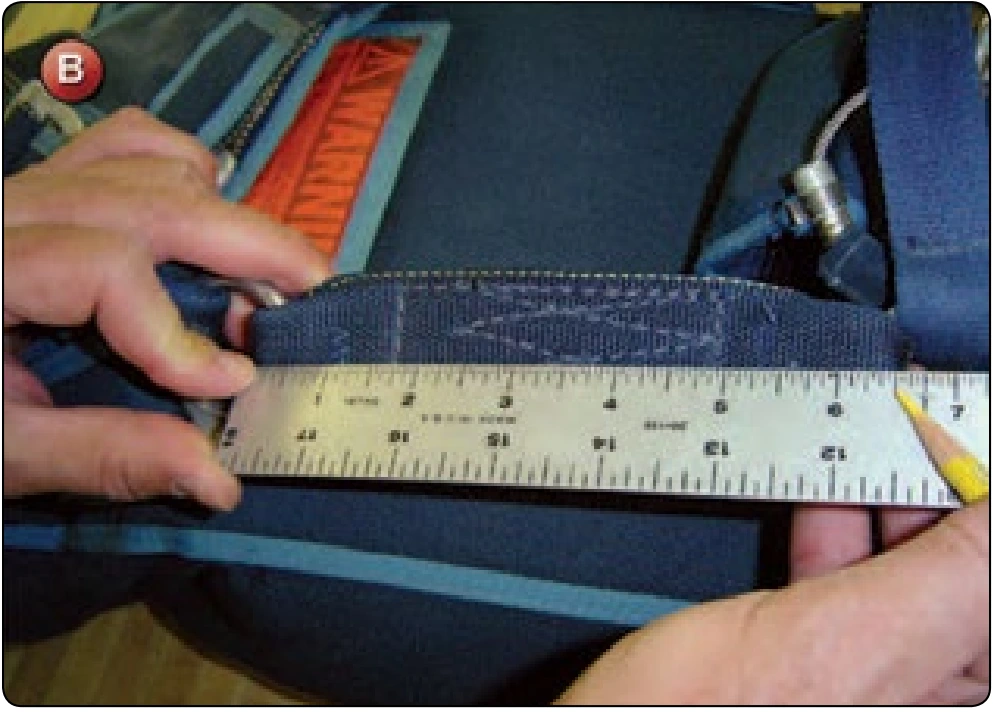
- Measure the MLW to check if the harness is even.
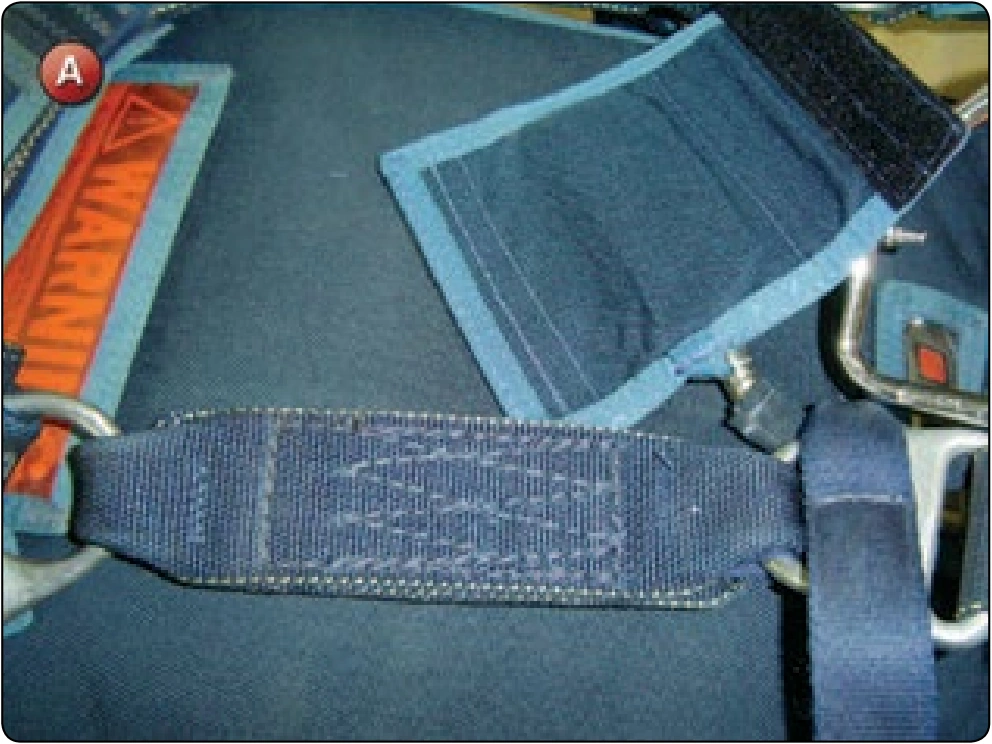
- Remove the ripcord pocket/MLW cover. [Figure A]
- Measure the lower MLW. [Figure B]