
Chapter 9
Weight and Balance Control—Commuter Category and Large Aircraft
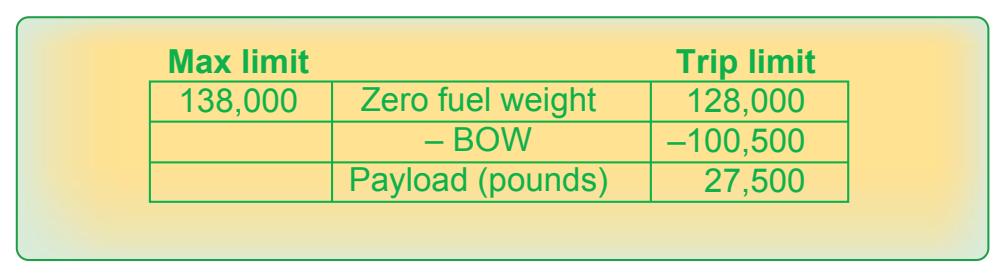
Under these conditions, 27,500 pounds of payload may be carried.
Determining the Landing Weight
It is important to know the landing weight of the aircraft in order to set up the landing parameters and to be certain the aircraft is able to land safely at the intended destination.
In this example of a four-engine turboprop airplane, determine the airplane weight at the end of 4.0 hours of cruise under these conditions:
- Takeoff weight — 140,000 lb
- Pressure altitude during cruise — 16,000 ft
- Ambient temperature during cruise — –32 °C
- Fuel burned during descent and landing — 1,350 lb
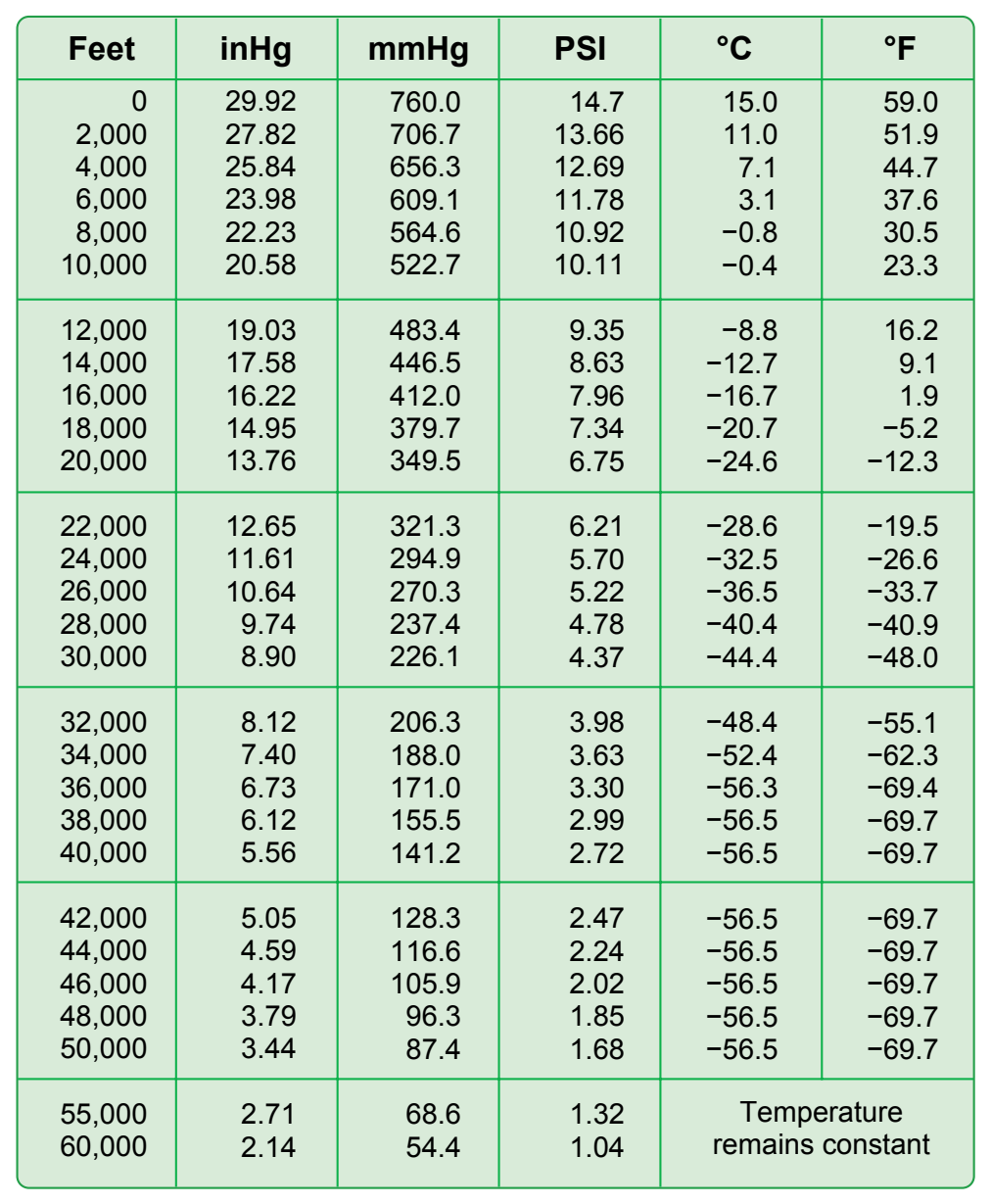
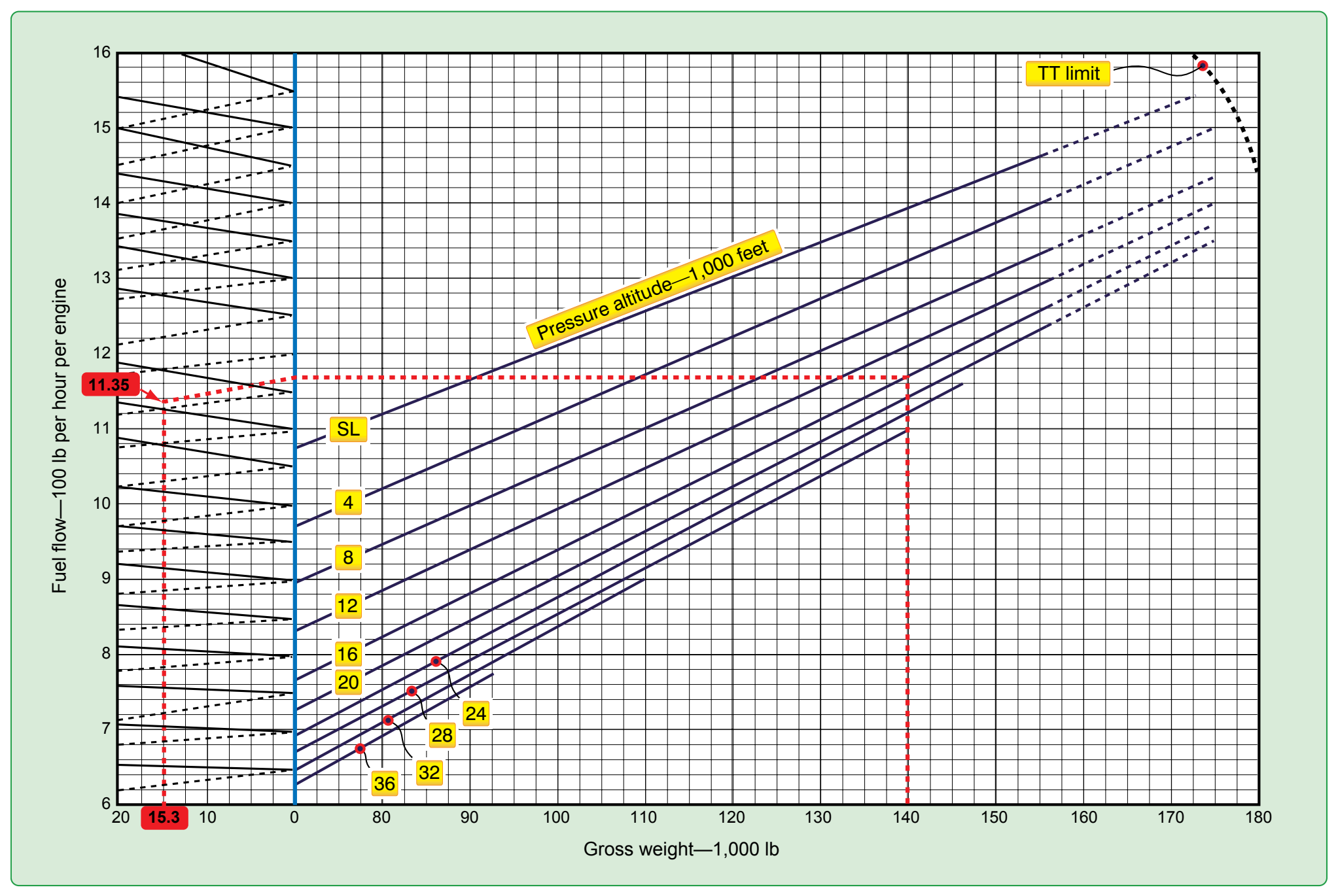
Refer to the U.S. Standard Atmosphere Table in Figure 9-33 and the gross weight table in Figure 9-34 when completing the following steps:
- Use the U.S. Standard Atmosphere Table to determine the standard temperature for 16,000 feet (–16.7 °C).
- The ambient temperature is –32 °C, which is a deviation from standard of 15.3 °C. (–32° – (–16.7°) = –15.3°). It is below standard.
- In the gross weight table, follow the vertical line representing 140,000 pounds gross weight upward until it intersects the diagonal line for 16,000 feet pressure altitude.
- From this intersection, draw a horizontal line to the left to the temperature deviation index (0 °C deviation).
- Draw a diagonal line parallel to the dashed lines for Below Standard from the intersection of the horizontal line and the Temperature Deviation Index.
- Draw a vertical line upward from the 15.3 °C Temperature Deviation From Standard.
- Draw a horizontal line to the left from the intersection of the Below Standard diagonal and the 15.3 °C temperature deviation vertical line. This line crosses the fuel flow–100 pounds per hour per engine index at 11.35 and indicates that each of the four engines burns 1,135 (100 × 11.35) pounds of fuel per hour. The total fuel burn for the 4-hour cruise is shown in Figure 9-35.
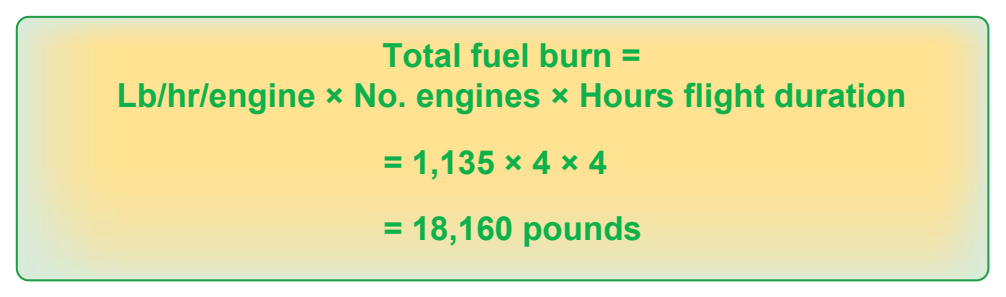
The airplane gross weight was 140,000 pounds at takeoff with 18,160 pounds of fuel burned during cruise and 1,350 pounds burned during the approach and landing phase. This leaves a landing weight of 140,000 – (18,160 + 1,350) = 120,490 pounds.
Determining Fuel Dump Time in Minutes
Most large aircraft are approved for a greater weight for takeoff than for landing. To make it possible for them to return to landing soon after takeoff, a fuel jettison system is sometimes installed. It is important in an emergency situation that the flight crew be able to dump enough fuel to lower the weight to its allowed landing weight. This is done by timing the dumping process.
In this example, the aircraft has two engines operating and these specifications apply:
- Cruise weight — 171,000 lb
- Maximum landing weight — 142,500 lb
- Time from start of dump to landing — 19 minutes
Fuel-flow and dump-rate data:
- Average fuel flow during dumping and descent — 3,170 lb/hr/eng
- Fuel dump rate — 2,300 lb/minute
To calculate the fuel dump time in minutes:
- Determine the amount of weight the aircraft must lose to reach the maximum allowable landing weight. [Figure 9-36]
- Determine the amount of fuel burned from the beginning of the dump to touchdown. [Figure 9-37]