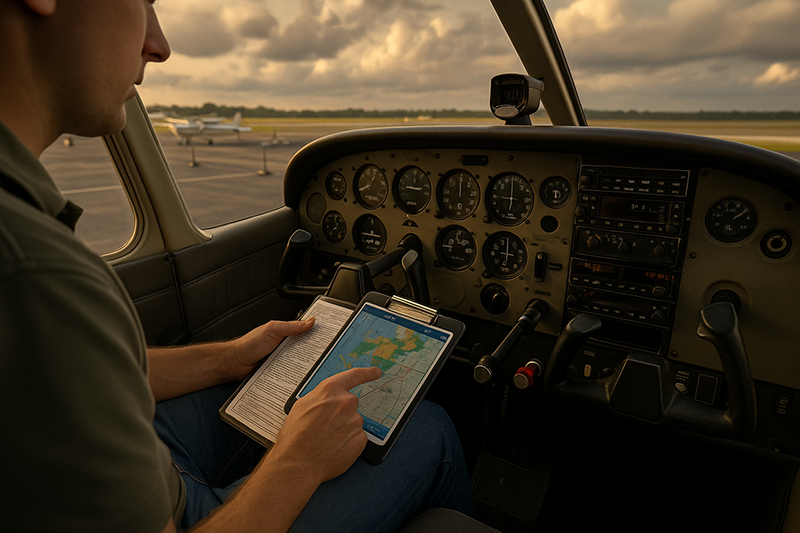
Fuel Reserve Strategies Beyond FAA Minimums
Fuel reserve strategies help pilots plan beyond FAA minimums by protecting options for weather, winds, traffic delays, diversions, and safer decisions.
Read article
Explore aviation training content, pilot guides, flight planning explanations, safety topics, navigation lessons, weather resources, and aviation fundamentals for students, pilots, instructors, and aviation enthusiasts.
Fresh aviation learning content and pilot-focused resources. Showing page 5 of 36.
Fuel reserve strategies help pilots plan beyond FAA minimums by protecting options for weather, winds, traffic delays, diversions, and safer decisions.
Read article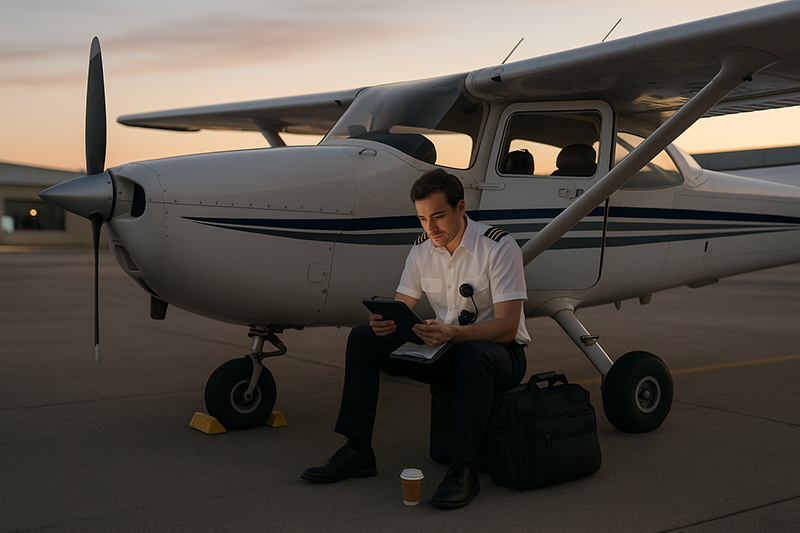
Managing fatigue during multi-day flying trips helps pilots protect judgment, alertness, and safety when schedules, weather, and workload accumulate.
Read article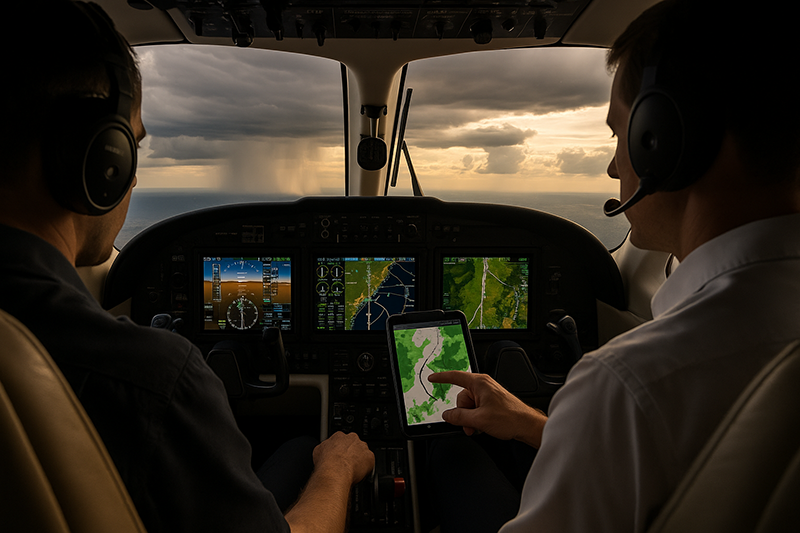
Learn how professional pilots approach alternate planning with practical judgment, fuel awareness, weather strategy, and safer diversion decision-making.
Read article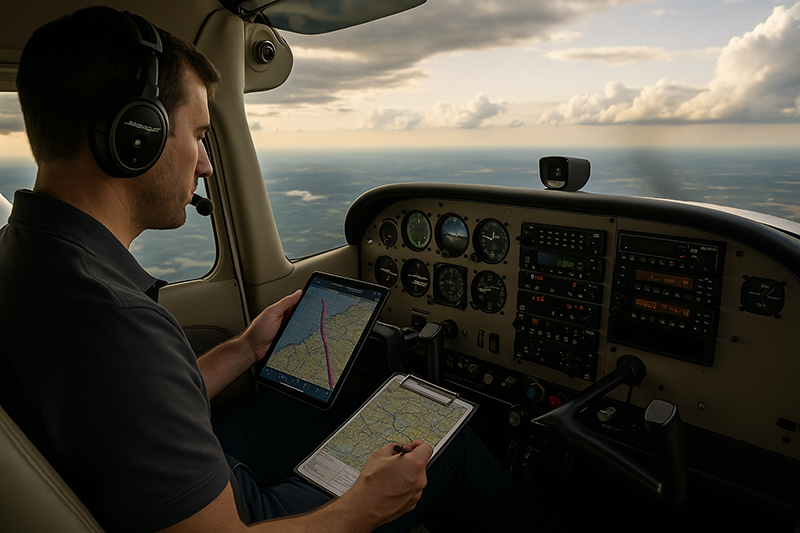
Contingency plans for long flights help pilots manage fuel, weather, diversion choices, fatigue, and equipment issues before small problems become urgent.
Read article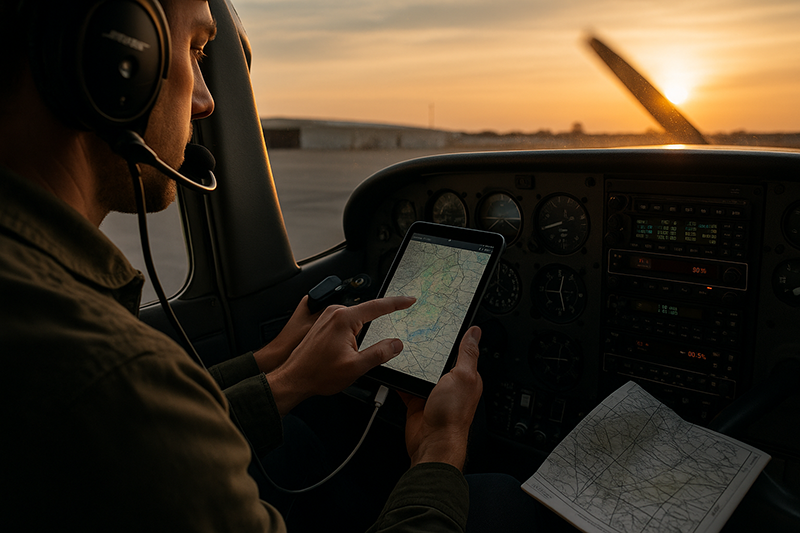
Tablet technology can improve flight operations when pilots use it with disciplined planning, cockpit workflow, backups, and awareness of EFB limitations.
Read article
Aircraft ownership responsibilities include maintenance, records, airworthiness, insurance, training, and risk management for safer general aviation flying...
Read article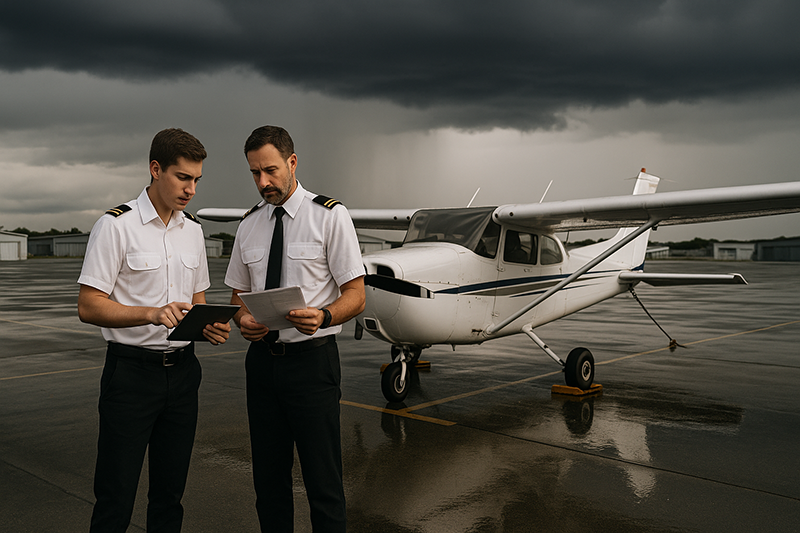
Delaying a flight can be the safest pilot decision when weather, aircraft condition, fatigue, performance, or pressure reduce your safety margin.
Read article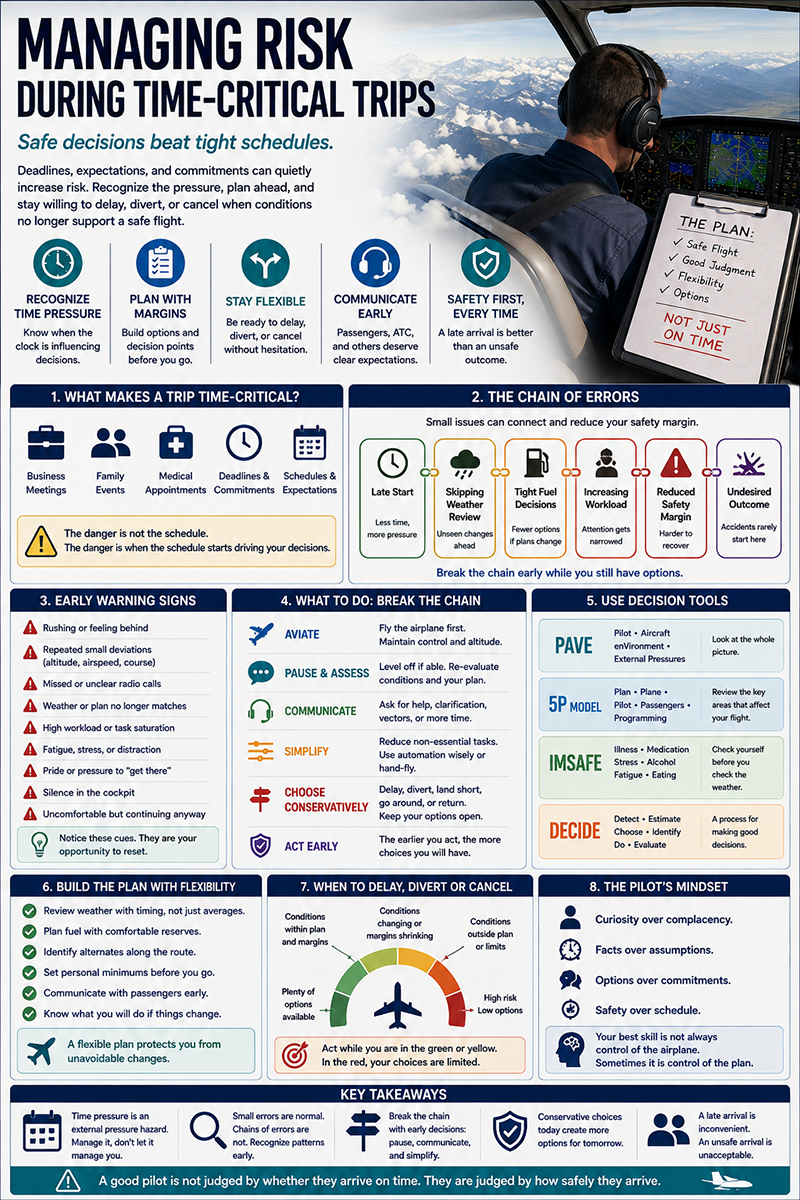
Managing risk during time-critical trips helps pilots recognize external pressure, protect safety margins, and make better go, delay, divert, or cancel dec...
Read article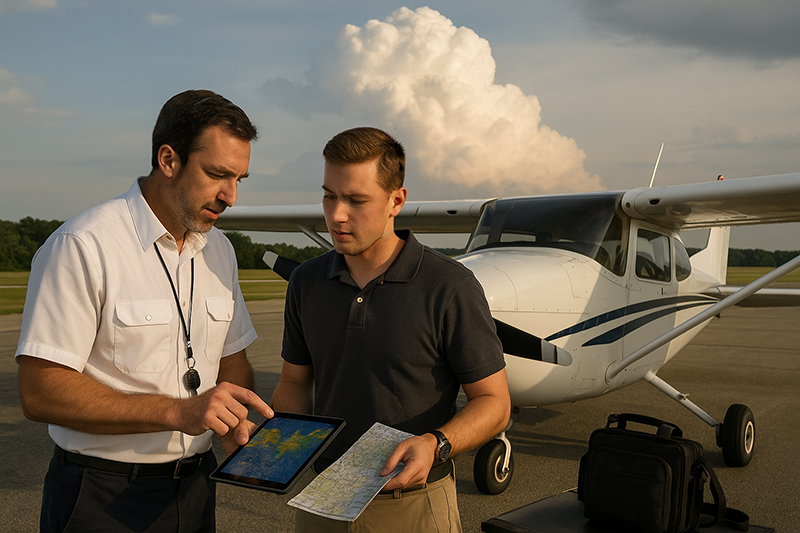
Learn how Convective SIGMETs affect cross-country flight planning, route decisions, thunderstorm avoidance, timing, diversions, and pilot weather judgment.
Read article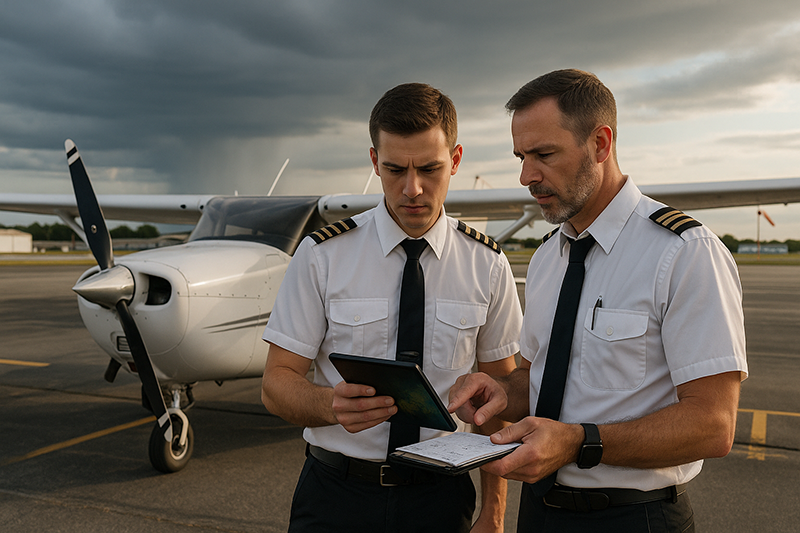
Learn how to detect weather trends before departure by comparing observations, forecasts, radar, satellite, winds, and pilot judgment before launch.
Read article
Learn how to conduct a realistic go/no-go evaluation using pilot readiness, aircraft capability, weather, mission pressure, and practical safety margins.
Read article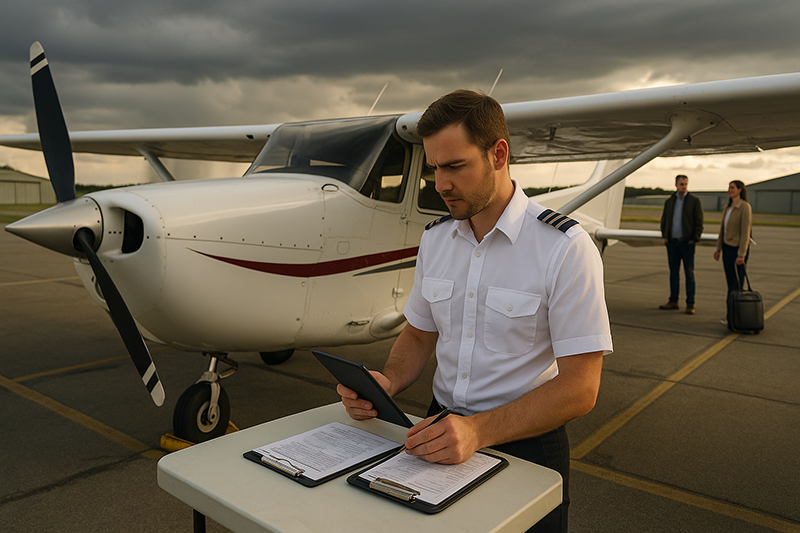
Learn how managing external pressures helps pilots make safer go/no-go, diversion, fuel, weather, and passenger decisions as Pilot in Command.
Read articleAviation Training Experts articles are designed to make aviation topics easier to understand. Use these guides alongside flight training, aviation calculators, and reference tools to build practical knowledge for study, planning, and aviation decision-making.