
Chapter 14
Aircraft Fuel Systems
AVGAS has a relatively low maximum vapor pressure compared to automotive gasoline—only 7 psi. But the vapor pressure of Jet A is only 0.125 psi at standard atmospheric conditions. Jet B, a blend of Jet A and gasoline, has higher volatility with a vapor pressure between 2 and 3 psi.
Turbine Engine Fuel Types
Three basic turbine engine fuel types are available worldwide, although some countries have their own unique fuels. The first is Jet A. It is the most common turbine engine fuel available in the continental United States. Globally, Jet A-1 is the most popular. Both Jet A and Jet A-1 are fractionally distilled in the kerosene range. They have low volatility and low vapor pressure. Flashpoints range between 110 °F and 150 °F. Jet A freezes at –40 °F and Jet A-1 freezes at –52.6 °F. Most engine operations manuals permit the use of either Jet A or Jet A-1.
The third basic type of turbine engine fuel available is Jet
- It is a wide-cut fuel that is basically a blend of kerosene and gasoline. Its volatility and vapor pressure reflect this and fall between Jet A and AVGAS. Jet B is primarily available in Alaska and Canada due to its low freezing point of approximately –58 °F, and its higher volatility yields better cold weather performance.
Turbine Engine Fuel Issues
Purity issues related to turbine engine fuels are unique. While AVGAS experiences similar issues of solid particle contamination and icing concerns, the presence of water and fuel-consuming microbes is more prominent in jet fuel, which has different molecular structure and retains water in two principal ways. Some water is dissolved into the fuel. Other water also is entrained in the fuel, which is more viscous than AVGAS. The greater presence of water in jet fuel allows microbes to assemble, grow, and live on the fuel.
Since turbine engine fuels always contain water, microbial contamination is always a threat. The large tanks of many turbine engine aircraft have numerous areas where water can settle, and microbes can flourish. Areas between the fuel tank and any water that may come to rest in the bottom of the tanks is where the microbes thrive. These microorganisms form a bio-film that can clog filters, corrode tank coatings, and degrade the fuel. They can be controlled somewhat with the addition of biocides to the fuel. [Figure 14-11] Anti-ice additives are also known to inhibit bacterial growth.
Since the microbes are sustained by fuel and water, best practices must be followed to keep the water in fuel to a minimum. Avoid having fuel in a storage tank for a prolonged period of time on or off the aircraft. Drain sumps and monitor the fuel for settled water. Investigate all incidents of water discovered in the fuel. In addition to water in jet fuel supporting the growth of microorganisms, it also poses a threat of icing. Follow the manufacturer’s instructions for fuel handling procedures and fuel system maintenance.

Aircraft Fuel Systems
While each manufacturer designs its own fuel system, the basic fuel system requirements referenced at the beginning of this chapter yield fuel systems of similar design and function in the field. In the following sections are representative examples of various fuel systems in each class of aircraft discussed. Others are similar but not identical. Each aircraft fuel system must store and deliver clean fuel to the engine(s) at a pressure and flow rate able to sustain operations regardless of the operating conditions of the aircraft.
Small Single-Engine Aircraft Fuel Systems
Small single-engine aircraft fuel systems vary depending on factors, such as tank location and method of metering fuel to the engine. A high-wing aircraft fuel system can be designed differently from one on a low-wing aircraft. An aircraft engine with a carburetor has a different fuel system than one with fuel injection.
Gravity Feed Systems
High-wing aircraft with a fuel tank in each wing are common. With the tanks above the engine, gravity is used to deliver the fuel. A simple gravity feed fuel system is shown in Figure 14-12. The space above the liquid fuel is vented to maintain atmospheric pressure on the fuel as the tank empties. The two tanks are also vented to each other to ensure equal pressure when both tanks feed the engine. A single screened outlet on each tank feeds lines that connect to either a fuel shutoff valve or multiposition selector valve. The shutoff valve has two positions: fuel ON and fuel OFF. If installed, the selector valve provides four options: fuel shutoff to the engine; fuel feed from the right-wing tank only; fuel feed from the left fuel tank only; fuel feed to the engine from both tanks simultaneously.
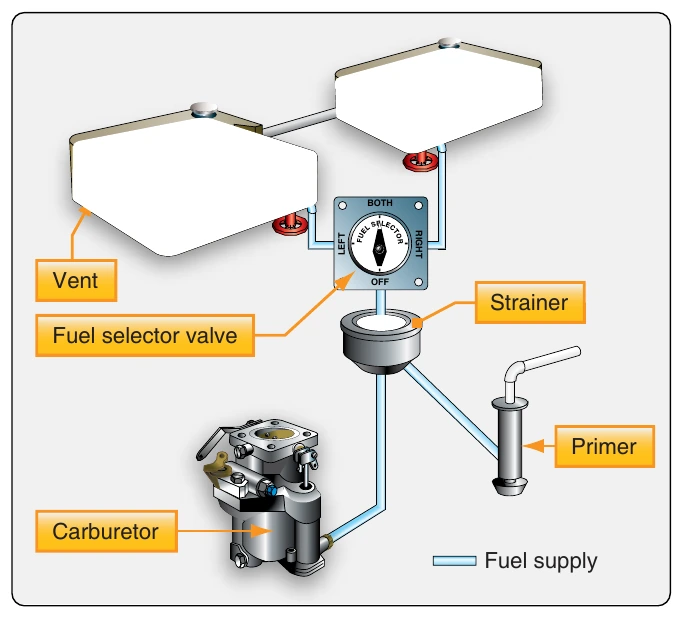
Downstream of the shutoff valve or selector valve, the fuel passes through a main system strainer. This often has a drain function to remove sediment and water. From there, it flows to the carburetor or to the primer pump for engine starting. Having no fuel pump, the gravity feed system is the simplest aircraft fuel system.