
Chapter 14
Aircraft Fuel Systems
Fuel System Components
To better understand aircraft fuel systems and their operation, the following discussion of various components of aircraft fuel systems is included.
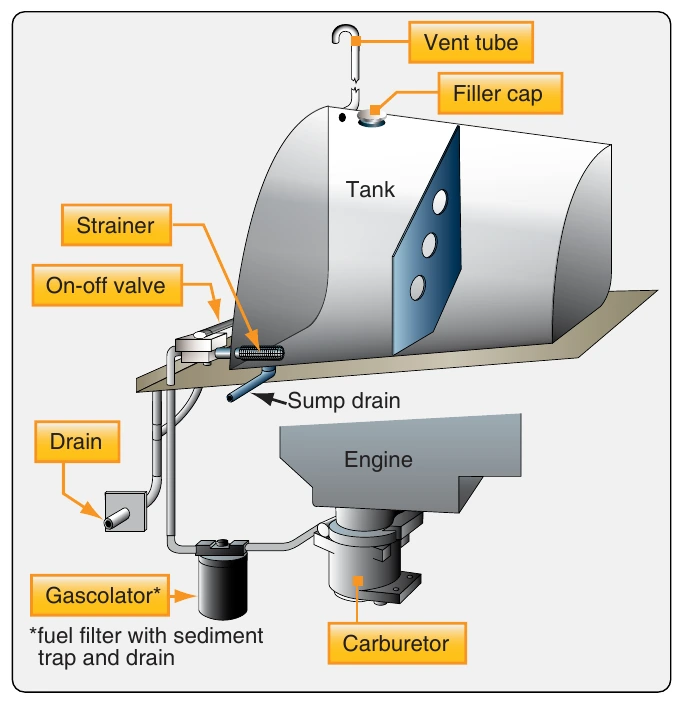
Fuel Tanks
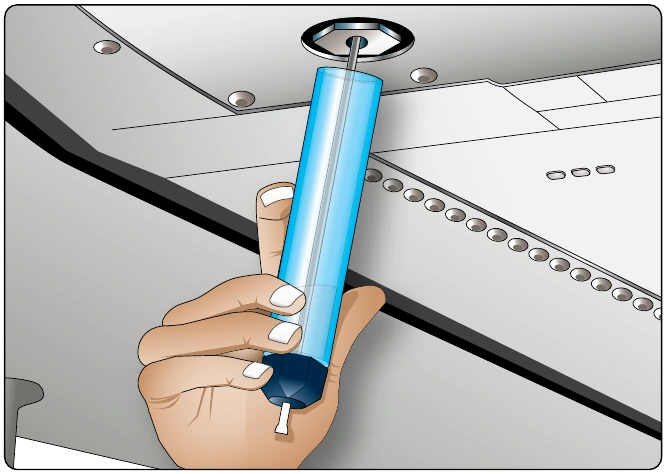
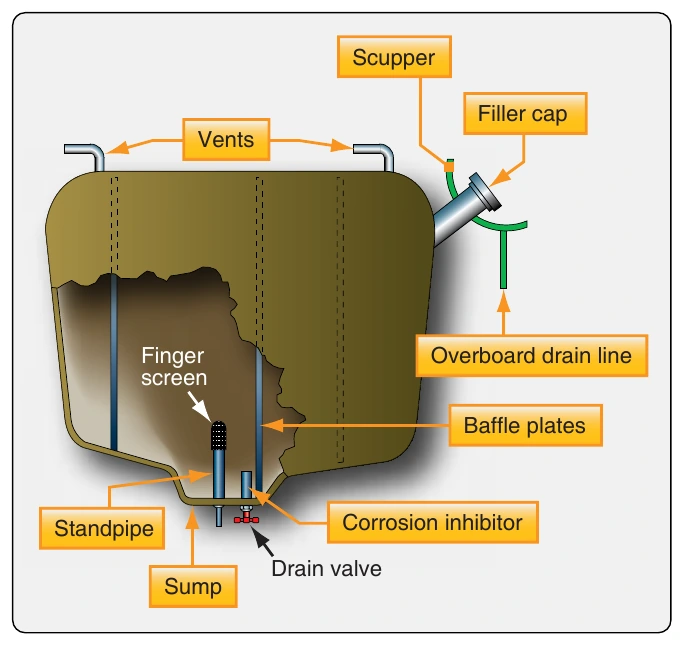
There are three types of aircraft fuel tanks: rigid removable tanks, bladder tanks, and integral fuel tanks. The type of aircraft, its design and intended use, as well as the age of the aircraft determine which fuel tank is installed in an aircraft. Most tanks are constructed of noncorrosive material(s). They are typically made to be vented either through a vent cap or a vent line. Aircraft fuel tanks have a low area called a sump that is designed as a place for contaminants and water to settle. The sump is equipped with a drain valve used to remove the impurities during preflight walk-around inspection. [Figure 14-26] Most aircraft fuel tanks contain some sort of baffling to subdue the fuel from shifting rapidly during flight maneuvers. Use of a scupper constructed around the fuel fill opening to drain away any spilled fuel is also common.
Rigid Removable Fuel Tanks
Many aircraft, especially older ones, utilize an obvious choice for fuel tank construction. A rigid tank is made from various materials, and it is strapped into the airframe structure. The tanks are often riveted or welded together and can include baffles, as well as the other fuel tank features described above. They typically are made from 3003 or 5052 aluminum alloy or stainless steel and are riveted and seam welded to prevent leaks. Many early tanks were made of a thin sheet steel coated with a lead/tin alloy called terneplate. The terneplate tanks have folded and soldered seams. Figure 14-27 shows the parts of a typical rigid removable fuel tank.
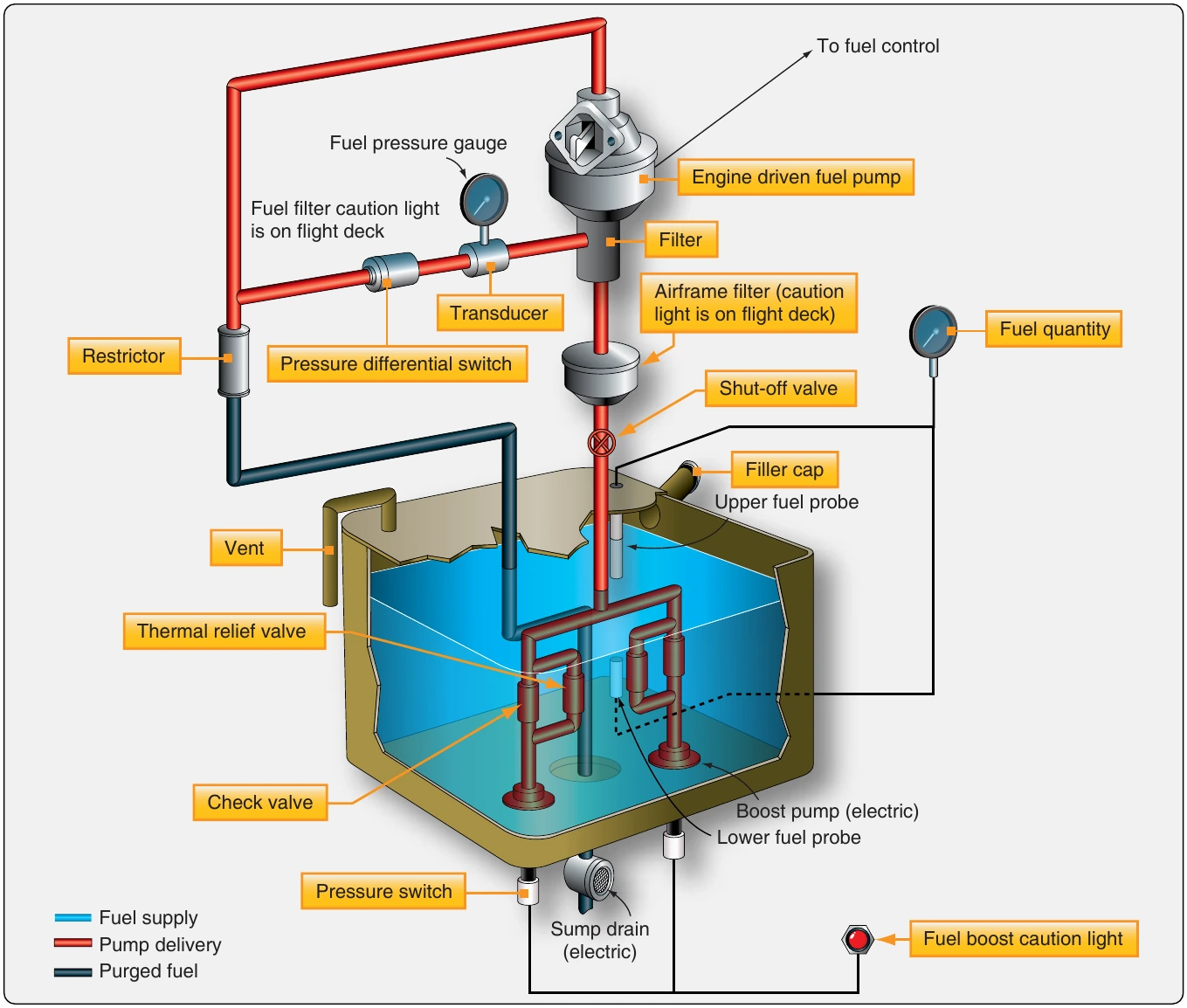
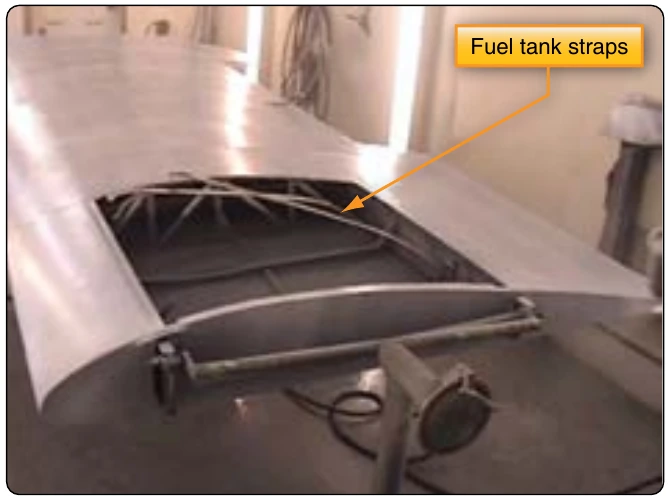
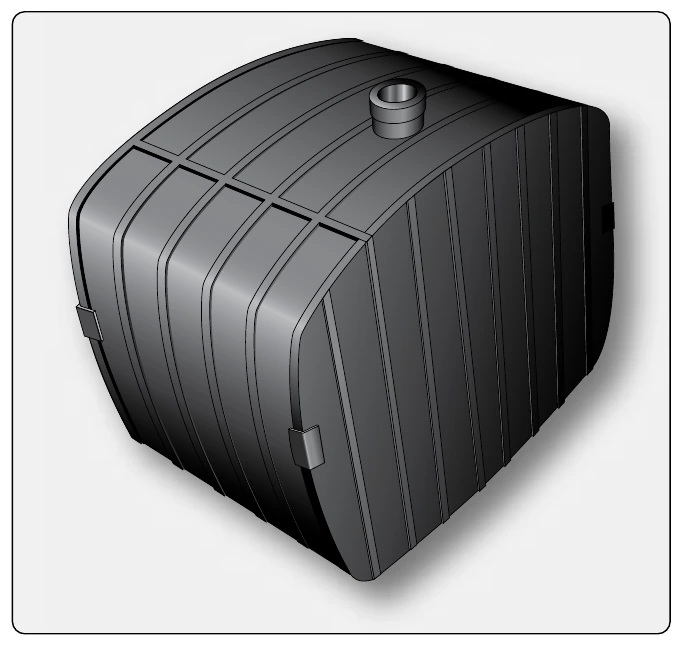
Regardless of the actual construction of removable metal tanks, they must be supported by the airframe and held in place with some sort of padded strap arrangement to resist shifting in flight. The wings are the most popular location for fuel tanks. Figure 14-28 shows a fuel tank bay in a wing root with the tank straps. Some tanks are formed to be part of the leading edge of the wing. These are assembled using electric resistance welding and are sealed with a compound that is poured into the tank and allowed to cure. Many fuselage tanks also exist. [Figure 14-29] In all cases, the structural integrity of the airframe does not rely on the tank(s) being installed, so the tanks are not considered integral.
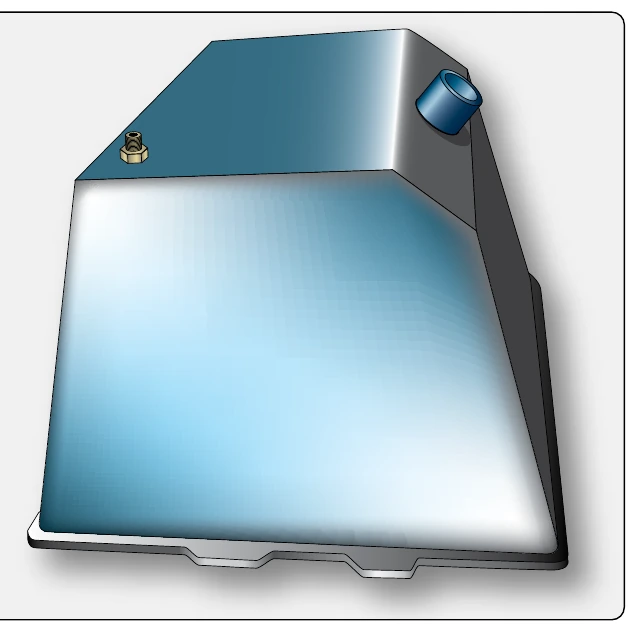
As new materials are tested and used in aircraft, fuel tanks are being constructed out of materials other than aluminum, steel, and stainless steel. Figure 14-30 shows a rigid removable fuel tank from an ultralight category aircraft that is constructed from Vipel® isophthalic polyester UL 1316/UL 1746 resin and composite. Its seamless, lightweight construction may lead to the use of this type of tank in other aircraft categories in the future.
Being able to remove and repair, or replace, a fuel tank can be a great convenience if a leak or malfunction with the tank exists. Repairs to fuel tanks must be done in accordance with manufacturers’ specifications. It is especially critical to follow all safety procedures when welding repairs are performed. Fuel vapors must be removed from the tank to prevent explosion. This typically involves washing out the tank with water and detergent, followed by a steam or water flush, as determined by the manufacturer. Once repaired, fuel tanks need to be pressure checked, usually while installed in the airframe, to prevent distortion while under pressure.
Bladder Fuel Tanks
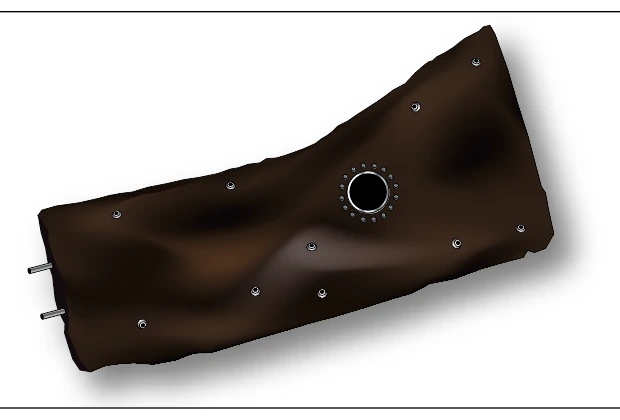
A fuel tank made out of a reinforced flexible material called a bladder tank can be used instead of a rigid tank. A bladder tank contains most of the features and components of a rigid tank but does not require as large an opening in the aircraft skin to install. The tank, or fuel cell as it is sometimes called, can be rolled up and put into a specially prepared structural bay or cavity through a small opening, such as an inspection opening. Once inside, it can be unfurled to its full size. Bladder tanks must be attached to the structure with clips or other fastening devices. They should lie smooth and unwrinkled in the bay. It is especially important that no wrinkles exist on the bottom surface so that fuel contaminants are not blocked from settling into the tank sump. [Figure 14-31]
Bladder fuel tanks are used on aircraft of all sizes. They are strong and have a long life with seams only around installed features, such as the tank vents, sump drain, filler spout, etc. When a bladder tank develops a leak, the technician can patch it following manufacturer’s instructions. The cell can also be removed and sent to a fuel tank repair station familiar with and equipped to perform such repairs.