
Chapter 4
Aircraft Metal Structural Repair
Before filling canvas bags with sand, use a brush to coat the inside of the bag with softened paraffin or beeswax, which forms a sealing layer and prevents the sand from working through the pores of the canvas. Bags can also be filled with shot as an alternative to sand.
Sheet Metal Hammers & Mallets
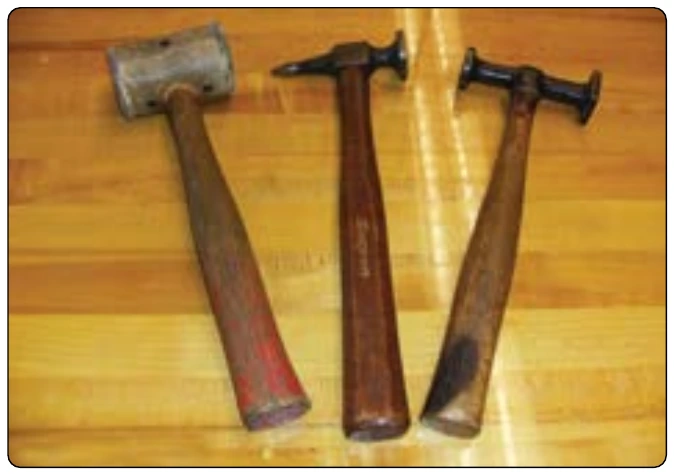
The sheet metal hammer and the mallet are metal fabrication hand tools used for bending and forming sheet metal without marring or indenting the metal. The hammer head is usually made of high carbon, heat-treated steel, while the head of the mallet, which is usually larger than that of the hammer, is made of rubber, plastic, wood, or leather. In combination with a sandbag, V-blocks, and dies, sheet metal body hammers and mallets are used to form annealed metal. [Figure 4-69]
Sheet Metal Holding Devices
In order to work with sheet metal during the fabrication process, the aviation technician uses a variety of holding devices, such as clamps, vises, and fasteners to hold the work together. The type of operation being performed and the type of metal being used determine what type of the holding device is needed.
Clamps & Vises
Clamps and vises hold materials in place when it is not possible to handle a tool and the workpiece at the same time. A clamp is a fastening device with movable jaws that has opposing, often adjustable, sides or parts. An essential fastening device, it holds objects tightly together to prevent movement or separation. Clamps can be either temporary or permanent. Temporary clamps, such as the carriage clamp (commonly called the C-clamp), are used to position components while fixing them together.
C-Clamps
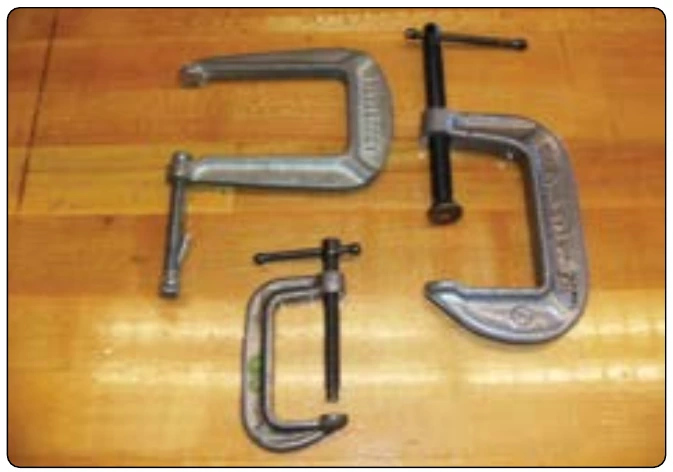
The C-clamp is shaped like a large C and has three main parts: threaded screw, jaw, and swivel head. [Figure 4-70] The swivel plate or flat end of the screw prevents the end from turning directly against the material being clamped. C-clamp size is measured by the dimension of the largest object the frame can accommodate with the screw fully extended. The distance from the center line of the screw to the inside edge of the frame or the depth of throat is also an important consideration when using this clamp. C-clamps vary in size from two inches upward. Since C-clamps can leave marks on aluminum, protect the aircraft covering with masking tape at the places where the C-clamp is used.
Vises
Vises are another clamping device that hold the workpiece in place and allow work to be done on it with tools such as saws and drills. The vise consists of two fixed or adjustable jaws that are opened or closed by a screw or a lever. The size of a vise is measured by both the jaw width and the capacity of the vise when the jaws are fully open. Vises also depend on a screw to apply pressure, but their textured jaws enhance gripping ability beyond that of a clamp.
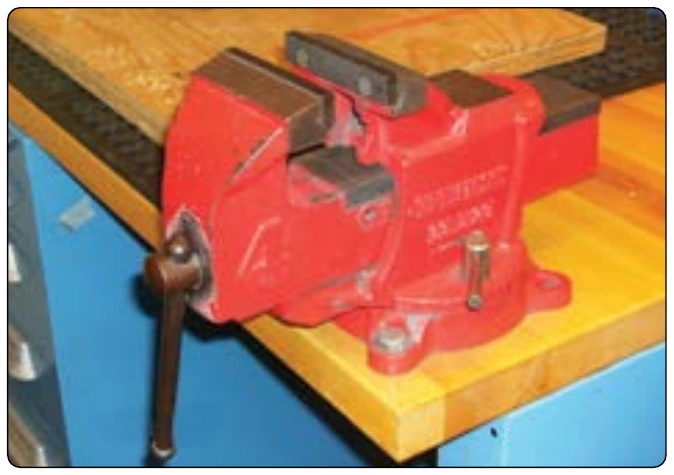
Two of the most commonly used vises are the machinist’s vise and the utility vise. [Figure 4-71] The machinist’s vise has flat jaws and usually a swivel base, whereas the utility bench vise has scored, removable jaws and an anvil-faced back jaw. This vise holds heavier material than the machinist’s vise and also grips pipe or rod firmly. The back jaw can be used as an anvil if the work being done is light. To avoid marring metal in the vise jaws, add some type of padding, such as a ready-made rubber jaw pad.
Reusable Sheet Metal Fasteners
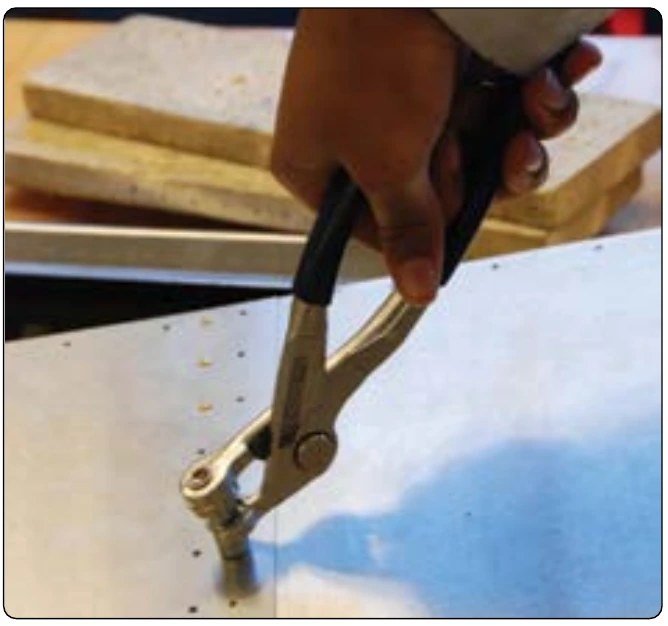
Reusable sheet metal fasteners temporarily hold drilled sheet metal parts accurately in position for riveting or drilling. If sheet metal parts are not held tightly together, they separate while being riveted or drilled. The Cleco (also spelled Cleko) fastener is the most commonly used sheet metal holder. [Figure 4-72]
Cleco Fasteners
The Cleco fastener consists of a steel cylinder body with a plunger on the top, a spring, a pair of step-cut locks, and a spreader bar. These fasteners come in six different sizes: 3⁄32, 1⁄8, 5⁄32, 3⁄16, 1⁄4, and 3⁄8-inch in diameter with the size stamped on the fastener. Color coding allows for easy size recognition. A special type of plier fits the six different sizes. When installed correctly, the reusable Cleco fastener keeps the holes in the separate sheets aligned.