
Chapter 4
Engine Ignition & Electrical Systems
If lead fouling is detected before the spark plugs become completely fouled, the lead can usually be eliminated or reduced by either a sharp rise or a sharp decrease in combustion temperature. This imposes a thermal shock on cylinder parts, causing them to expand or contract. Since there is a different rate of expansion between deposits and metal parts on which they form, the deposits chip off or are loosened and then scavenged from the combustion chamber by the exhaust or are burned in the combustion process.
Several methods of producing thermal shock to cylinder parts are used. The method used depends on the accessory equipment installed on the engine. A sharp rise in combustion temperatures can be obtained on all engines by operating them at full takeoff power for approximately 1 minute. When using this method to eliminate fouling, the propeller control must be placed in low pitch, or high rpm, and the throttle advanced slowly to produce takeoff rpm and manifold pressure. Slow movement of the throttle control provides reasonable freedom from backfiring in the affected cylinders during the application of power.
Another method of producing thermal shock is the use of excessively rich air-fuel mixtures. This method suddenly cools the combustion chamber because the excess fuel does not contribute to combustion; instead, it absorbs heat from the combustion area. Some carburetor installations use twoposition manual mixture controls that provide a lean mixture setting for cruising economy and a richer mixture setting for all powers above cruising. Neither manual mixture control setting in this type of configuration is capable of producing an excessively rich air-fuel mixture. Even when the engine is operated in auto-rich at powers where an auto-lean setting would be entirely satisfactory, the mixture is not rich enough.
Graphite Fouling of Spark Plugs
As a result of careless and excessive application of thread lubricant, called antiseize compound, to the spark plug, the lubricant flows over the electrodes and causes shorting. Shorting occurs because graphite is a good electrical conductor. The elimination of service difficulties caused by graphite is up to the aircraft technician. Use care when applying the lubricant to make certain that smeared fingers, shop towels, or brushes do not contact the electrodes or any part of the ignition system except the spark plug threads. Never apply to the first set of threads.
Gap Erosion of Spark Plugs
Erosion of the electrodes takes place in all aircraft spark plugs as the spark jumps the air gap between the electrodes. [Figure 4-57]
The spark carries with it a portion of the electrode, part of which is deposited on the other electrode. The remainder is blown off in the combustion chamber. As the airgap is enlarged by erosion, the resistance that the spark must
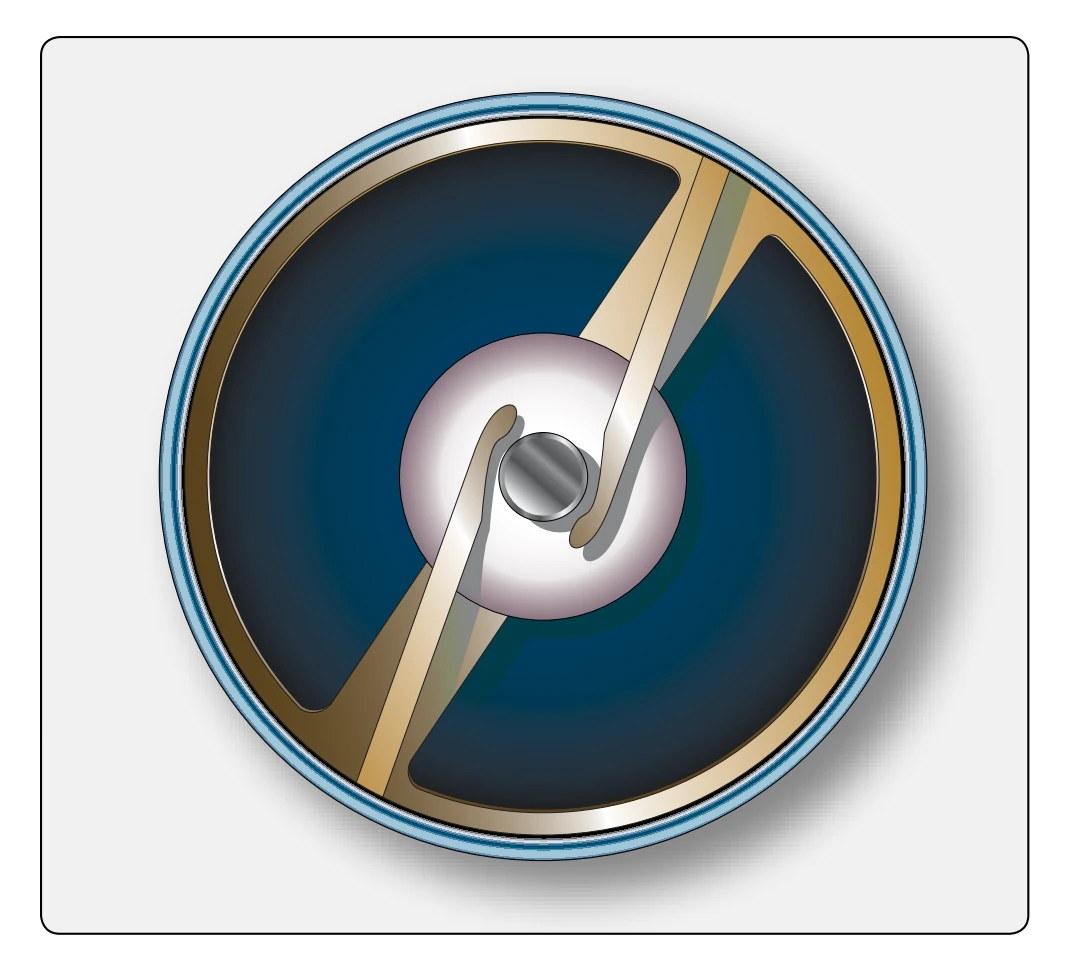
overcome in jumping the air gap also increases. This means that the magneto must produce a higher voltage to overcome the higher resistance. With higher voltages in the ignition system, a greater tendency exists for the spark to discharge at some weak insulation point in the ignition system. Since the resistance of an air gap also increases as the pressure in the engine cylinder increases, a double danger exists at takeoff and during sudden acceleration with enlarged airgaps. Insulation breakdown, premature flashover, and carbon tracking result in misfiring of the spark plug and go hand in hand with excessive spark plug gap. Wide gap settings also raise the coming in speed of a magneto and therefore cause hard starting.
Spark plug manufacturers have partially overcome the problem of gap erosion by using a hermetically sealed resistor in the center electrode of spark plugs. This added resistance in the high-tension circuit reduces the peak current at the instant of firing. This reduced current flow helps prevent metal disintegration in the electrodes. Also, due to the high erosion rate of steel or any of its known alloys, spark plug manufacturers are using tungsten or an alloy of nickel for their massive electrode plugs and iridium/platinum plating for their fine wire electrode plugs.
Spark Plug Removal
Spark plugs should be removed for inspection and servicing at the intervals recommended by the manufacturer. Since the rate of gap erosion varies with different operating conditions, engine models, and type of spark plug, engine malfunction traceable to faulty spark plugs may occur before the regular servicing interval is reached. Normally, in such cases, only the faulty plugs are replaced.
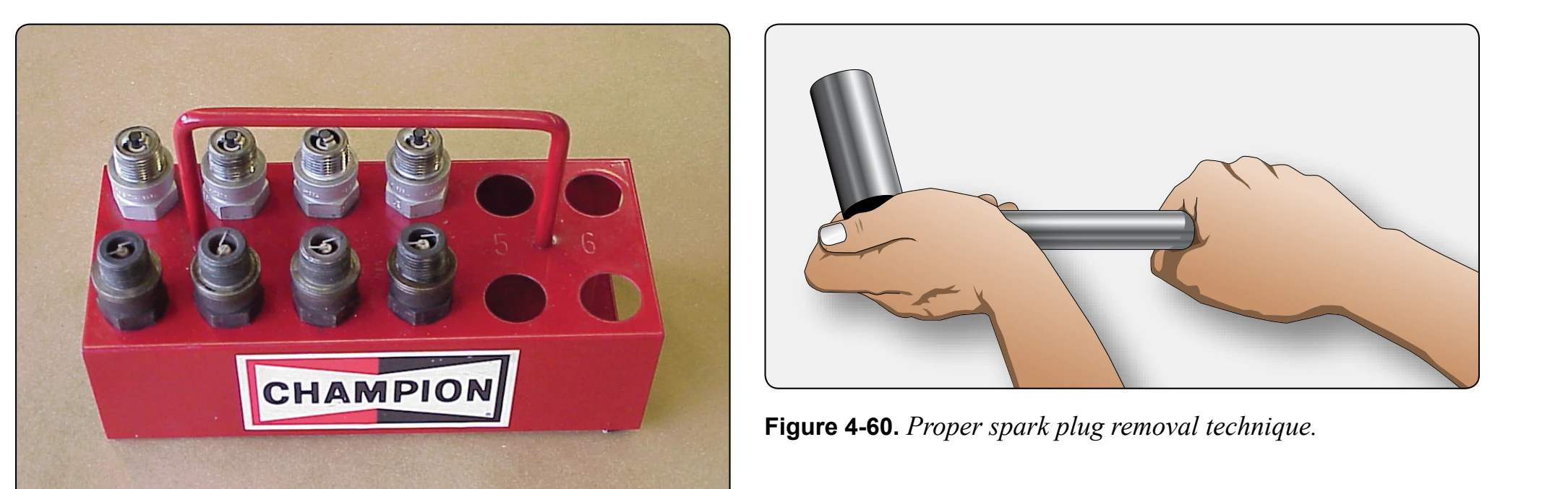
Since spark plugs can be easily damaged, careful handling of the used and replacement plugs during installation and removal of spark plugs from an engine cannot be overemphasized. To prevent damage, spark plugs should always be handled individually and new and reconditioned plugs should be stored in separate cartons. A common method of storage is illustrated in Figure 4-58. This is a drilled tray, which prevents the plugs from bumping against one another and damaging the fragile insulators and threads. Additionally, the tray helps identify where the spark plug came from and its proper rotation. If a plug is dropped on the floor or other hard surface, it should not be installed in an engine, since the shock of impact usually causes small, invisible cracks in the insulators. A dropped spark plug should be discarded.
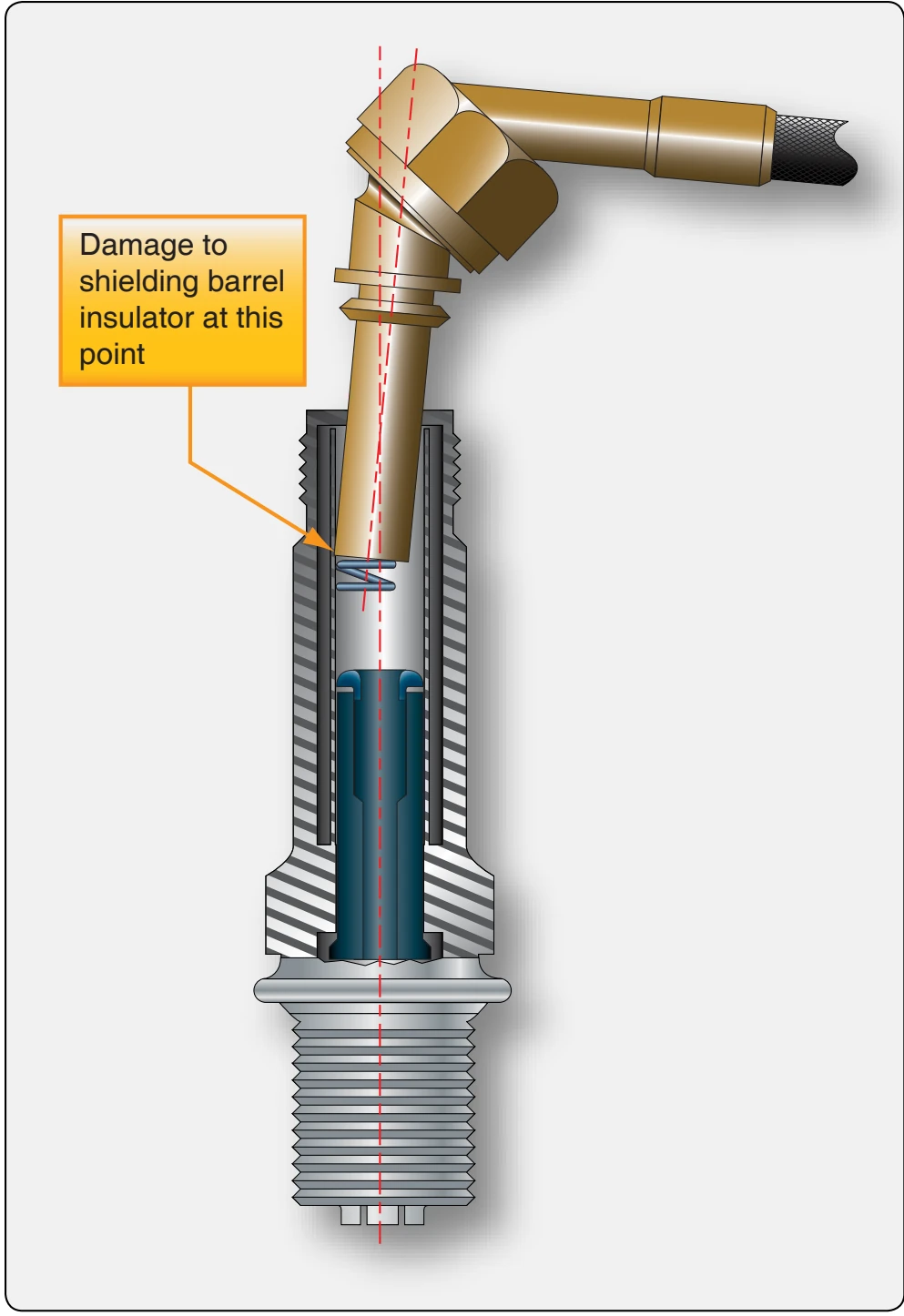
Before a spark plug can be removed, the ignition harness lead must be disconnected. Using the special spark plug coupling elbow wrench, loosen and remove the spark plug to elbow coupling nut from the spark plug. Take care to pull the lead
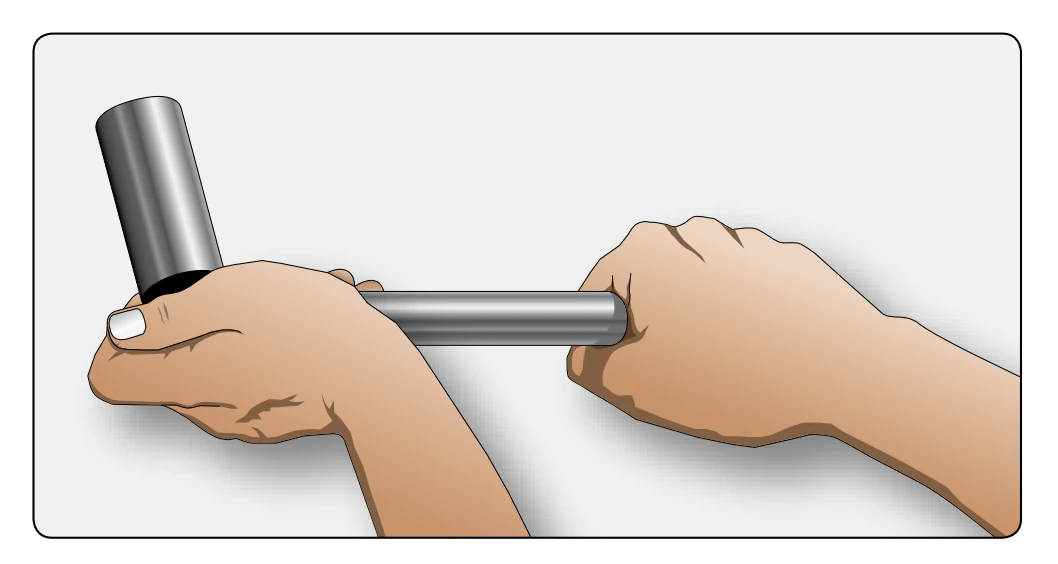
After the lead has been disconnected, select the proper size deep socket for spark plug removal. Apply steady pressure with one hand on the hinge handle, holding the socket in straight out and in line with the centerline of the plug barrel. If a side load is applied, damage to the barrel insulator and the ceramic lead terminal may result. [Figure 4-59] If the lead cannot be removed easily in this manner, the neoprene collar may be stuck to the shielding barrel. Break loose the neoprene collar by twisting the collar as though it were a nut being unscrewed from a bolt.
alignment with the other hand. Failure to hold the socket in correct alignment causes the socket to tilt to one side and damage the spark plug. [Figure 4-60]