
Chapter 3
Identifying Hazards & Associated Risks
Airspace requirements and ATC services facilitate safe and efficient operations. However, under some circumstances, their presence or absence constitutes a “V” hazard.
- Prohibited and Restricted Airspace–Different airspace designations and restrictions are meant to protect pilots and aircraft from hazards. For example, entering a prohibited or restricted area without permission can result in conflicts with military aircraft.
- ATC Delays and Service Availability–The ATC system may require route changes or holding, which may require more fuel than expected.
- Air Traffic Density and Collision Hazards–Pilots are responsible for seeing and avoiding other aircraft when flying under VFR or in VMC while flying under IFR. However, under certain conditions, it is difficult to see other aircraft because of haze, sunlight, aircraft position, blind spots, and other factors.
Night Operations
Night operations make it more difficult to see and identify other hazards.
- VFR operations–Visual operations are often hampered by visibility restrictions at night. This restricts a pilot’s ability to see and avoid terrain and obstacles, other aircraft, precipitation, and other hazards.
- Single-engine operations–A forced landing at night may require a pilot to deal with unexpected terrain hazards. In addition, the failure of engine accessories, such as an alternator, may lead to total electrical failure.
External Pressure Hazards
External pressures or “E” hazards originate from a variety of personal and business reasons. The pressure to get to a particular destination or to leave at the conclusion of a planned stay can affect a pilot’s judgment. Pilots subject to external pressures sometimes fail to consider the other three major categories of hazards.
- Why does the pilot need to fly to a particular destination at a given time? Wanting to be present at a family celebration, wishing to see a terminally ill relative, or the need to be at an important meeting can affect pilot motivation. It may be a simple matter of not wanting to disappoint someone waiting at the destination. It could also include a condition that arises during a flight, such as a sick passenger.
- If a general aviation aircraft is used for business travel, a pilot may experience time pressure after committing to be somewhere at a given time. Business flights place additional pressure on the pilot to conduct the “mission,” regardless of the hazards and conditions.
Hazard Combinations
Pilots often need to consider the effect of interactions with several hazards at the same time.
Imagine that a pilot operates from the Elkins-Randolph County airport in Elkins, West Virginia (KEKN). This airport sits in a valley at an elevation of 1,987 feet. The terrain and obstacles on the east and west sides rise to as high as 3,631 feet. The images in Figure 3-4 and Figure 3-5 show a photograph and a sectional aeronautical chart excerpt of the Elkins airport.
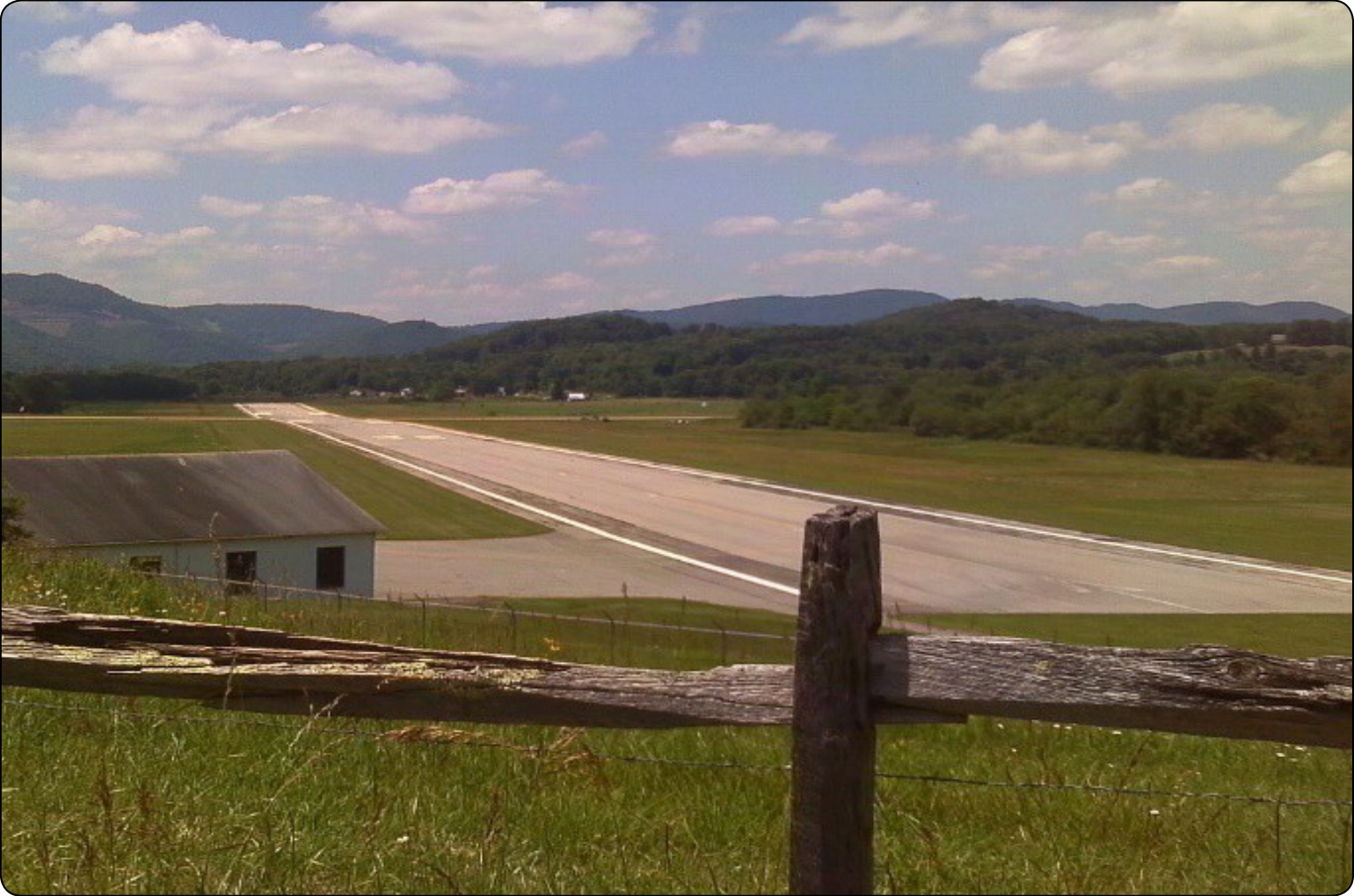
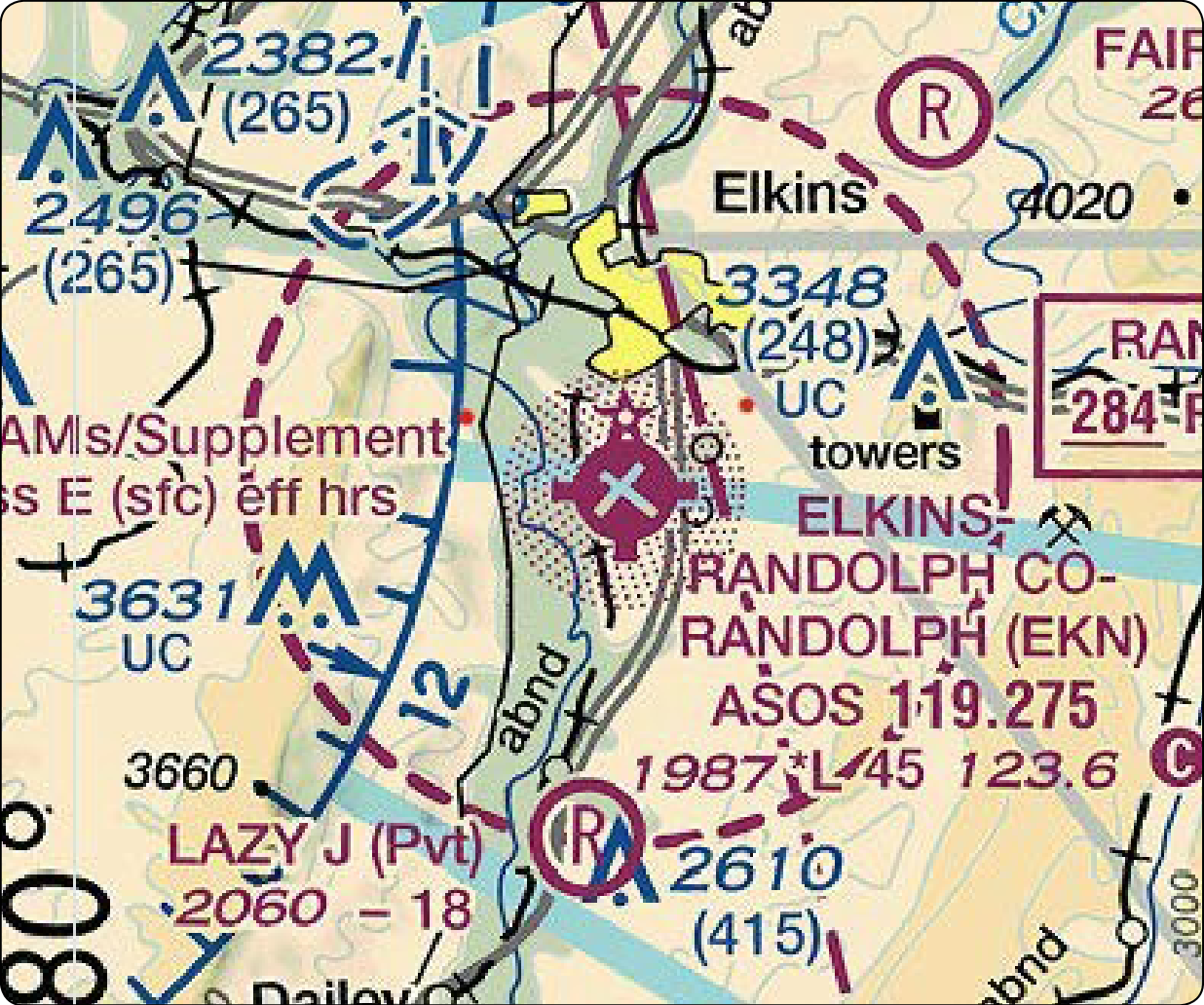
The mountains and obstructions on both sides of the Elkins airport are a hazard. However, on a day with good visibility, few clouds, and light winds, the associated risks are low for most aircraft engaged in visual flight rules (VFR) operations.
If the Elkins airport scenario changes to a night operation, the level of risk associated with the combination of hazards increases, and an accident becomes more likely. Pilots exposed to these multiple hazards need to consider the equipment, skill, and experience necessary to operate safely.
Hazards and Associated Risks
While interaction with a hazard can cause an accident, the level of risk associated with the hazard depends on composite of the likelihood for the type of accident and the expected severity of injury as a result of such an accident. Depending on a particular flight mission, each individual risk may be acceptable or unacceptable. In general aviation operations, the tolerance for risk is generally low, and pilots should use risk assessment and management tools to mitigate any unacceptable risk before embarking on a flight.
Using a Flight Risk Assessment Tool (FRAT)
Identifying hazards and associating them with risks can be accomplished using a simple spreadsheet or form during flight planning. The form used to record each hazard is known as a Flight Risk Assessment Tool (FRAT).